
Decolonial Disruptions in Central Asia
Discussion, Practices, and Networks
Inbunden, Engelska, 2026
1 159 kr
Beställningsvara. Skickas inom 5-8 vardagar. Fri frakt för medlemmar vid köp för minst 249 kr.
Finns i fler format (1)
A consequential shift is taking place in Central Asian studies today. What started as a slow rejection of the idea that the region benefited from Soviet control has turned into a decentralized, collective effort to revise the region's relationship to its colonial identity and to search for indigenous interpretations of the self. This Element explores the current decolonial disruptions in Central Asia-how the region is being redefined by its inhabitants, both in discourse and in practice. It captures the main areas of activism in memory studies, language activism, art installations, and transnational solidarity networks. Decolonial discussions are gaining traction, challenging political elites' hegemony over national identity formation. Such changes harbour the potential to profoundly alter Russia's influence in the areas it once controlled. Decolonial disruptions are reshaping how Central Asians think about their past and imagine their future.
Produktinformation
- Utgivningsdatum2026-06-04
- Mått152 x 229 x 8 mm
- Vikt284 g
- FormatInbunden
- SpråkEngelska
- SerieElements in Politics and Society from Central Europe to Central Asia
- Antal sidor75
- FörlagCambridge University Press
- ISBN9781009610803
Tillhör följande kategorier
Hoppa över listan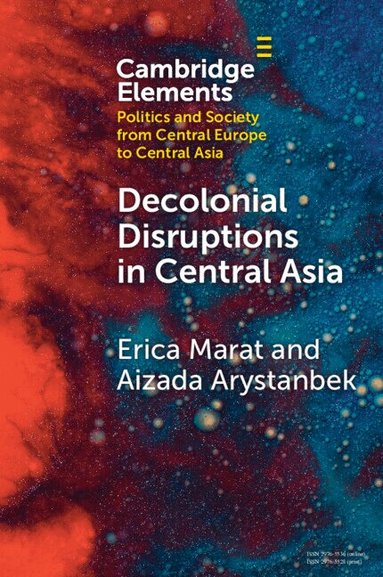

Du kanske också är intresserad av
Reforming the Police in Post-Soviet States: Georgia and Kyrgyzstan (Enlarged Edition)
Strategic Studies Institute, U.S. Army War College, Erica Marat
Häftad, 2014
209 kr