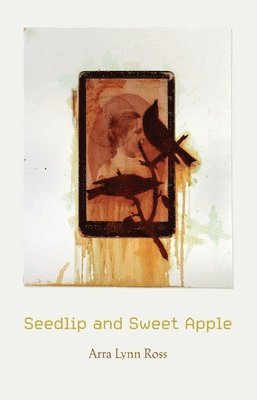
Praise for Day of the Child“Dreamy . . . shimmering . . . In considering how to talk with her child about current events, Ross writes ‘My job to transform, now, / this narrative, allow compassion's vow.’ It's a heavy responsibility along with her other roles: ‘soother, watcher, blame-taker.’ As Ross generously lets readers peek into scenes of her and her son writing poems, watching a young buck, or drawing ‘joy's map,’ she adds another role: wonder-sharer.”—Elizabeth Hoover, Minneapolis Star Tribune “Arra Lynn Ross’s Day of the Child chronicles the seams of ‘Months. Years. Minutes.’ in the ultimate love story, its enchantments, fusions and refusals––retooling language with syntactical rigor, taut syncopation, and the keenest perceptions. The poet’s ear and eye are meticulous, resolute, and virtuosic, lacing the taxonomy of parenthood against the inexorable urge for the self into fabled psalms that embody the personal and universal, liminal and mundane. “But a heart! Inside. Of mine – not / mine – by my body’s lambent knowledge wrought / your blood pump hustled / and sang O indivisible divisible,” Ross writes, offering revelatory glimpses of, through the fracturing of light, a most primal, tenacious love.”—Su Hwang “‘Uphold heaven—humble & hurting, here—rapt,’ Arra Lynn Ross writes early on in Day of the Child. This pristine line opens like a fan and radiates through the entire collection—it bears the dazzling solace and resolve to be with and bear it. Ross’s fervent and riveted eye threads the needle, piercing ‘us, tripped of facades, gods’ and ‘a finger, wet, running the wine glasses’ / rims for water’s pitch: listen.’ In fact, each poem imprints a new way to listen, a new way to hone the listening so that ‘rapt’ becomes a diurnal conduit. In a series of phrasal movements, the day’s accretion gathers tenfold to make childhood, which builds to encompass more time and deeper lineage. But there is nothing without the day and for the day to accrue we must know the choral minutes that grow in its interior. Tranche by tranche, Arra Lynn Ross makes a diurnal map, each one articulated, held and here."—Asiya Wadud “What good luck to encounter the work of a poet of such recognizable gifts, a poet whose syntax is a music all its own, whose imagery is both tenderness and insight, whose narrative skill creates a world both its own and ours. Arra Lynn Ross has made for us a book-long poetics of parenthood: a lyric meditation where the mysterium of time is sang for all to see. Open this book on any page and watch how a mother stands between the outside world and her child, making a lullaby for any age that both protects and reveals. Here language itself becomes the act of parenthood. What a book!”—Ilya Kaminsky “Imagine if Anne Bradstreet had written her own Homage. Imagine what might happen if a poet—a woman, a mother, a teacher—were to swim through the dictionaries and grammars of her linguistic upbringing, only to surface, miraculously, on the far shore of her own life, speaking a syntax reformed to the particularities of her own seeing-sensing Being. Imagine a meticulous reckoning-up of the days and hours, tedious and miraculous, of a mother and a child—a reminder of what an homage can be brought to serve and show. This is what Arra Ross offers us in her new collection. Day of the Child is an embodiment of a poetic tradition internalized and reinvented: Ross's music, meter, patterns of sound, and syntax may suggest Hopkins and cummings and Berryman, but they display a precision, an attention, and a skill that are their maker's own. Like a stone that, broken, reveals the mystery of a geode's brilliant facets, Day of the Child is a revelation of the complex and often beautiful experiences of being-mother, of mothering, and of being-child. Arra Ross has made—the verbs for intricate needlework would be appropriate here—a portrait of and in time that is painstaking in its accounting and recounting of the totally ordinary, totally precious facts of daily life.”—Éireann Lorsung Praise for Seedlip and Sweet Apple “Situated between glossary and glossolalia, word and vision, the communal act of language and the singularity of inspiration, Seedlip and Sweet Apple reaffirms the tradition of American visionaries, even while reshaping that tradition into an innovative and dynamic lyric. Arra Lynn Ross raises the roof with her convocation of tongues. A pioneering collection of poems.”—D. A. Powell “A creative and compelling rendering of a strange and charismatic leader. Arra Lynn Ross’s poems catch the dangers and the challenges of this woman who heard God’s whisperings, lost four children to early deaths, journeyed to the New World in 1744, used her body with others to warm a room with dance, and rejoiced in the sight of a deer or the pleasures of watching rosehip tea steaming in the sun.”—Spirituality & Practice “A work powerful in voice and craft . . . If you care about the value of our national literature, Seedlip and Sweet Apple is well worth the investment.”—Feminist Review “Seedlip and Sweet Apple marks the birth of a star. Radical and transgressive young poet and writer Arra Lynn Ross has made a miraculous text of narrative and speech fragments . . . to raise up Mother Ann Lee, founder of the Shakers, her ecstatic voice, energy, and vision. If, as Yeats promised, ‘soul clap its hands and sing,’ here she is, on the page, in the ear: Ann Lee in the historical world, harmed and holy, brave, alive and in community, ‘a woman sowing seeds at the break of day.’”—Hilda Raz “Arra Lynn Ross’s powerful collection inevitably recalls Robert Peters’s The Gift to Be Simple and she is no less penetrating of Mother Ann’s psyche. But whereas Peters’s stubby-lined, intense, physical style kindled fire, Ross’s longer lines, occasional prose poems and narrative episodes, documentary interjections, and employment of voices other than Ann’s feel broader, cooler, more rested in the Lord, at last.”—Booklist