
Del i serien Anthem Global Media and Communication Studies
Dark Side of News Fixing
The Culture and Political Economy of Global Media in Pakistan and Afghanistan
Inbunden, Engelska, 2021
2 449 kr
Beställningsvara. Skickas inom 3-6 vardagar. Fri frakt för medlemmar vid köp för minst 249 kr.
This book provides a local journalist’s perspective on a four-decade long regional contribution to global news production. It shows how the fixers’ risky news pursuits made possible for global media to access distant regions and dangerous caves on Pakistan and Afghanistan borders, causing unprecedented deaths of the local reporters in the context of the U.S-led war on terror. The book analyzes the fixer as a role in its relationship with militarization. It is not a coincidence that fixers become valuable to commercial media only during the height of violence or crises. Emerging under conditions of scarcity or war, the value of this role, in turn, is intrinsically tied to the fear of extinction. It is this vulnerability or perceived expendability— imposed by the need to find work—that binds fixers in a symbiotic relationship with global market and global war. This book, then, serves as a vantage point from which one can clearly see the connection between the regional wars and commercial media, as well as local journalists’ transformation into daily wage earners in a global media shift toward neoliberalism.
Produktinformation
- Utgivningsdatum2021-11-02
- Mått153 x 229 x 26 mm
- Vikt454 g
- FormatInbunden
- SpråkEngelska
- SerieAnthem Global Media and Communication Studies
- Antal sidor240
- FörlagAnthem Press
- ISBN9781839981371
Tillhör följande kategorier
Hoppa över listan




Mer från samma serie
Angus & Robertson and the British Trade in Australian Books, 1930–1970
Jason D. Ensor
Inbunden, 2012
2 259 kr
Perceptions of the Press in Nineteenth-Century British Periodicals
E. M. Palmegiano
Häftad, 2013
659 kr
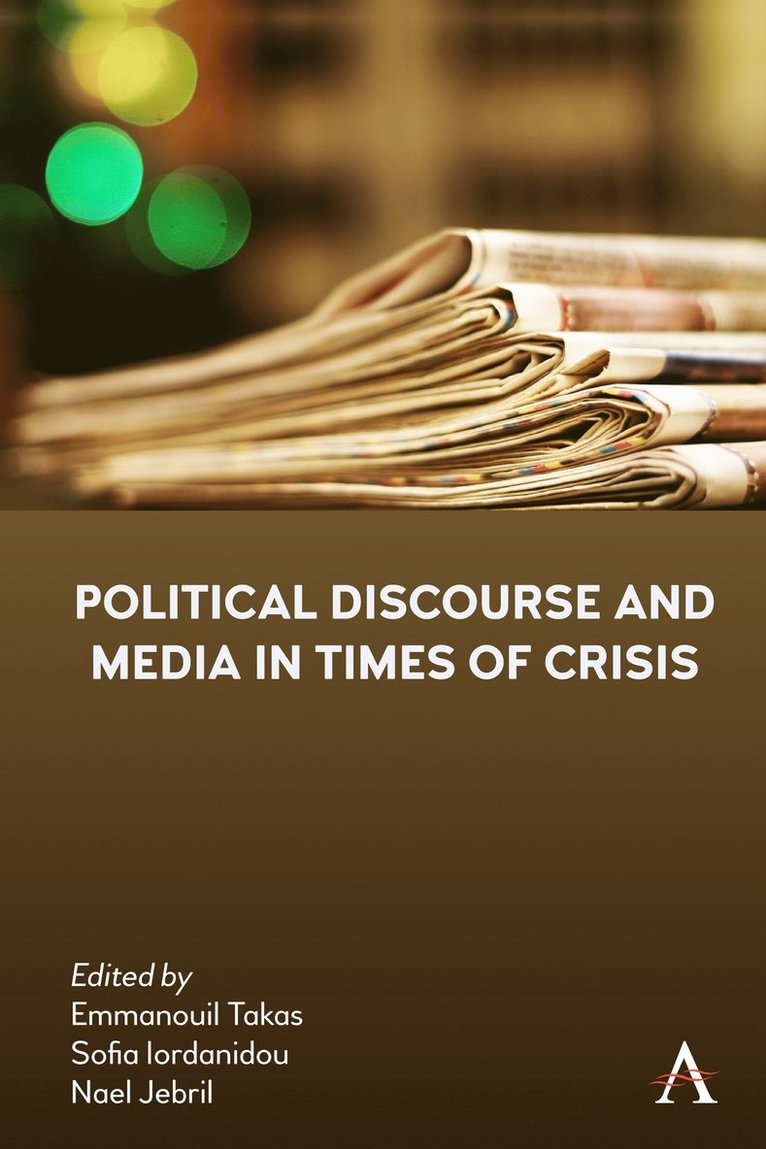
Political Discourse and Media in Times of Crisis
Sofia Iordanidou, Nael Jebril, Emmanouil Takas
Inbunden, 2023
1 609 kr
Hoppa över listan

Du kanske också är intresserad av
Political Discourse and Media in Times of Crisis
Sofia Iordanidou, Nael Jebril, Emmanouil Takas
Inbunden, 2023
1 609 kr
- Nyhet
Del 3
Perceptions of the Press in Nineteenth-Century British Periodicals
E. M. Palmegiano
Häftad, 2013
659 kr