
Del i serien GeoJournal Library
Danube: A River Basin in Transition
Inbunden, Engelska, 1997
1 439 kr
Beställningsvara. Skickas inom 10-15 vardagar. Fri frakt för medlemmar vid köp för minst 249 kr.
Finns i fler format (1)
International river basins first captured my interest while I worked on water resource issues in the US Department of the Interior during the 1970s and '80s. I was especially intrigued with the way the US resolved long and recurring disputes with Mexico over the shared use of the Colorado River. The elements of decision making common to basins throughout the world were present in these transboundary conflicts and their resolution. In 1985 I began collaborating with Dr. Eleonora Sabadell, who was then a specialist in water resources at George Washington University and who is now with the US National Science Foundation, on analyses of several international river basin agreements. The work combined her expertise as a civil engineer and mine as a political scientist and practicing policy analyst. We wrote articles, participated in panel sessions, and in 1986 directed an international workshop at IIASA in Laxenburg, Austria. By no means ready to retire in 1989 I nevertheless began to thinkof leaving Interior to spend full time exploring the challenge, and intrinsic value, of transboundary river basin agreements. I applied for a Fulbright research grant to develop for the Danube River Basin one of the most needed tools for successful management of an international river, a basin-wide information system. My proposal, for nine-months' study at the Bulgarian Academy of Sciences, was filed with the Fulbright Program on September 1, 1989.
Produktinformation
- Utgivningsdatum1997-06-30
- Mått170 x 244 x 21 mm
- Vikt606 g
- FormatInbunden
- SpråkEngelska
- SerieGeoJournal Library
- Antal sidor274
- Upplaga1997
- FörlagKluwer Academic Publishers
- ISBN9780792345589
Tillhör följande kategorier
Hoppa över listan
Mer från samma författare
Del 74
Transboundary Water Resources in the Balkans
Jacques Ganoulis, I.L. Murphy, Mitja Brilly
Inbunden, 2000
1 439 kr
Del 74
Transboundary Water Resources in the Balkans
Jacques Ganoulis, I.L. Murphy, Mitja Brilly
Häftad, 2000
1 439 kr
Del 24
Hoppa över listan




Mer från samma serie
Evaluation in Planning
Nathaniel Lichfield, Angela Barbanente, Dino Borri, Abdul Khakee, Anna Prat
Inbunden, 1998
2 149 kr
Del 17
Geographical Information Systems for Urban and Regional Planning
Henk J. Scholten, John Stillwell
Inbunden, 1990
2 149 kr
Oceanic and Anthropogenic Controls of Life in the Pacific Ocean
V.I. Ilyichev, V.V. Anikiev
Inbunden, 1992
2 149 kr
Perspectives on Planning and Urban Development in Belgium
Ashok K. Dutt, F.J. Costa
Inbunden, 1992
1 439 kr
Del 23
Hoppa över listan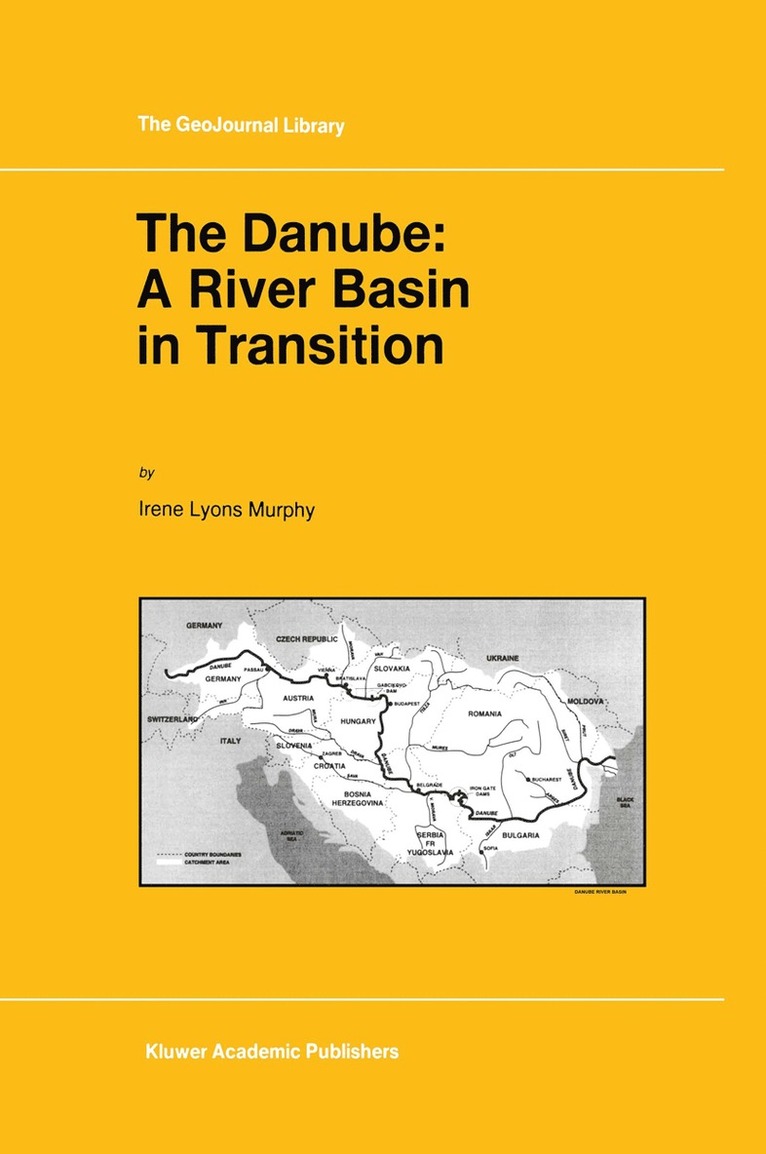





Du kanske också är intresserad av
Del 40
Del 74
Transboundary Water Resources in the Balkans
Jacques Ganoulis, I.L. Murphy, Mitja Brilly
Inbunden, 2000
1 439 kr
Del 24
Del 74
Transboundary Water Resources in the Balkans
Jacques Ganoulis, I.L. Murphy, Mitja Brilly
Häftad, 2000
1 439 kr
- Nyhet
Del 3
- Nyhet
Del 11
- Nyhet
Del 4
Del 3
Del 1