
Del 18
Dancing with the Devil
The Political Economy of Privatization in China
Inbunden, Engelska, 2017
2 819 kr
Beställningsvara. Skickas inom 5-8 vardagar. Fri frakt för medlemmar vid köp för minst 249 kr.
Finns i fler format (1)
From 1978 through the turn of the century, China was transformed from a state-owned economy into a predominantly private economy. This fundamental change took place under the Chinese Communist Party (CCP), which is ideologically mandated and politically predisposed to suppress private ownership. In Dancing with the Devil, Yi-min Lin explains how and why such an ironic and puzzling reality came about. The central thesis is that private ownership became a necessary evil for the CCP because the public sector was increasingly unable to address two essential concerns for regime survival: employment and revenue. Focusing on political actors as a major group of change agents, the book examines how their self-interested behavior led to the decline of public ownership. Demographics and the state's fiscal system provide the analytical coordinates for revealing the changing incentives and constraints faced by political actors and for investigating their responses and strategies. These factors help explain CCP leaders' initial decision to allow limited private economic activities at the outset of reform. They also shed light on the subsequent growth of opportunism in the behavior of lower level officials, which undermined the vitality of public enterprises. Furthermore, they hold a key to understanding the timing of the massive privatization in the late 1990s, as well as its tempo and spread thereafter. Dancing with the Devil illustrates how the driving forces developed and played out in these intertwined episodes of the story. In so doing, it offers new insights into the mechanisms of China's economic transformation and enriches theories of institutional change.
Produktinformation
- Utgivningsdatum2017-06-15
- Mått239 x 160 x 22 mm
- Vikt601 g
- FormatInbunden
- SpråkEngelska
- Antal sidor288
- FörlagOUP USA
- ISBN9780190682828
Tillhör följande kategorier
Hoppa över listan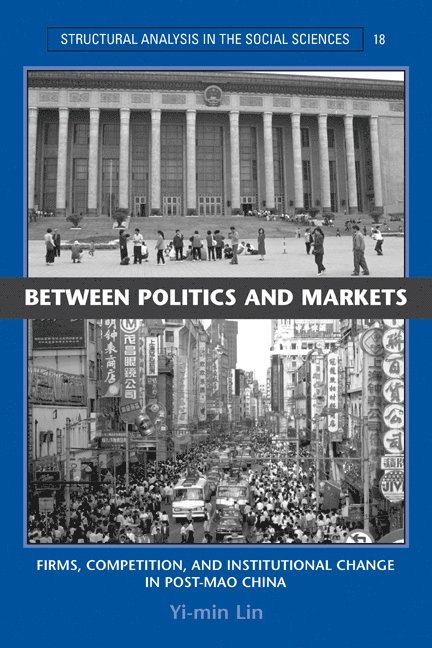
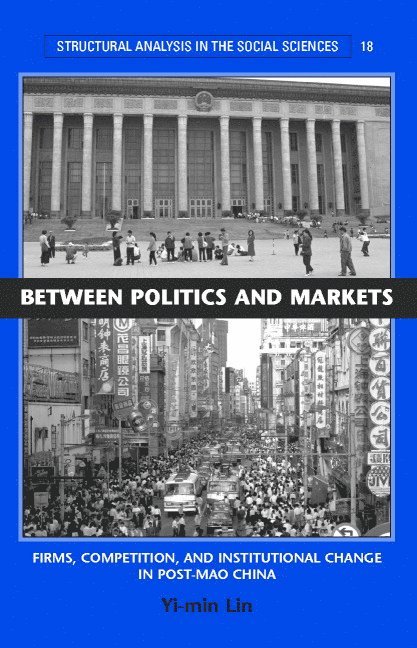

Mer från samma författare
Del 18
Del 2
CORPORATE CHINA: STRUCTURE AND CHANGE - A WORLD SCIENTIFIC REFERENCE FOR ACADEMIC RESEARCHERS AND PRACTITIONERS (IN 4 VOLUMES)
Yi-min Lin, Siqin Liu, Wang Wen, Xinzhuo Huang, Yi-min Lin
Inbunden, 2026
6 549 kr
Hoppa över listan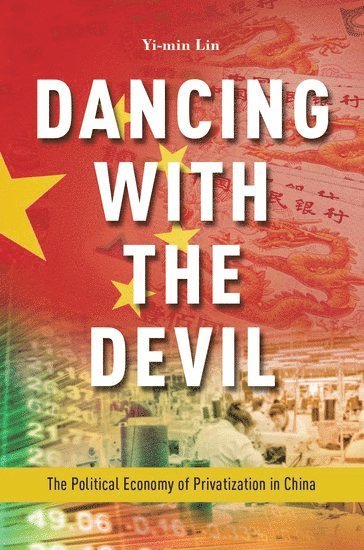





Du kanske också är intresserad av
Del 18
Del 18
Del 2
CORPORATE CHINA: STRUCTURE AND CHANGE - A WORLD SCIENTIFIC REFERENCE FOR ACADEMIC RESEARCHERS AND PRACTITIONERS (IN 4 VOLUMES)
Yi-min Lin, Siqin Liu, Wang Wen, Xinzhuo Huang, Yi-min Lin
Inbunden, 2026
6 549 kr
- Nyhet
Del 3
- Nyhet
Del 11
- Nyhet
Del 4
- Nyhet
Del 6
Del 1
Del 3