
Dancing Across Borders
Danzas Y Bailes Mexicanos
Häftad, Engelska, 2009
549 kr
Beställningsvara. Skickas inom 5-8 vardagar. Fri frakt för medlemmar vid köp för minst 249 kr.
Dancing across Borders: Danzas y Bailes Mexicanos focuses specifically on Mexican dance practices on both sides of the U.S.-Mexico border. The essays explore various types of Mexican popular and traditional dances and address questions of authenticity, aesthetics, identity, interpretation, and research methodologies in dance performance. Contributors include not only noted scholars from a variety of disciplines but also several dance practitioners who reflect on their engagement with dance and reveal subtexts of dance culture. Capturing dance as a living expression, the volume's ethnographic approach highlights the importance of the cultural and social contexts in which dances are practiced. Contributors are Norma E. CantÚ, Susan Cashion, MarÍa Teresa CeseÑa, XÓchitl C. ChÁvez, Adriana Cruz-Manjarrez, RenÉe de la Torre Castellanos, Peter J. GarcÍa, Rudy F. GarcÍa, Chris Goertzen, Martha GonzÁlez, Elisa Diana Huerta, Sydney Hutchinson, Marie "Keta" Miranda, Olga NÁjera-RamÍrez, Shakina Nayfack, Russell RodrÍguez, Brenda M. Romero, Nancy Lee Chalfa Ruyter, JosÉ SÁnchez JimÉnez, and Alberto ZÁrate Rosales.
Produktinformation
- Utgivningsdatum2009-05-26
- Mått152 x 229 x 38 mm
- Vikt626 g
- FormatHäftad
- SpråkEngelska
- Antal sidor472
- FörlagUniversity of Illinois Press
- ISBN9780252076091
Tillhör följande kategorier
Hoppa över listan







Du kanske också är intresserad av
At the Crossroads of Music and Social Justice
Brenda M Romero, Brenda M. Romero, Susan M. Asai, David A. McDonald, Andrew G. Snyder, Katelyn E. Best
Inbunden, 2023
1 349 kr
At the Crossroads of Music and Social Justice
Brenda M Romero, Brenda M. Romero, Susan M. Asai, David A. McDonald, Andrew G. Snyder, Katelyn E. Best
Häftad, 2023
489 kr
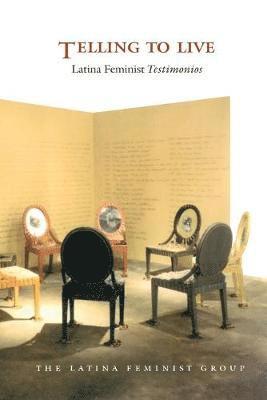
Telling to Live
Latina Feminist Group, Luz del Alba Acevedo, Norma Alarcón, Celia Alvarez, Ruth Behar, Rina Benmayor, Norma E. Cantú, Gloria Holguin Cuadraz, Daisy Cocco de Filippis, Liza Fiol-Matta, Yvette Gisele Flores-Ortiz, Inés Hernández-Ávila, Clara Lomas, Inez López, Aurora Levins Morales, Mirtha F. Quintanales, Eliana Rivero, Caridad Souza, Patricia Zavella
Häftad, 2001
449 kr