
Del i serien Routledge Research in Architectural History
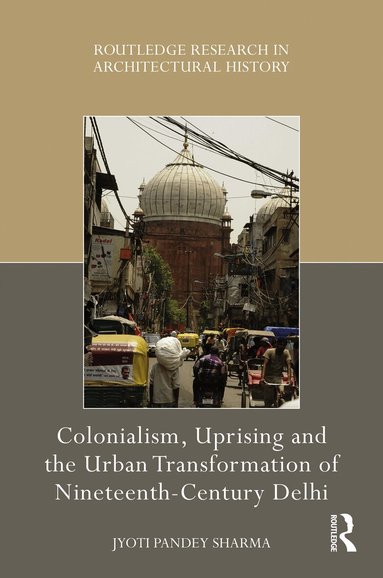
Dahomey’s Royal Architecture
An Earthen Record of Construction, Subjugation, and Reclamation
Häftad, Engelska, 2024
849 kr
Beställningsvara. Skickas inom 10-15 vardagar. Fri frakt för medlemmar vid köp för minst 249 kr.
Finns i fler format (1)
Dahomey’s Royal Architecture examines the West African kingdom of Dahomey, located in present-day Republic of Benin. The book explores the Royal Palace of Dahomey’s relationship to the religious, cultural, and national identity of the pre-colonial Kingdom of Dahomey (c. 1625–1892), colonial Dahomey (1892–1960) and post-colonial Benin (1960–present).The Royal Palace of Dahomey covers more than 108 acres and was surrounded by a wall over two miles long. When the French colonial army arrived in Abomey in 1892, the ruling king set fire to the palace to keep it from falling into enemy hands. Though much of the palace structure was subsequently left to ruin, a portion of it was restored from which the French ruled for a short period. In 1945, the colonial administration transformed part of the palace into a museum, and in 1985 the entire palace was added to UNESCO’s World Heritage list. This book documents the palace’s physical transformations in relation to its changing purposes and explores how the space maintained religious significance despite change. The palace’s construction, destruction, and restorations demonstrate how architecture can be manipulated and transformed according to the agendas of governments or according to the religious and cultural needs of a populace. The palace functions as a historic record by discussing aspects of documentation, revision, language, and interpretation.Covering almost four centuries of Dahomey’s history, this book will be of interest to researchers and students of African art and architecture, religious studies, west African history, and post-colonial studies.
Produktinformation
- Utgivningsdatum2024-11-28
- Mått156 x 234 x 14 mm
- Vikt360 g
- FormatHäftad
- SpråkEngelska
- SerieRoutledge Research in Architectural History
- Antal sidor202
- FörlagTaylor & Francis Ltd
- ISBN9781032285573
Tillhör följande kategorier
Hoppa över listan



Mer från samma serie
Colonialism, Uprising and the Urban Transformation of Nineteenth-Century Delhi
Jyoti Pandey Sharma
Inbunden, 2023
2 869 kr
Colonialism, Uprising and the Urban Transformation of Nineteenth-Century Delhi
Jyoti Pandey Sharma
Häftad, 2024
869 kr
Hoppa över listan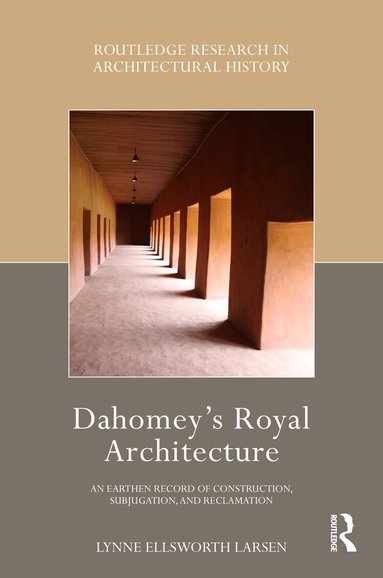


Du kanske också är intresserad av
- Nyhet
Del 3
Colonialism, Uprising and the Urban Transformation of Nineteenth-Century Delhi
Jyoti Pandey Sharma
Inbunden, 2023
2 869 kr
- Nyhet
Del 6