
Cyprus in the 1930s
British Colonial Rule and the Roots of the Cyprus Conflict
Häftad, Engelska, 2020
639 kr
Beställningsvara. Skickas inom 10-15 vardagar. Fri frakt för medlemmar vid köp för minst 249 kr.
Finns i fler format (1)
Why has the unification of Cyprus proved impossible? The existing literature looks to the 1950s, and the formation of EOKA under George Grivas. Here, Alexis Rappas challenges the dominance of that starting point in the current histories of the island, showing that the key to the conflict between the British Empire and Greek Cypriots lies in the disputes of the 1930s. Cyprus in the 1930s charts the history of the island in this period, and details British attempts to impose a homogeneous 'Cypriot' culture onto a diverse and divided population. Community leaders and the hierarchy of the Church, who had functioned as bridges between local interests, were marginalised as Britain attempted to engineer unification through education and social policy. The result was a radicalisation of both Turkish-Cypriot and Greek-Cypriot identity. Based on new primary source material from Britain, Cyprus and Greece, Rappas analyses British state-building and the role of Cypriot ethnicities in the formation of modern Cyprus.
Produktinformation
- Utgivningsdatum2020-03-19
- Mått138 x 214 x 16 mm
- Vikt340 g
- FormatHäftad
- SpråkEngelska
- Antal sidor272
- FörlagBloomsbury Publishing PLC
- ISBN9781350156425
Tillhör följande kategorier
Hoppa över listan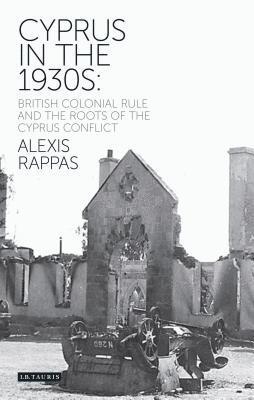







Du kanske också är intresserad av
- Nyhet
Del 3
- Nyhet
Del 11
- Nyhet
Del 4
Del 1
- Nyhet
Del 4
- Nyhet
- Nyhet
Del 6