
Controversies in Monetary Economics
Revised Edition
Inbunden, Engelska, 2003
2 439 kr
Beställningsvara. Skickas inom 5-8 vardagar. Fri frakt för medlemmar vid köp för minst 249 kr.
Finns i fler format (1)
This influential volume, which has been revised and updated for the twenty-first century, includes both new material and more detailed expositions of existing arguments.Although so-called 'real' theories of business cycles and growth are prevalent in contemporary mainstream economics, Controversies in Monetary Economics suggests that those economists who have instinctively focused on monetary factors in explaining macroeconomic behaviour are more genuinely 'realistic'. The author combines an explanation of past and present monetary controversy with practical proposals for the conduct of monetary policy in the contemporary global economy. Several alternative approaches are discussed, ranging from the traditional quantity theory to post Keynesian theories of endogenous money.This insightful book will be of interest to all those concerned with monetary economics and macroeconomics, including academic researchers, graduate and senior undergraduate students - particularly those looking for an alternative to current economic orthodoxy - and historians of economic thought. Practitioners in central banks, international financial institutions, the financial markets and finance ministries will also find this work invaluable.
Produktinformation
- Utgivningsdatum2003-04-28
- Mått156 x 234 x undefined mm
- FormatInbunden
- SpråkEngelska
- FörlagEdward Elgar Publishing Ltd
- ISBN9781840648294
Tillhör följande kategorier
Hoppa över listan


Mer från samma författare
Del 53
Money, Financial Institutions and Macroeconomics
AVI J. Cohen, Avi Cohen, Harald Hagemann, John Smithin
Inbunden, 1997
2 949 kr
economic integration between unequal partners
Theodore Georgakopoulos, Christos C. Paraskevopoulos, John Smithin
Inbunden, 1994
2 979 kr
Hoppa över listan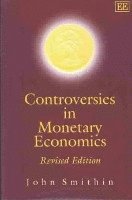

Du kanske också är intresserad av
Del 53
Money, Financial Institutions and Macroeconomics
AVI J. Cohen, Avi Cohen, Harald Hagemann, John Smithin
Inbunden, 1997
2 949 kr
Del 53
Money, Financial Institutions and Macroeconomics
Avi Cohen, Harald Hagemann, John Smithin
Häftad, 2012
3 249 kr