
Constraining Elites in Russia and Indonesia
Political Participation and Regime Survival
Inbunden, Engelska, 2016
2 069 kr
Beställningsvara. Skickas inom 5-8 vardagar. Fri frakt för medlemmar vid köp för minst 249 kr.
Finns i fler format (1)
This is a thought-provoking analysis on why democracy succeeds in some countries but not others, comparing the post-transition experiences of two cases of contemporary democratisation: Russia and Indonesia. Following authoritarian regimes, democracy eroded in Russia but flourished in Indonesia - so confounding dominant theories of democratisation that predicted the opposite outcomes based on their levels of socioeconomic development and histories of statehood. Identifying key behaviours and patterns of political participation as a factor, Lussier interweaves ethnographic interview and quantitative public opinion data to expand our understanding on how mass political participation contributes to a democracy's survival. The integration of both micro- and macro-level data in a single study is one of this project's most significant contributions, and will enhance its appeal to both researchers and instructors.
Produktinformation
- Utgivningsdatum2016-10-13
- Mått152 x 229 x 22 mm
- Vikt660 g
- FormatInbunden
- SpråkEngelska
- Antal sidor332
- FörlagCambridge University Press
- ISBN9781107084377
Tillhör följande kategorier
Hoppa över listan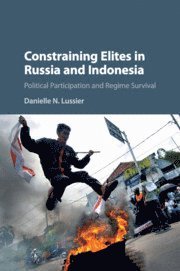









Du kanske också är intresserad av
- Nyhet
Del 3
- Nyhet
- Nyhet
Del 6
- Nyhet
Del 11
Del 1
- Nyhet
- Nyhet
Del 4
- Nyhet
Del 4
- Nyhet
Del 9