
Del i serien Routledge Studies in Fascism and the Far Right
Conservatives and Right Radicals in Interwar Europe
Inbunden, Engelska, 2020
3 029 kr
Skickas . Fri frakt för medlemmar vid köp för minst 249 kr.
Finns i fler format (1)
This book features a broad range of thematic and national case studies which explore the interrelations and confrontations between conservatives and the radical Right in the European and global contexts of the interwar years.It investigates the political, social, cultural, and economic issues that conservatives and radicals tried to address and solve in the aftermaths of the Great War. Conservative forces ended up prevailing over far-right forces in the 1920s, with the notable exception of the Fascist regime in Italy. But over the course of the 1930s, and the ascent of the Nazi regime in Germany, political radicalisation triggered both competition and hybridisation between conservative and right-wing radical forces, with increased power for far-right and fascist movements.The book will be of great interest to students and scholars of politics, history, fascism, and Nazism.
Produktinformation
- Utgivningsdatum2020-12-31
- Mått156 x 234 x 28 mm
- Vikt810 g
- FormatInbunden
- SpråkEngelska
- SerieRoutledge Studies in Fascism and the Far Right
- Antal sidor338
- FörlagTaylor & Francis Ltd
- ISBN9780367225155
Tillhör följande kategorier
Hoppa över listan


Mer från samma serie
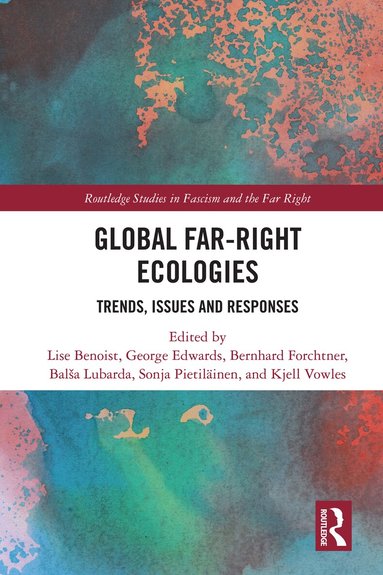
Global Far-Right Ecologies
Lise Benoist, George Edwards, Bernhard Forchtner, Balša Lubarda, Sonja Pietiläinen, Kjell Vowles
Inbunden, 2026
3 279 kr
CasaPound Italia
Caterina Froio, Pietro Castelli Gattinara, Giorgia Bulli, Matteo Albanese
Inbunden, 2020
3 589 kr
Hoppa över listan








Du kanske också är intresserad av
- Nyhet
Del 6
- Nyhet
Del 7
- Nyhet
Del 3
- Nyhet
Del 4
- Nyhet
Del 11
- Nyhet
- Nyhet
- Nyhet
Del 3