
Del i serien Library of Second Temple Studies
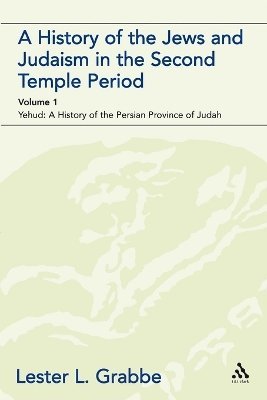
Concept of the Messiah in the Scriptures of Judaism and Christianity
Häftad, Engelska, 2013
729 kr
Beställningsvara. Skickas inom 10-15 vardagar. Fri frakt för medlemmar vid köp för minst 249 kr.
Finns i fler format (1)
For 2000 years Judaism and Christianity have been at odds with one another. The problem at the heart of the division is the concept of messiah. Shirley Lucass looks directly at the concept of messiah from an historical perspective and examines its roots in ancient Jewish literature, and its development within the Christian tradition, aiming not only to trace the biblical and extra-biblical developments of the concept, but to outline a platform for religious dialogue. Lucass begins with a survey of methodological approaches, and then moves on to consider the origins of the messiah concept in ancient near eastern kingship, the 'anointed' in the Second Temple period and the messiah as outlined in the New Testament and in post 70 CE Messianism. Lucass contends that the New Testament concept of messiah is not inconsistent with, nor incompatible with the Jewish antecedent traditions, and it is this conclusion which enables her to present a valuable chapter on the implications of this study for inter-religious dialogue.
Produktinformation
- Utgivningsdatum2013-03-28
- Mått156 x 234 x 14 mm
- Vikt363 g
- FormatHäftad
- SpråkEngelska
- SerieLibrary of Second Temple Studies
- Antal sidor256
- FörlagBloomsbury Publishing PLC
- ISBN9780567153975
Tillhör följande kategorier
Hoppa över listan

Mer från samma serie
Determinism and Petitionary Prayer in John and the Dead Sea Scrolls
Emmanuel O. Tukasi, Lester L. Grabbe
Inbunden, 2008
2 959 kr
Use of Sobriquets in the Qumran Dead Sea Scrolls
Matthew A. Collins, Lester L. Grabbe
Inbunden, 2009
3 149 kr
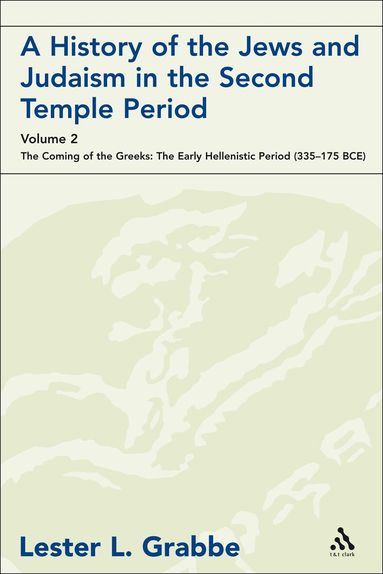
History of the Jews and Judaism in the Second Temple Period, Volume 2
Lester L. Grabbe, Lester L. Grabbe
Inbunden, 2008
3 149 kr
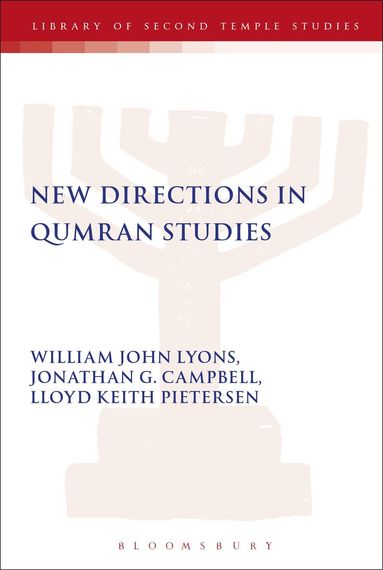
New Directions in Qumran Studies
William John Lyons, Jonathan G. Campbell, Lloyd Keith Pietersen, Lester L. Grabbe
Inbunden, 2005
3 329 kr
History of the Jews and Judaism in the Second Temple Period (vol. 1)
Lester L. Grabbe, Lester L. Grabbe
Häftad, 2006
1 849 kr
Hoppa över listan





Du kanske också är intresserad av
Concept of the Messiah in the Scriptures of Judaism and Christianity
Shirley Lucass, Lester L. Grabbe
Inbunden, 2011
2 589 kr
- Nyhet
Del 3
- Nyhet
- Nyhet
Del 6
- Nyhet
Del 7
- Nyhet
Del 11
- Nyhet
Del 4