
Del i serien Routledge Studies in American Philosophy
Community and Loyalty in American Philosophy
Royce, Sellars, and Rorty
Häftad, Engelska, 2020
919 kr
Beställningsvara. Skickas inom 10-15 vardagar. Fri frakt för medlemmar vid köp för minst 249 kr.
Finns i fler format (1)
American pragmatism has always had at its heart a focus on questions of communities and ethics. This book explores the interrelated work of three thinkers influenced by the pragmatist tradition: Josiah Royce, Wilfrid Sellars, and Richard Rorty. These thinkers’ work spanned the range of twentieth-century philosophy, both historically and conceptually, but all had common concerns about how morality functions and what we can hope for in our interactions with others. Steven Miller argues that Royce, Sellars, and Rorty form a traditional line of inheritance, with the thought of each developing upon the best insights of the ones prior. Furthermore, he shows how three divergent views about the function, possibilities, and limits of moral community coalesce into a key narrative about how best we can work with and for other people, as we strive to come to think of widely different others as somehow being morally considerable as "one of us."
Produktinformation
- Utgivningsdatum2020-09-30
- Mått152 x 229 x undefined mm
- Vikt453 g
- FormatHäftad
- SpråkEngelska
- SerieRoutledge Studies in American Philosophy
- Antal sidor122
- FörlagTaylor & Francis Ltd
- ISBN9780367666811
Tillhör följande kategorier
Hoppa över listan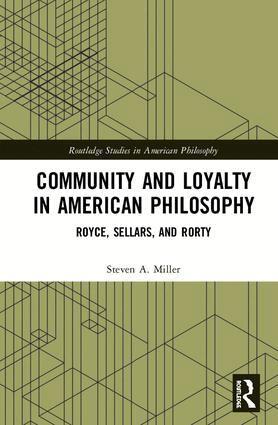





Du kanske också är intresserad av
- Nyhet
Del 7
- Nyhet
Del 11
- Nyhet
Del 4
- Nyhet
Del 6
- Nyhet
Del 3
- Nyhet
- Nyhet
- Nyhet
Del 3