
Del i serien Early American Places
Colonization and Its Discontents
Emancipation, Emigration, and Antislavery in Antebellum Pennsylvania
Inbunden, Engelska, 2011
1 179 kr
Beställningsvara. Skickas inom 10-15 vardagar. Fri frakt för medlemmar vid köp för minst 249 kr.
Finns i fler format (1)
Pennsylvania contained the largest concentration of early America's abolitionist leaders and organizations, making it a necessary and illustrative stage from which to understand how national conversations about the place of free blacks in early America originated and evolved, and, importantly, the role that colonization—supporting the emigration of free and emancipated blacks to Africa—played in national and international antislavery movements. Beverly C. Tomek's meticulous exploration of the archives of the American Colonization Society, Pennsylvania's abolitionist societies, and colonizationist leaders (both black and white) enables her to boldly and innovatively demonstrate that, in Philadelphia at least, the American Colonization Society often worked closely with other antislavery groups to further the goals of the abolitionist movement.In Colonization and Its Discontents, Tomek brings a much-needed examination of the complexity of the colonization movement by describing in depth the difference between those who supported colonization for political and social reasons and those who supported it for religious and humanitarian reasons. Finally, she puts the black perspective on emigration into the broader picture instead of treating black nationalism as an isolated phenomenon and examines its role in influencing the black abolitionist agenda.
Produktinformation
- Utgivningsdatum2011-07-18
- Mått153 x 229 x 22 mm
- Vikt612 g
- FormatInbunden
- SpråkEngelska
- SerieEarly American Places
- Antal sidor304
- FörlagNew York University Press
- ISBN9780814783481
Tillhör följande kategorier
Hoppa över listan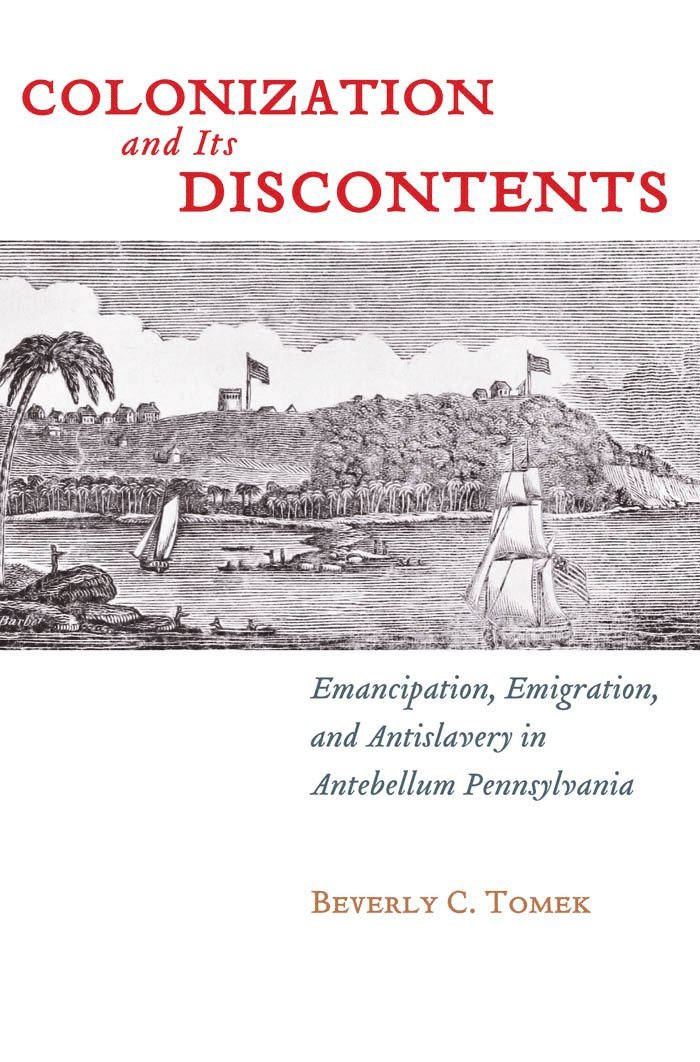







Du kanske också är intresserad av
- Nyhet
Del 11
- Nyhet
Del 3
- Nyhet
Del 4
- Nyhet
Del 3
Del 1
Del 3
Del 2
- Nyhet
Del 6