
Del i serien Modern History of Politics and Violence
Colin Jordan and Britain's Neo-Nazi Movement
Hitler's Echo
Inbunden, Engelska, 2016
2 619 kr
Beställningsvara. Skickas inom 10-15 vardagar. Fri frakt för medlemmar vid köp för minst 249 kr.
Finns i fler format (1)
Colin Jordan and Britain's Neo-Nazi Movement casts fresh light on one of post-war Britain’s most notorious fascists, using him to examine the contemporary history of the extreme right. The book explores the wide range of neo-Nazi groups that Colin Jordan led, contributed to and inspired throughout his time as Britain's foremost promoter of Nazi ideology.In a period stretching from the close of the Second World War right up to the 2000s, Colin Jordan became politically engaged with a multitude of Nazi-inspired extremist groups, either as leader or as a key protagonist. Moreover, Jordan also developed critical relationships with larger, competitor extreme-right organisations and parties, including the Mosley’s Union Movement, the National Front and the most recent incarnation of the British National Party. He fostered a number of transnational links throughout his years of activism as well, especially with American neo-Nazis. In recent years, his writings and somewhat idealised profile have been adopted by more contemporary extremist organisations, such as the British People's Party and a rekindled British Movement, who look to Jordan as an inspirational figure for their own reconfigurations of a National Socialist agenda.By examining this history, drawing on a wide range of fresh primary sources, Colin Jordan and Britain's Neo-Nazi Movement offers a new analysis on the nature and workings of Nazi-inspired political extremism in post-war Britain. It is an important study for anyone interested in the history of fascism, extreme ideologies and the political and social history of Britain since the Second World War.
Produktinformation
- Utgivningsdatum2016-12-15
- Mått160 x 236 x 22 mm
- Vikt580 g
- FormatInbunden
- SpråkEngelska
- SerieModern History of Politics and Violence
- Antal sidor304
- FörlagBloomsbury Publishing PLC
- ISBN9781472509314
Tillhör följande kategorier
Hoppa över listan








Mer från samma serie
Survivor Transitional Narratives of Nazi-Era Destruction
Dennis B. Klein, Paul Jackson
Inbunden, 2017
2 429 kr
Transnational Fascism in the Twentieth Century
Matteo Albanese, Pablo del Hierro, Paul Jackson
Häftad, 2018
679 kr
Survivor Transitional Narratives of Nazi-Era Destruction
Dennis B. Klein, Paul Jackson
Häftad, 2019
659 kr
Traces of Aerial Bombing in Berlin
Eloise Florence, Paul Jackson, Raul Cârstocea
Inbunden, 2024
1 679 kr
Nationalism From Below in the East European and Soviet Borderlands
Petru Negura, Andrei Cusco, Svetlana Suveica
Inbunden, 2025
1 589 kr
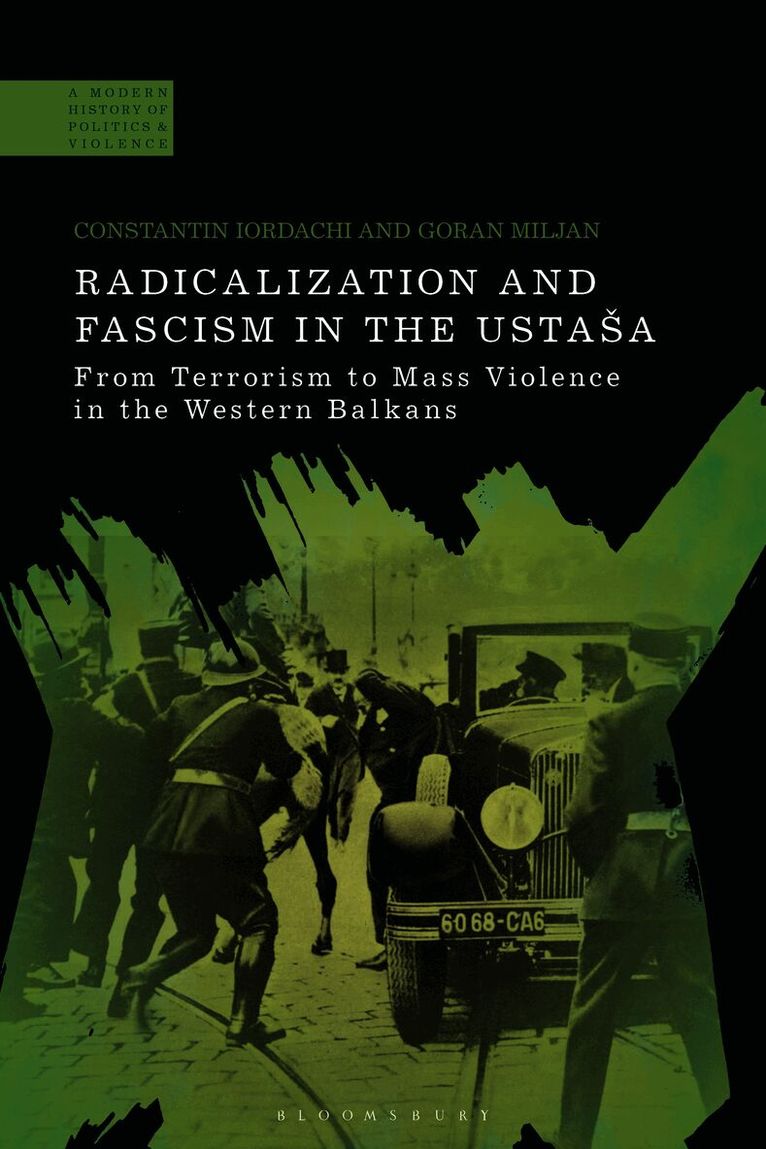
Radicalization and Fascism in the Ustaša
Constantin Iordachi, Goran Miljan, Paul Jackson
Inbunden, 2026
1 589 kr
Hoppa över listan





Du kanske också är intresserad av
- Nyhet
Del 3
Traces of Aerial Bombing in Berlin
Eloise Florence, Paul Jackson, Raul Cârstocea
Inbunden, 2024
1 679 kr
Transnational Fascism in the Twentieth Century
Matteo Albanese, Pablo del Hierro, Paul Jackson
Häftad, 2018
679 kr
- Nyhet
Del 6
Radicalization and Fascism in the Ustaša
Constantin Iordachi, Goran Miljan, Paul Jackson
Inbunden, 2026
1 589 kr
British Fascist Antisemitism and Jewish Responses, 1932-40
Daniel Tilles, Paul Jackson
Inbunden, 2014
2 619 kr