
Cognition-Based Biology
Cellular Sentience, Communication, and Symbiosis
Inbunden, Engelska, 2026
2 149 kr
Beställningsvara. Skickas inom 10-15 vardagar. Fri frakt för medlemmar vid köp för minst 249 kr.
Cognition-Based Biology (CBB) is a radical restructuring of biological and evolutionary development as a comprehensive alternative narrative to 20th century Neo-Darwinism and its critical deficiencies. Our work substantiates that cells are conscious agents and have been since life's origin. Consequently, biology represents a holistic continuum of intelligent natural learning, propelled by the coordinated interactions among cognitive agents at every scale and extending uninterruptedly for billions of years. This unification is possible because the co-authors are the originators of each of the underlying conceptual facets that will underpin this volume. Consequently, we are able to combine our peer-accepted ideas into a unique synthesis that recasts biological and evolutionary development into a modern frame.By combining multiple unique biological concepts into a single, comprehensive evolutionary narrative, this book articulates an entirely new approach to biology, which will become the foundational work in the field in the 21st century. Biology urgently requires this overhaul.
Produktinformation
- Utgivningsdatum2026-07-03
- Mått155 x 235 x 26 mm
- Vikt709 g
- FormatInbunden
- SpråkEngelska
- Antal sidor326
- FörlagSpringer Nature Switzerland AG
- ISBN9783032237781
Tillhör följande kategorier
Hoppa över listan



Mer från samma författare
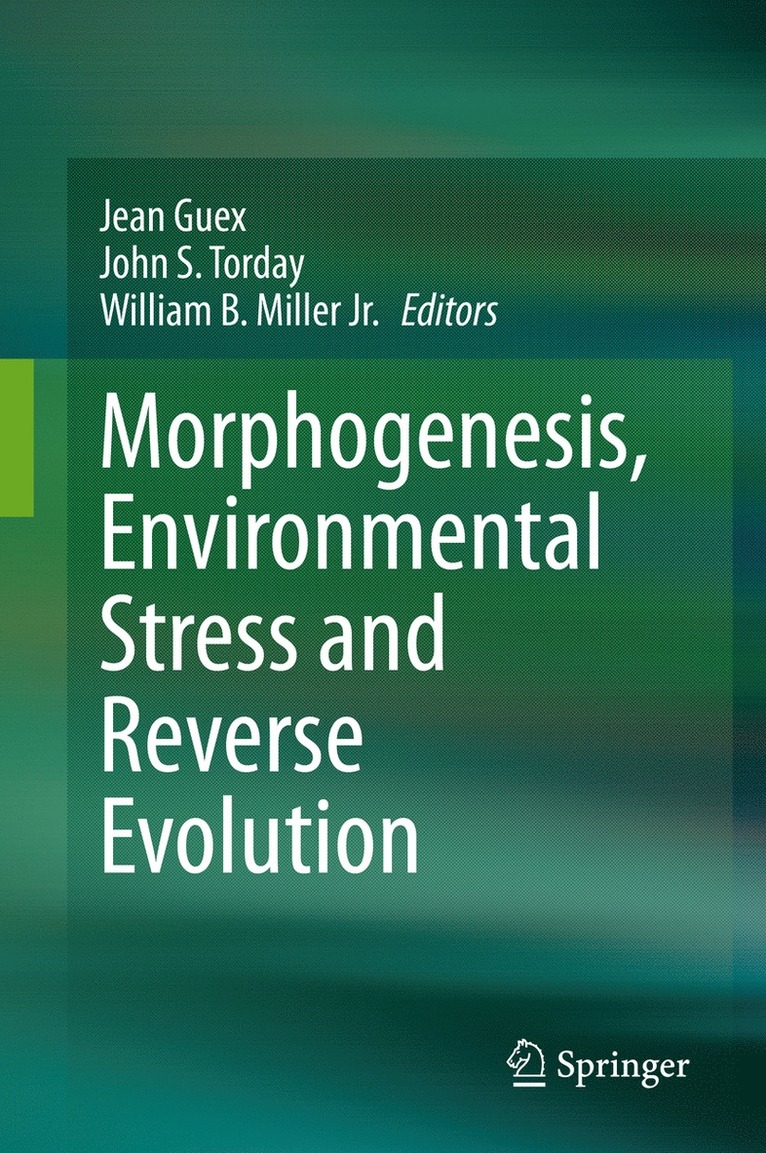
Morphogenesis, Environmental Stress and Reverse Evolution
Jean Guex, John S. Torday, William B. Miller Jr.
Inbunden, 2020
2 869 kr
Morphogenesis, Environmental Stress and Reverse Evolution
Jean Guex, John S. Torday, William B. Miller Jr.
Häftad, 2021
2 869 kr
Hoppa över listan
Du kanske också är intresserad av
Del 19
Morphogenesis, Environmental Stress and Reverse Evolution
Jean Guex, John S. Torday, William B. Miller Jr.
Häftad, 2021
2 869 kr
Morphogenesis, Environmental Stress and Reverse Evolution
Jean Guex, John S. Torday, William B. Miller Jr.
Inbunden, 2020
2 869 kr