
Del i serien Literacy, Language and Learning
Closing the Gap
English Educators Address the Tensions Between Teacher Preparation and Teaching Writing in Secondary Schools
Häftad, Engelska, 2007
719 kr
Beställningsvara. Skickas inom 5-8 vardagar. Fri frakt för medlemmar vid köp för minst 249 kr.
Finns i fler format (3)
Without contraries there is no progression. ---William BlakeThis is a book about reality and hope. Its chapters reframe the concept of gap, acknowledging distances (for example, acknowledging old insights and theory while also honoring teacher discovery). However, it refuses to bow under the weight of these challenges. Its contributors focus, instead on how to overcome acknowledged inadequacies in learning how to teach writing as well as how to practice principled literacy instruction. These contributors see gaps not as unbridgeable chasms, but rather as opportunities to educate their students to use writing to understand the broader context of their education and pre-service candidates to adapt curriculum creatively.Contributors include new and seasoned secondary school teachers, graduate students, and university faculty who together remind us of “old insights needing to be passed along” (Villanueva) and show us new practices that challenge the conventions of the status quo and promote social justice. To close the gaps, in short, they demonstrate how rhetoric and truth are intertwined. In a time when too many children continue to be left behind, this book should be required reading for all literacy teachers because it is in our continued willingness to learn from each other that hope resides.
Produktinformation
- Utgivningsdatum2007-08-14
- Mått156 x 234 x 11 mm
- Vikt289 g
- FormatHäftad
- SpråkEngelska
- SerieLiteracy, Language and Learning
- Antal sidor200
- FörlagEmerald Publishing Inc
- ISBN9781593117818
Tillhör följande kategorier
Hoppa över listan


Mer från samma serie
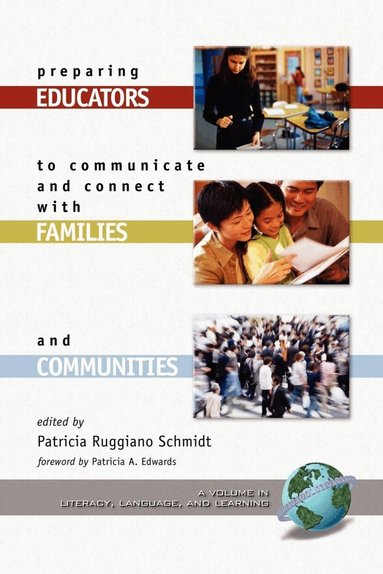
Preparing Educators to Communicate and Connect with Families and Communities
Patricia Ruggiano Schmidt
Häftad, 2005
719 kr
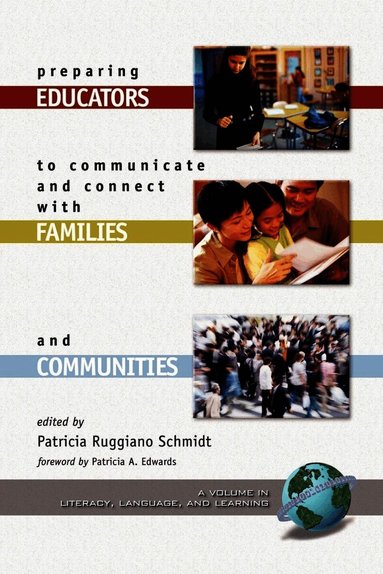
Preparing Educators to Communicate and Connect with Families and Communities
Patricia Ruggiano Schmidt
Inbunden, 2005
1 339 kr
ABC's of Cultural Understanding and Communication
Patricia Ruggiano Schmidt, Claudia Finkbeiner
Häftad, 2006
809 kr
ABC's of Cultural Understanding and Communication
Patricia Ruggiano Schmidt, Claudia Finkbeiner
Inbunden, 2006
1 429 kr
African American Middle-Income Parents
Ethel Swindell Robinson, Patricia Ruggiano Schmidt
Häftad, 2007
629 kr
African American Middle-Income Parents
Ethel Swindell Robinson, Patricia Ruggiano Schmidt
Inbunden, 2007
1 159 kr
Hoppa över listan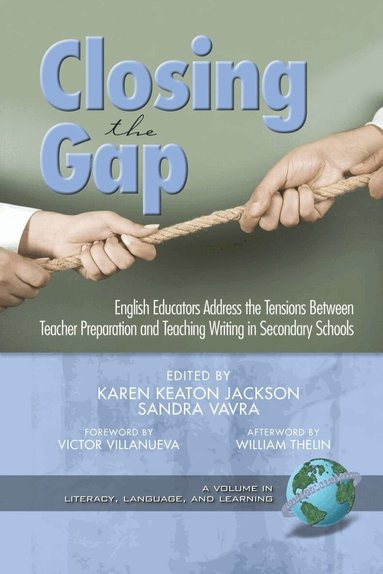



Du kanske också är intresserad av
Closing the Gap
Karen Keaton Jackson, Sandra A. Vavra, Victor Villanueva, William Thelin
Inbunden, 2007
1 339 kr
Cross-Talk in Comp Theory: A Reader, 4th Edition
Kristin L. Arola, Victor Villanueva
Häftad, 2024
889 kr
Language Diversity in the Classroom
Victor Villanueva, Geneva Smitherman, Robert Brooke
Häftad, 2003
539 kr