
Claude Chabrol's Aesthetics of Opacity
Häftad, Engelska, 2019
479 kr
Beställningsvara. Skickas inom 7-10 vardagar. Fri frakt för medlemmar vid köp för minst 249 kr.
Finns i fler format (1)
Claude Chabrol's cinema is generally associated with a specific type of psychological thriller, one set in the French provinces and fascinated with murder, incest, fragmented families, unstable spaces and inscrutable female characters. But Chabrol's films are both deceptively accessible and deeply reflexive, and in this innovative reappraisal of his filmography Catherine Dousteyssier-Khoze explores the Chabrol who was influenced by Balzac, Magritte and Stanley Kubrick. Bringing to the fore Chabrol’s ‘aesthetic of opacity’, the book deconstructs the apparent clarity and comfort of his chosen genre, encouraging the viewer to reflect on the relationship between illusion and reality, and the status of the film image itself.
Produktinformation
- Utgivningsdatum2019-05-13
- Mått156 x 234 x 11 mm
- Vikt312 g
- FormatHäftad
- SpråkEngelska
- Antal sidor200
- FörlagEdinburgh University Press
- ISBN9781474431866
Hoppa över listan
Mer från samma författare
Del 55
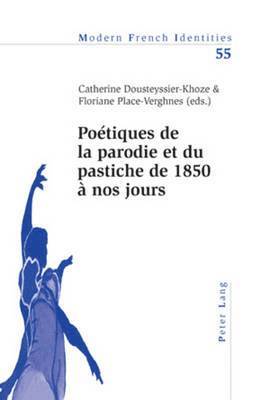
Poétiques de la parodie et du pastiche de 1850 à nos jours
Catherine Dousteyssier-Khoze, Floriane Place-Verghnes
Häftad, 2006
2 169 kr
Hoppa över listan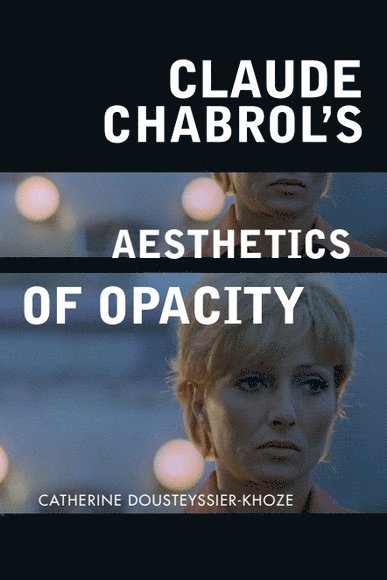


Du kanske också är intresserad av
Claude Chabrol's Aesthetics of Opacity
Catherine Dousteyssier-Khoze, Catherine Dousteyssier-Khoze
Inbunden, 2017
2 619 kr
Del 55
Poétiques de la parodie et du pastiche de 1850 à nos jours
Catherine Dousteyssier-Khoze, Floriane Place-Verghnes
Häftad, 2006
2 169 kr
- Nyhet
Del 3
- Nyhet
Del 6
- Nyhet
- Nyhet
Del 7
- Nyhet
Del 11
- Nyhet
Del 1