
Del i serien Architext
City Halls and Civic Materialism
Towards a Global History of Urban Public Space
Inbunden, Engelska, 2014
3 379 kr
Beställningsvara. Skickas inom 10-15 vardagar. Fri frakt för medlemmar vid köp för minst 249 kr.
The town hall or city hall as a place of local governance is historically related to the founding of cities in medieval Europe. As the space of representative civic authority it aimed to set the terms of public space and engagement with the citizenry. In subsequent centuries, as the idea and built form travelled beyond Europe to become an established institution across the globe, the parameters of civic representation changed and the town hall was forced to negotiate new notions of urbanism and public space. City Halls and Civic Materialism: Towards a Global History of Urban Public Space utilizes the town hall in its global historical incarnations as bases to probe these changing ideas of urban public space. The essays in this volume provide an analysis of the architecture, iconography, and spatial relations that constitute the town hall to explore its historical ability to accommodate the "public" in different political and social contexts, in Europe, Asia, Australia, Africa and the Americas, as the relation between citizens and civic authority had to be revisited with the universal franchise, under fascism, after the devastation of the world wars, decolonization, and most recently, with the neo-liberal restructuring of cities.As a global phenomenon, the town hall challenges the idea that nationalism, imperialism, democracy, the idea of citizenship – concepts that frame the relation between the individual and the body politic -- travel the globe in modular forms, or in predictable trajectories from the West to East, North to South. Collectively the essays argue that if the town hall has historically been connected with the articulation of bourgeois civil society, then the town hall as a global spatial type -- architectural space, urban monument, and space of governance -- holds a mirror to the promise and limits of civil society.
Produktinformation
- Utgivningsdatum2014-03-10
- Mått174 x 246 x 21 mm
- Vikt770 g
- FormatInbunden
- SpråkEngelska
- SerieArchitext
- Antal sidor332
- FörlagTaylor & Francis Ltd
- ISBN9780415819008
Tillhör följande kategorier
Hoppa över listan
Mer från samma författare
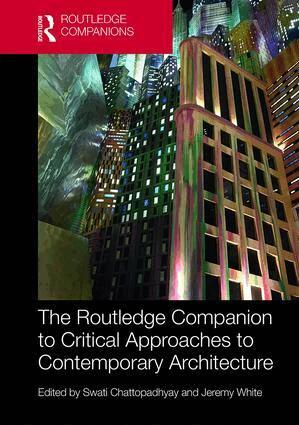
Routledge Companion to Critical Approaches to Contemporary Architecture
Swati Chattopadhyay, Jeremy White
Häftad, 2021
639 kr
Routledge Companion to Critical Approaches to Contemporary Architecture
Swati Chattopadhyay, Jeremy White
Inbunden, 2019
5 099 kr
Hoppa över listan
Mer från samma serie
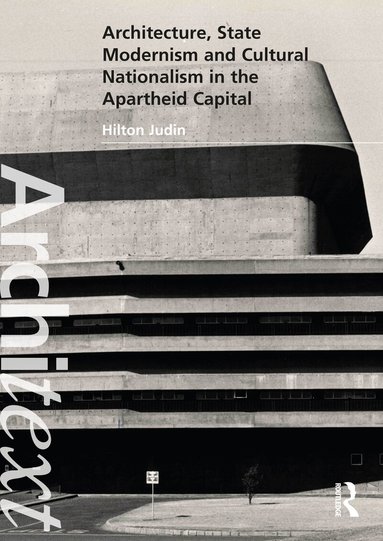
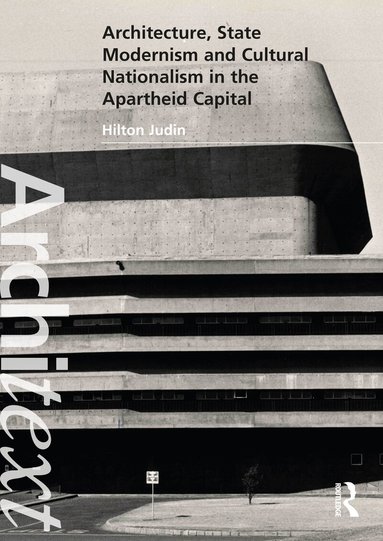
Architecture, State Modernism and Cultural Nationalism in the Apartheid Capital
Hilton Judin
Inbunden, 2021
3 379 kr
Architecture, State Modernism and Cultural Nationalism in the Apartheid Capital
Hilton Judin
Häftad, 2021
869 kr
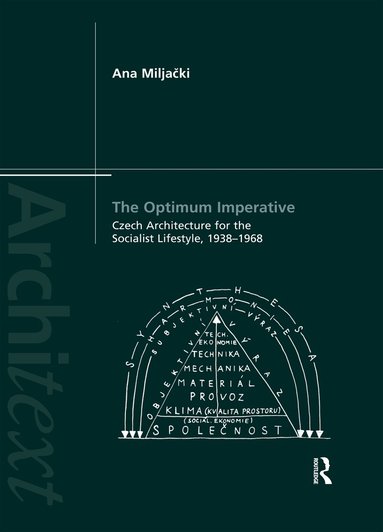
Optimum Imperative: Czech Architecture for the Socialist Lifestyle, 1938–1968
Ana Miljacki
Häftad, 2020
969 kr
Hoppa över listan

Du kanske också är intresserad av
Routledge Companion to Critical Approaches to Contemporary Architecture
Swati Chattopadhyay, Jeremy White
Häftad, 2021
639 kr
Routledge Companion to Critical Approaches to Contemporary Architecture
Swati Chattopadhyay, Jeremy White
Inbunden, 2019
5 099 kr