
Cinema, Emergence, and the Films of Satyajit Ray
Inbunden, Engelska, 2010
1 929 kr
Beställningsvara. Skickas inom 3-6 vardagar. Fri frakt för medlemmar vid köp för minst 249 kr.
Finns i fler format (1)
Although revered as one of the world's great filmmakers, the Indian director Satyajit Ray is described either in narrowly nationalistic terms or as an artist whose critique of modernity is largely derived from European ideas. Rarely is he seen as an influential modernist in his own right whose contributions to world cinema remain unsurpassed. In this benchmark study, Keya Ganguly situates Ray's work within the internationalist spirit of the twentieth century, arguing that his film experiments revive the category of political or 'committed' art. She suggests that in their depictions of Indian life, Ray's films intimate the sense of a radical future and document the capacity of the image to conceptualize a different world glimpsed in the remnants of a disappearing past.
Produktinformation
- Utgivningsdatum2010-06-08
- Mått152 x 229 x 20 mm
- Vikt499 g
- FormatInbunden
- SpråkEngelska
- Antal sidor274
- FörlagUniversity of California Press
- ISBN9780520262164
Hoppa över listan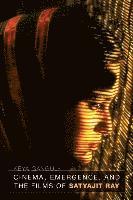






Du kanske också är intresserad av
- Bokrea
- Bokrea
- Bokrea
- Bokrea
Del 2
- Bokrea
Del 1
- Bokrea
Del 1
- Bokrea
Del 3