
Cinema and Secularism
Häftad, Engelska, 2025
539 kr
Beställningsvara. Skickas inom 10-15 vardagar. Fri frakt för medlemmar vid köp för minst 249 kr.
Finns i fler format (1)
Cinema and Secularism is the first collection to make the relationship between cinema and secularism thematic, utilizing a number of different methodological approaches to examine their identification and differentiation across film theory, film aesthetics, film history, and throughout global cinema.The emergence of moving images and the history of cinema historically coincide with the emergence of secularism as a concept and discourse. More than historically coinciding, however, cinema and secularism would seem to have—and many contemporary theorists and critics seem to assume—a more intrinsic, almost ontological connection to each other. While early film theorists and critics explicitly addressed questions about secularism, religion, and cinema, once the study of film was professionalized and secularized in the Western academy in both film studies and religious studies, explicit and critical attention to the relationship between cinema and secularism rapidly declined. Indeed, if one canvases film scholarship today, one will find barely any works dedicated to thinking critically about the relationship between cinema and secularism. Extending the recent “secular turn” in the humanities and social sciences, Cinema and Secularism provokes critical reflection on its titular concepts. Making contributions to theory, philosophy, criticism, and history, the chapters in this pioneering volume collectively interrogate the assumption that cinema is secular, how secularism is conceived and related to cinema differently in different film cultures, and whether the world is disenchanted or enchanted in cinema. Coming from intellectually diverse backgrounds in film studies, religious studies, and philosophy, the interdisciplinary contributors to this book cover films and traditions of thought from America, Europe, Africa, the Middle East, South Asia, and East Asia. In these ways, Cinema and Secularism opens new areas of inquiry in the study of film and contributes to the ongoing interrogation of secularism more broadly.
Produktinformation
- Utgivningsdatum2025-07-24
- Mått150 x 228 x 18 mm
- Vikt420 g
- FormatHäftad
- SpråkEngelska
- Antal sidor288
- FörlagBloomsbury Publishing Plc
- ISBN9781501388842
Tillhör följande kategorier
Hoppa över listan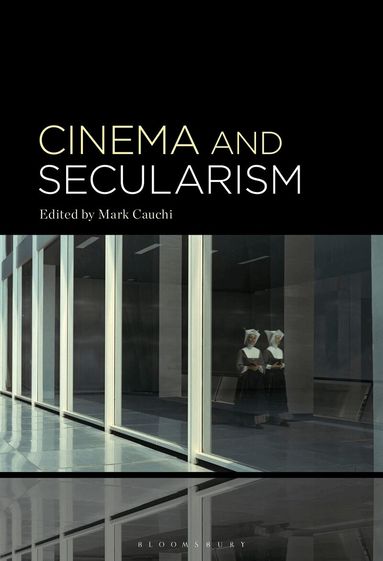






Du kanske också är intresserad av
- Nyhet
Del 6
- Nyhet
Del 11
- Nyhet
Del 3
- Nyhet
- Nyhet
Del 7
- Nyhet
Del 4
- Nyhet