
Chinese Workers in Comparative Perspective
Häftad, Engelska, 2015
479 kr
Beställningsvara. Skickas inom 5-8 vardagar. Fri frakt för medlemmar vid köp för minst 249 kr.
Finns i fler format (1)
As the "world's factory" China exerts an enormous pressure on workers around the world. Many nations have had to adjust to a new global political and economic reality, and so has China. Its workers and its official trade union federation have had to contend with rapid changes in industrial relations. Anita Chan argues that Chinese labor is too often viewed from a prism of exceptionalism and too rarely examined comparatively, even though valuable insights can be derived by analyzing China's workforce and labor relations side by side with the systems of other nations. The contributors to Chinese Workers in Comparative Perspective compare labor issues in China with those in the United States, Australia, Japan, India, Pakistan, Germany, Russia, Vietnam, and Taiwan. They also draw contrasts among different types of workplaces within China. The chapters address labor regimes and standards, describe efforts to reshape industrial relations to improve the circumstances of workers, and compare historical and structural developments in China and other industrial relations systems.
Produktinformation
- Utgivningsdatum2015-05-21
- Mått155 x 235 x 18 mm
- Vikt454 g
- FormatHäftad
- SpråkEngelska
- Antal sidor296
- FörlagCornell University Press
- ISBN9780801479939
Tillhör följande kategorier
Hoppa över listan








Mer från samma författare
On Socialist Democracy and the Chinese Legal System
Anita Chan, Stanley Rosen, Jonathan Unger
Inbunden, 1985
3 299 kr
On Socialist Democracy and the Chinese Legal System
Anita Chan, Stanley Rosen, Jonathan Unger
Häftad, 1985
739 kr
On Socialist Democracy and the Chinese Legal System
Anita Chan, Stanley Rosen, Jonathan Unger
Inbunden, 2016
3 279 kr
On Socialist Democracy and the Chinese Legal System
Anita Chan, Stanley Rosen, Jonathan Unger
Häftad, 2018
809 kr
Hoppa över listan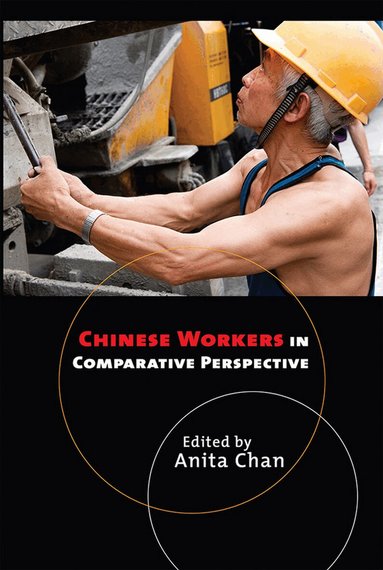

Du kanske också är intresserad av
On Socialist Democracy and the Chinese Legal System
Anita Chan, Stanley Rosen, Jonathan Unger
Häftad, 1985
739 kr
On Socialist Democracy and the Chinese Legal System
Anita Chan, Stanley Rosen, Jonathan Unger
Inbunden, 2016
3 279 kr
On Socialist Democracy and the Chinese Legal System
Anita Chan, Stanley Rosen, Jonathan Unger
Häftad, 2018
809 kr