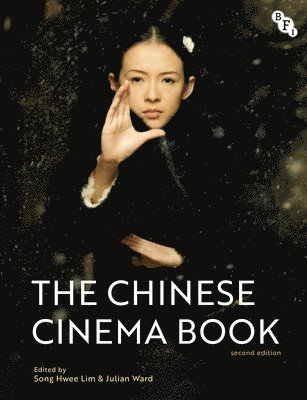
Chinese Cinema Book
Häftad, Engelska, 2020
Av Song Hwee Lim, Julian Ward, Song Hwee (The Chinese University of Hong Kong) Lim, UK) Ward, Julian (University of Edinburgh
819 kr
Produktinformation
- Utgivningsdatum2020-05-14
- Mått189 x 246 x 13 mm
- Vikt770 g
- FormatHäftad
- SpråkEngelska
- Antal sidor336
- Upplaga2
- FörlagBloomsbury Publishing PLC
- ISBN9781911239536
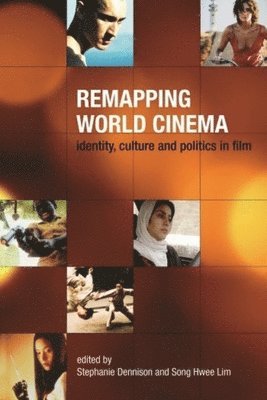
Song Hwee Lim is a professor in the Department of Cultural and Religious Studies at The Chinese University of Hong Kong (CUHK), China. He is an Honorary Research Fellow at the University of Exeter, UK.Lim is the author of Celluloid Comrades: Representations of Male Homosexuality in Contemporary Chinese Cinemas (2006), and Tsai Ming-liang and a Cinema of Slowness (2014). He is the co-editor of the first edition of The Chinese Cinema Book (BFI, 2011) and of Remapping World Cinema: Identity, Culture and Politics in Film (2006), and a founding editor of the peer-reviewed Journal of Chinese Cinemas as well as being the Principal Investigator of an international networks project “Chinese Cinemas in the 21st Century: Production, Consumption, Imagination” funded by the Leverhulme Trust (UK) between 2012 and 2013. He has held visiting fellowships at Academia Sinica (Taiwan), Free University Berlin, National Chiao Tung University (Taiwan), and National University of Singapore, and has delivered keynote lectures in Australia, Britain and China.Julian Ward is a senior lecturer in Chinese in the department of Asian Studies at the University of Edinburgh, UK. He is an associate editor of the Journal of Chinese Cinemas, co-author of The Rough Guide to Mandarin Chinese (2006) and co-editor of the first edition of The Chinese Cinema Book (BFI, 2011).
- Introduction“The Coming of Age of Chinese Cinemas Studies” Song Hwee Lim, Chinese University of Hong Kong, China, and Julian Ward, University of Edinburgh, UKPreface to Revised EditionSong Hwee Lim, Chinese University of Hong Kong, China, and Julian Ward, University of Edinburgh, UKSection I: Territories, Trajectories, HistoriographiesChapter 1, “Transnational Chinese Film Studies”Chris Berry, King’s College London, UKChapter 2, “National Cinema as Translocal Practice: reflections on Chinese LFI Historiography”Yingjin Zhang, University of California, San Diego, USAChapter 3, “Cinemas of the Chinese Diaspora” Gina Marchetti, Hong Kong University, ChinaChapter 4, “Six Chinese Cinemas in Search of a Historiography”Song Hwee LimSection II: Early Cinema to 1949 Chapter 5, “Shadow Magic and the Lost Decades in Chinese Film History”Zhiwei Xiao, California State University, San Marcos, and Xuelei Huang, University of Edinburgh, UKChapter 6, “The Making of a National Cinema: Shanghai Cinema of the 1930s”Laikwan Pang, The Chinese University of Hong Kong, ChinaChapter 7, “Wartime Cinema: Reconfiguration and Border Navigation”Yiman Wang, University of California, Santa Cruz, USAChapter 8, “Chinese Filmmaking on the eve of the Communist Revolution”Paul Pickowicz, University of California, San Diego, USASection III: The Forgotten Period – 1949-1980 Chapter 9, “The Remodelling of a National Cinema: Chinese film of the Seventeen Years (1949-1966)”Julian Ward, University of Edinburgh, UKChapter 10, “Liminal Cinema: PRC Film Genres of the New Era”Michael Berry, University of California, Los Angeles, USAChapter 11, “Healthy Realism in Taiwan, 1964-1980: Film Style, Cultural Policies and Mandarin Cinema”Guo-Juin Hong, Duke University, USAChapter 12, “The Hong Kong Cantonese Cinema: Emergence, Development and Decline”Stephen Teo, Nanyang Technological University, SingaporeSection IV: The New Waves Chapter 13, “The Fifth Generation: A Re-assessment”Wendy Larson, University of Oregon, USAChapter 14, “Taiwan New Cinema Movement and Its Legacy”Tonglin Lu, University of Montreal, CanadaChapter 15, “The Hong Kong New Wave: A Critical Reappraisal”Vivian P. Y. Lee, City University of Hong Kong, ChinaChapter 16, “Transnational Chinese-Language Auteurism: Time, Place, Gender”James Udden, Gettysburg College, Pennsylvania, USASection V: Stars, Auteurs and Genres Chapter 17, “Dragons Forever: Chinese Martial Arts Stars”Leon Hunt, Brunel University, UKChapter 18, “The Contemporary Wuxia Revival: Genre Evolution and the Hollywood Transnational Factor”Kenneth Chan, University of Northern Colorado, USAChapter 19, “Independent Documentary in China, Taiwan, and Hong Kong”Luke Robinson, University of Sussex, UK Section 6: Industry, Market and TechnologyChapter 20, “Contemporary Mainstream PRC Cinema”Yomi Braester, University of Washington, USA Chapter 21, “The Urban Generation: Underground and Independent Films from the PRC”Jason McGrath, University of Minnesota, USAChapter 22, “Censorship, Propaganda, and Film Policy”Matthew Johnson, Taylor’s University, MalaysiaChapter 23, “Alternative Ways of Seeing: Post-Digital Detours in Chinese Cinema”Paola Voci, University of Otago, New ZealandAfterword“Liquidity of Being”Rey Chow, Duke University, USAAppendix 1Book-length Studies of Chinese Cinemas in the English LanguageCompiled by Wan-Jui Wang, Louise Williams, Li Pin, and Song Hwee LimAppendix 2Chinese Film Titles Appendix 3Chinese Names Appendix 1Book-length Studies of Chinese Cinemas in the English LanguageCompiled by Wan-Jui Wang, Louise Williams, Li Pin, and Song Hwee LimAppendix 2Chinese Film Titles Appendix 3Chinese Names
Chinese cinema’s unprecedented growth in the last decade invites new considerations about the state of this vibrant industry. In this expanded second edition, The Chinese Cinema Book addresses important developments in digital technology, documentary filmmaking, and censorship, propaganda and film policy, as they relate to one of the fastest growing cinemas in the world.