
Del i serien New Regionalisms Series
China-Africa Relations in an Era of Great Transformations
Inbunden, Engelska, 2013
3 309 kr
Beställningsvara. Skickas inom 10-15 vardagar. Fri frakt för medlemmar vid köp för minst 249 kr.
Finns i fler format (1)
This collection juxtaposes a variety of approaches about China and Africa, and their interrelations seeking to go beyond early, simplistic formulations. Perspectives informed by Polanyi advance nuanced analysis of varieties of capitalisms and double-movements. It seeks to put contemporary China-Africa relations in critical, comparative context and in doing so, it will go beyond descriptions of inter-regional trade and investment, large- and small-scale sectors, to ask whether structural change is underway. Already it is apparent that the growing presence of China in Africa presents the latter with some novel options but whether these will generate a new embeddedness remains problematic. Highlighting the ’varieties of capitalisms’ in the new century, given the undeniable difficulties of extreme neo-liberalism in the US and UK by contrast, to the apparent ebullience of the emerging economies in the global South, this book examines such implications for international relations, international political economy, development studies and policies.
Produktinformation
- Utgivningsdatum2013-06-03
- Mått156 x 234 x 18 mm
- Vikt544 g
- FormatInbunden
- SpråkEngelska
- SerieNew Regionalisms Series
- Antal sidor222
- FörlagTaylor & Francis Ltd
- ISBN9781409464785
Tillhör följande kategorier
Hoppa över listan

Mer från samma författare
China-US Rivalry and Regional Reordering in Latin America and the Caribbean
Li Xing, Javier Vadell
Inbunden, 2024
3 209 kr
China-US Rivalry and Regional Reordering in Latin America and the Caribbean
Li Xing, Javier Vadell
Häftad, 2025
899 kr
Emerging Powers, Emerging Markets, Emerging Societies
Steen Fryba Christensen, Li Xing
Inbunden, 2016
1 329 kr
Hoppa över listan
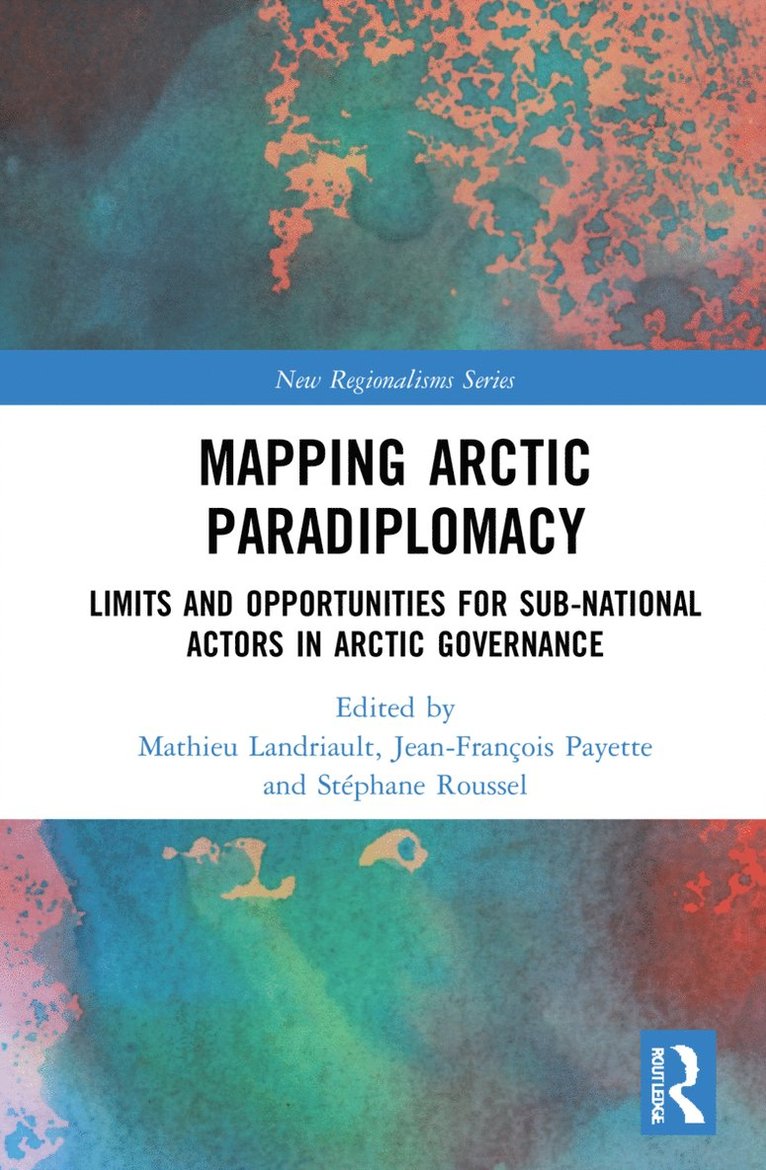
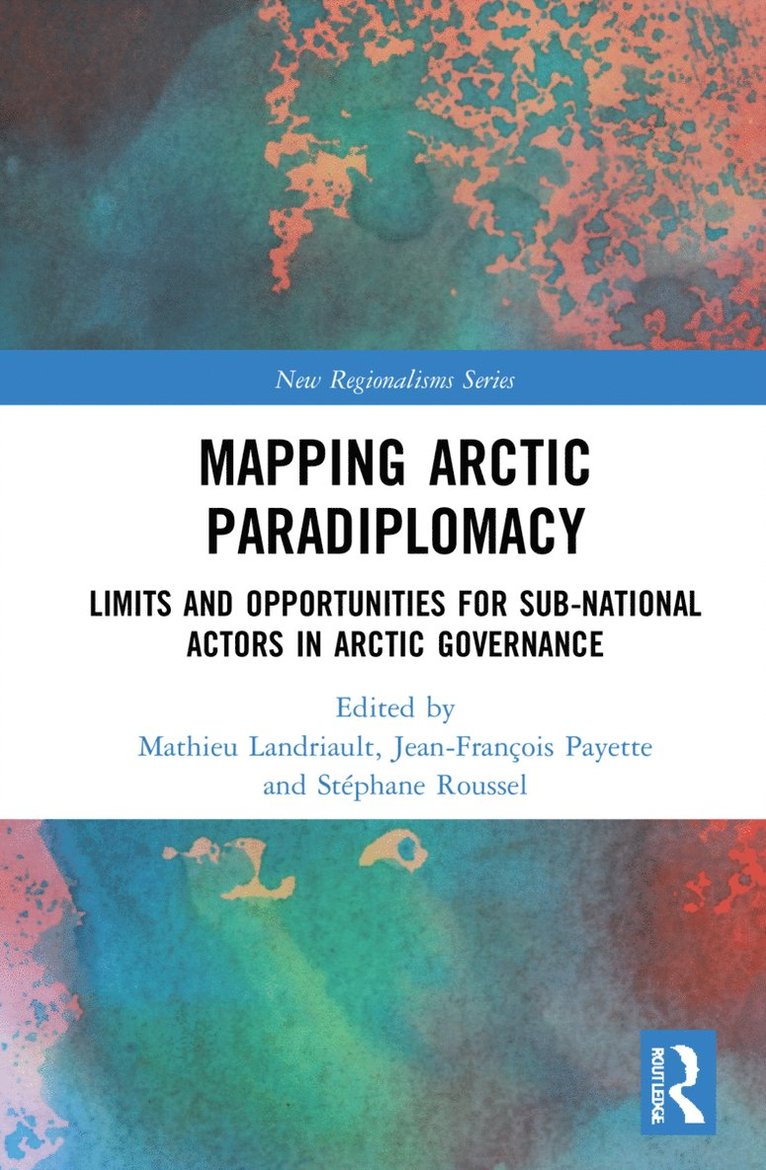
Mer från samma serie
Governing Complexity in the Arctic Region
Mathieu Landriault, Andrew Chater, Elana Wilson Rowe, P. Whitney Lackenbauer
Inbunden, 2019
3 209 kr
Terrorism, Security and Development in South Asia
M. Raymond Izarali, Dalbir Ahlawat
Inbunden, 2021
2 729 kr
Mapping Arctic Paradiplomacy
Mathieu Landriault, Jean-François Payette, Stéphane Roussel
Inbunden, 2021
3 209 kr
Mapping Arctic Paradiplomacy
Mathieu Landriault, Jean-François Payette, Stéphane Roussel
Häftad, 2023
829 kr
Terrorism, Security and Development in South Asia
M. Raymond Izarali, Dalbir Ahlawat
Häftad, 2021
809 kr
Hoppa över listan

Du kanske också är intresserad av
China-Africa Relations in an Era of Great Transformations
Li Xing, Abdulkadir Osman Farah
Häftad, 2016
1 119 kr
Transnational Community Mobilization and Transformation, 2010-2020
Abdulkadir Osman Farah
Inbunden, 2024
1 359 kr
INTEGRAL EQUATIONS, BOUNDARY VALUE PROBLEMS AND RELATED PROBLEMS
Li Xing, Xing Li
Inbunden, 2013
2 379 kr
Rise of China & the Impact on Semi-Periphery & Periphery Countries
Li Xing, Steen Fryba Christensen
Inbunden, 2012
529 kr