
Del i serien Community Development Research and Practice Series
Catalysts for Change
21st Century Philanthropy and Community Development
Inbunden, Engelska, 2013
3 579 kr
Beställningsvara. Skickas inom 10-15 vardagar. Fri frakt för medlemmar vid köp för minst 249 kr.
Finns i fler format (1)
Winner of the Community Development Society's 2014 Current Research Award! 21st Century Philanthropy and Community fills a gap in the literature on philanthropic organizations and how they intertwine with community development. Drawing first on the history of philanthropic funding, Maria Martinez-Cosio and Mirle Bussell look at developments in the last twenty years in detail, focussing on five key case studies from across America. The authors use their own first hand experiences and research to forge a new path for academic research in an area where it has been lacking. With the current economic climate forcing shrewd spending, foundations need all the guidance they can find on how to appropriately channel their funds in the best way. But how can these sorts of community projects be analyzed for effectiveness? Is there a quantitative rather than qualitative element which can be studied to give real feedback to those investing in projects? Arguing against a one-size-fits-all model, the authors illustrate the importance of context and relationships in the success of these projects.
Produktinformation
- Utgivningsdatum2013-05-22
- Mått156 x 234 x undefined mm
- Vikt540 g
- FormatInbunden
- SpråkEngelska
- SerieCommunity Development Research and Practice Series
- Antal sidor208
- FörlagTaylor & Francis Ltd
- ISBN9780415683227
Tillhör följande kategorier
Hoppa över listan
Mer från samma serie
50 Years of Community Development Vol I
Norman Walzer, Rhonda Phillips, Robert Blair
Inbunden, 2020
3 279 kr
50 Years of Community Development Vol II
Norman Walzer, Rhonda Phillips, Robert Blair
Inbunden, 2021
3 279 kr
50 Years of Community Development Vol I
Norman Walzer, Rhonda Phillips, Robert Blair
Häftad, 2022
899 kr
50 Years of Community Development Vol II
Norman Walzer, Rhonda Phillips, Robert Blair
Häftad, 2023
899 kr
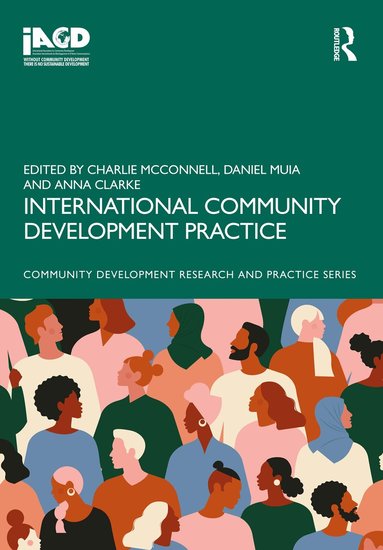
International Community Development Practice
Charlie McConnell, Daniel Muia, Anna Clarke
Häftad, 2021
729 kr
International Community Development Practice
Charlie McConnell, Daniel Muia, Anna Clarke
Inbunden, 2021
3 279 kr
Hoppa över listan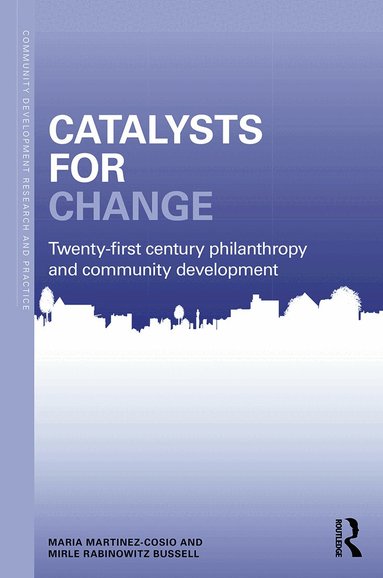

Du kanske också är intresserad av
Community Development for Times of Crisis
Mark A. Brennan, Rhonda Phillips, Norman Walzer, Brent D. Hales
Häftad, 2022
789 kr
50 Years of Community Development Vol I
Norman Walzer, Rhonda Phillips, Robert Blair
Häftad, 2022
899 kr
- Nyhet
Del 7
Retaining and Transitioning Businesses in Communities
Norman Walzer, Christopher D. Merrett
Häftad, 2025
849 kr
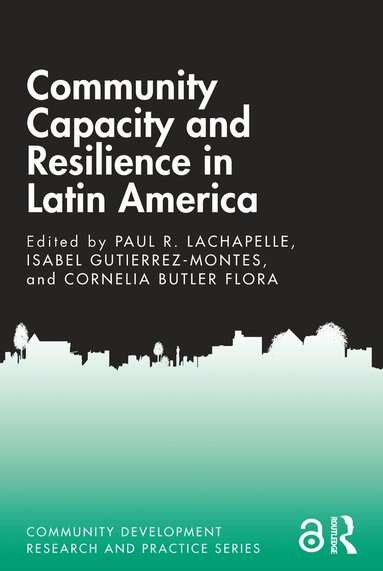
Community Capacity and Resilience in Latin America
Paul R. Lachapelle, Isabel Gutierrez-Montes, Cornelia Butler Flora
Häftad, 2020
829 kr