
- Nyhet
Carl Schmitt and Leo Strauss in the Chinese-Speaking World
Reorienting the Political
Inbunden, Engelska, 2017
2 019 kr
Beställningsvara. Skickas inom 10-15 vardagar. Fri frakt för medlemmar vid köp för minst 249 kr.
Finns i fler format (1)
Carl Schmitt and Leo Strauss in the Chinese-Speaking World: Reorienting the Political examinesthe reception of Carl Schmitt and Leo Strauss in China and Taiwan. The legacies of bothSchmitt, the German legal theorist and thinker who joined the Nazi party, and Strauss, theGerman-Jewish classicist and political philosopher who became famous after his emigrationto the United States, are highly controversial. Since the 1990s, however, these thinkers havehad a powerful resonance for Chinese scholars. Today, when Chinese intellectuals debate theChinese state, the future role of China in the world, the liberal international order, and eventhe meaning of Confucian civilization, they often employ Schmittian and Straussian conceptslike “the political,” “friend–enemy,” “state of exception,” “liberal education,” and “naturalright.” The very possibility of a genuine Chinese political theory is often thought to be tied tothe legacy of these two thinkers.This volume explores this complex phenomenon with a cross-cultural and interdisciplinaryapproach. The twelve essays in this volume are written from a range of perspectives by philosophers,political theorists, historians, and legal scholars from China, Germany, Taiwan,and the United States.
Produktinformation
- Utgivningsdatum2017-02-22
- Mått159 x 238 x 24 mm
- Vikt553 g
- FormatInbunden
- SpråkEngelska
- Antal sidor290
- FörlagBloomsbury Publishing Plc
- ISBN9781498536264
Tillhör följande kategorier
Hoppa över listan



Mer från samma författare
Del 157
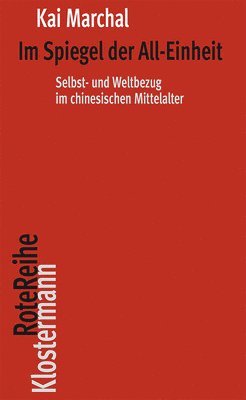
Im Spiegel Der All-Einheit: Selbst- Und Weltbezug Im Chinesischen Mittelalter
Kai Marchal
Häftad, 2024
409 kr
Hoppa över listan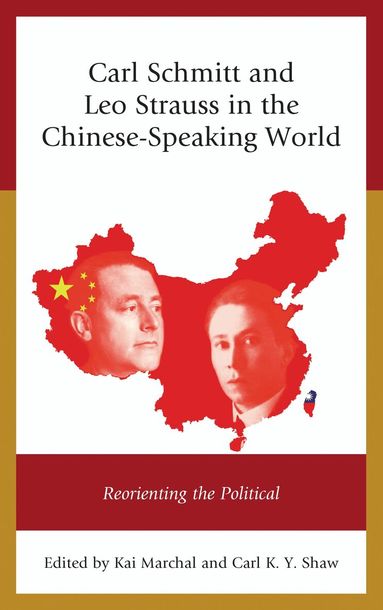



Du kanske också är intresserad av
Carl Schmitt and Leo Strauss in the Chinese-Speaking World
Kai Marchal, Carl K. Y. Shaw, Kai Marchal, Carl K. Y. Shaw
Häftad, 2019
739 kr
- Nyhet
Del 157
Im Spiegel Der All-Einheit: Selbst- Und Weltbezug Im Chinesischen Mittelalter
Kai Marchal
Häftad, 2024
409 kr
- Nyhet
Del 3
- Nyhet
- Nyhet
Del 7
- Nyhet