
Building sustainable communities
Spatial policy and labour mobility in post-war Britain
Häftad, Engelska, 2007
669 kr
Beställningsvara. Skickas inom 5-8 vardagar. Fri frakt för medlemmar vid köp för minst 249 kr.
In 2003 the Labour Government published its ambitious Sustainable Communities Plan. It promised to bring about a 'step change' in the English planning system and a new emphasis on the construction of more balanced, cohesive, and competitive places.This book uses historical and contemporary materials to document the ways in which policy-makers, in different eras, have sought to use state powers and regulations to create better, more balanced, and sustainable communities and citizens. It charts the changes that have take place in community-building policy frameworks, place imaginations, and core spatial policy initiatives in the UK since 1945. In so doing, it examines the tensions that have emerged within spatial policy over the types of places that should be created and the forms of mobility and fixity required to create them. It also shows that there are significant lessons that can be learnt from the experiences of the past. These can be used to inform contemporary policy debates over issues such as migration, uneven development, key worker housing, and sustainability.The book will be an important text for students and researchers in geography, urban studies, planning, and modern social history. It will also be of interest to practitioners working in central and local government, voluntary organisations, community groups, and those involved in the planning and design of sustainable communities.
Produktinformation
- Utgivningsdatum2007-01-10
- Mått156 x 234 x 15 mm
- Vikt430 g
- FormatHäftad
- SpråkEngelska
- Antal sidor280
- FörlagBristol University Press
- ISBN9781861347435
Tillhör följande kategorier
Hoppa över listan
Mer från samma författare
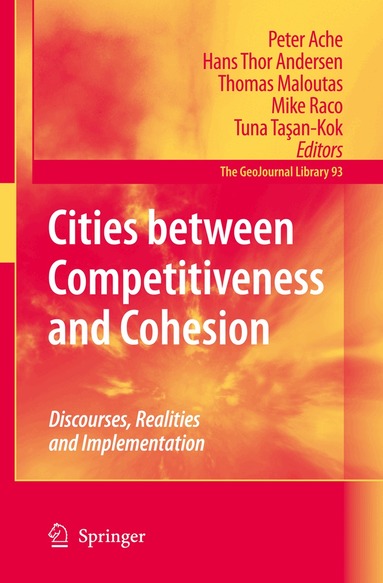
Cities between Competitiveness and Cohesion
Peter Ache, Hans Thor Andersen, Thomas Maloutas, Mike Raco, Tuna Taşan-Kok
Inbunden, 2008
2 159 kr
Del 7
Hoppa över listan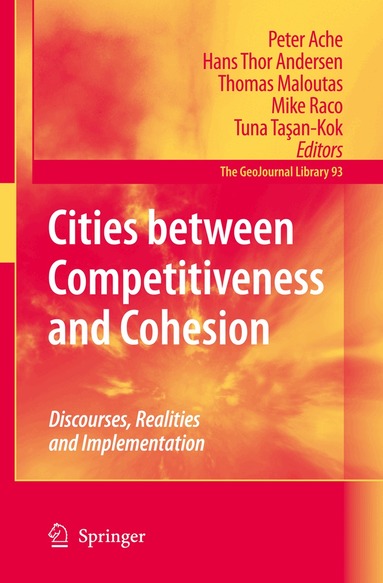
Du kanske också är intresserad av
Del 93
Cities between Competitiveness and Cohesion
Peter Ache, Hans Thor Andersen, Thomas Maloutas, Mike Raco, Tuna Taşan-Kok
Häftad, 2010
2 159 kr
Cities between Competitiveness and Cohesion
Peter Ache, Hans Thor Andersen, Thomas Maloutas, Mike Raco, Tuna Taşan-Kok
Inbunden, 2008
2 159 kr
Sustainable Brownfield Regeneration
Tim Dixon, Mike Raco, Philip Catney, David N. Lerner
Häftad, 2007
1 209 kr
Del 6