
Del 63 i serien Rochester Studies in African History and the Diaspora
Building a Peaceful Nation
Julius Nyerere and the Establishment of Sovereignty in Tanzania, 1960-1964
Häftad, Engelska, 2018
619 kr
Beställningsvara. Skickas inom 10-15 vardagar. Fri frakt för medlemmar vid köp för minst 249 kr.
Finns i fler format (1)
A compelling account of the establishment of Tanzania's stable and ambitious government in the face of external threats and internal turmoil.In the early 1960s, nationalist politicians established in Tanzania a stable government in the face of external threats and internal turmoil. Paul Bjerk's volume chronicles this history and examines the politics and policies of the nation's first president, Julius Nyerere. One of the great leaders of modern Africa, Nyerere unified the diverse people who became citizens of the new nation and negotiated the tumultuous politics of the Cold War. In an era whenmany postcolonial countries succumbed to corrupt dictatorship or civil war, Nyerere sought principled government. Making difficult choices between democratic and autocratic rule, Nyerere creatively managed the destabilizing forces of decolonization.With extensive archival research and interviews with scores of participants in this history, Bjerk reorients our understanding of the formative years of Tanzanian independence. This study provides a new paradigm for understanding the history of the postcolonial nations that became independent in a global postwar order defined by sovereignty.Paul Bjerk is associate professor of history at Texas Tech University.
Produktinformation
- Utgivningsdatum2018-09-15
- Mått152 x 229 x 21 mm
- Vikt578 g
- FormatHäftad
- SpråkEngelska
- SerieRochester Studies in African History and the Diaspora
- Antal sidor392
- FörlagBoydell & Brewer Ltd
- ISBN9781580469357
Tillhör följande kategorier
Hoppa över listan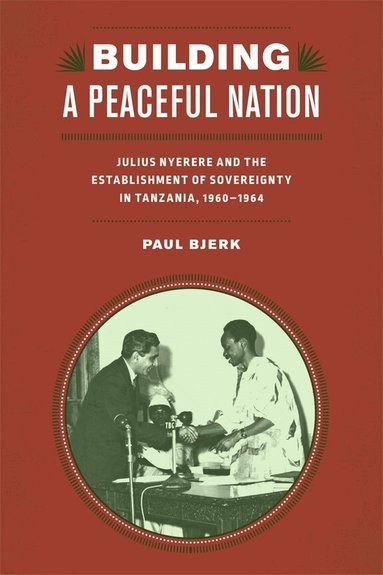








Du kanske också är intresserad av
Del 63
- Nyhet
Del 7
- Nyhet
Del 6
- Nyhet
Del 4
Del 3
- Nyhet
- Nyhet
Del 11
- Nyhet
- Nyhet
Del 1