
Del i serien Bloomsbury Research Handbooks in Asian Philosophy
Bloomsbury Research Handbook of Indian Philosophy of Language
Inbunden, Engelska, 2020
3 079 kr
Beställningsvara. Skickas inom 10-15 vardagar. Fri frakt för medlemmar vid köp för minst 249 kr.
The Bloomsbury Research Handbook of Indian Philosophy of Language presents a systematic survey of philosophy of language in the Indian tradition, providing an up-to-date research resource for better understanding the history and future direction of the field. Each chapter addresses a particular philosophical problem from the viewpoint of seminal traditions and specific thinkers. Covering the philosophical insight on language found in the mainstream philosophies of Vyakarana, Mima?sa, Nyaya, Vedanta, Buddhism, and Alankarasastra, the chapters tackle crucial semantic and pragmatic questions such as the relation of the speaker to reality, the use of metalanguage, the distinction between sentences, elliptic statements, and figurative usages, and the impact of textual structures on the philosophical message.Complete with further reading suggestions and an annotated bibliography, this collection makes an important contribution to both Eastern and Western contemporary philosophy of language.
Produktinformation
- Utgivningsdatum2020-03-19
- Mått156 x 234 x 27 mm
- Vikt853 g
- FormatInbunden
- SpråkEngelska
- SerieBloomsbury Research Handbooks in Asian Philosophy
- Antal sidor488
- FörlagBloomsbury Publishing PLC
- ISBN9781350049161
Tillhör följande kategorier
Hoppa över listan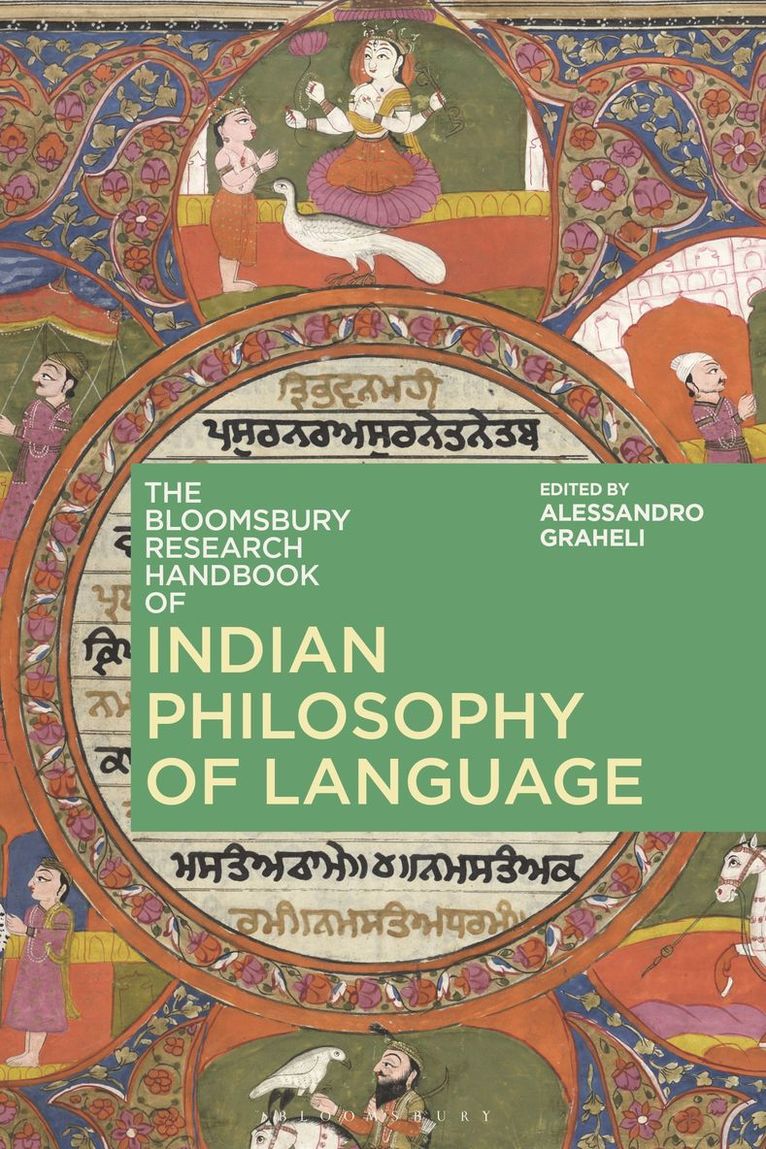


Du kanske också är intresserad av
Bloomsbury Research Handbook of Indian Aesthetics and the Philosophy of Art
Arindam Chakrabarti
Inbunden, 2016
3 439 kr
Bloomsbury Research Handbook of Indian Aesthetics and the Philosophy of Art
Arindam Chakrabarti
Häftad, 2018
709 kr
Bloomsbury Research Handbook of Chinese Aesthetics and Philosophy of Art
Marcello Ghilardi, Hans-Georg Moeller
Häftad, 2023
769 kr