
Del i serien Routledge Global 1960s and 1970s Series
Black 1968
Inbunden, Engelska, 2025
3 309 kr
Beställningsvara. Skickas inom 10-15 vardagar. Fri frakt för medlemmar vid köp för minst 249 kr.
Initially, the 1960s was a time of understandable optimism. The civil rights movement and the legislation it inspired suggested an end to institutionalized racism in the United States, while in the Global South, the emergence of independent states anticipated political liberation and increased prosperity. So, when racial discrimination, entrenched privilege, cold war politics, and fiscal reality dashed these hopes later in the decade, the world experienced a wave of protests. Conventional narratives of 1968 focus on student strikes, revolutions and coups, assassinations, and the reactionary backlash that they inspired.The chapters of Black 1968 reveal the imperfectly documented and heretofore unrecognized bonds that led peoples of African descent around the world to articulate new global conceptions of Blackness as a way to mount local challenges to racism, segregation, colonialism, economic exploitation, generational authority, and cultural chauvinism.This book will be of interest to general readers interested in the global 1968 as well as scholars of Blackness and global history.
Produktinformation
- Utgivningsdatum2025-02-25
- Mått156 x 234 x 19 mm
- Vikt648 g
- FormatInbunden
- SpråkEngelska
- SerieRoutledge Global 1960s and 1970s Series
- Antal sidor250
- FörlagTaylor & Francis Ltd
- ISBN9781032872643
Tillhör följande kategorier
Hoppa över listan



Mer från samma serie
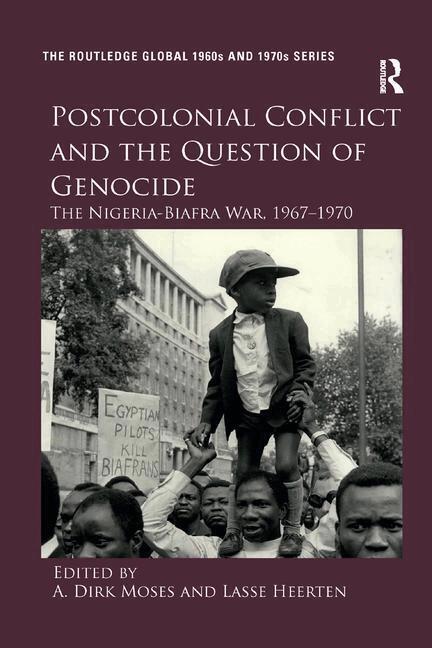
Postcolonial Conflict and the Question of Genocide
A. Dirk Moses, Lasse Heerten
Inbunden, 2017
3 619 kr
Amílcar Cabral and the PAIGC’s Binational Struggle for the Independence of Guinea-Bissau and Cabo Verde
Víctor Barros, Aurora Almada e Santos
Inbunden, 2025
3 309 kr
Hoppa över listan






Du kanske också är intresserad av
Race, Resistance, and the Boy Scout Movement in British Colonial Africa
Timothy H. Parsons
Häftad, 2004
479 kr