
Del i serien Late Antique and Early Medieval Iberia
Bishops, Community and Authority in Late Roman Society
Northwestern Hispania, c. 370-470 C.E.
Häftad, Engelska, 2025
909 kr
Beställningsvara. Skickas inom 10-15 vardagar. Fri frakt för medlemmar vid köp för minst 249 kr.
Finns i fler format (1)
When the bishop Hydatius found himself held hostage in Gallaecia, a Roman province in the northwestern Iberian Peninsula, by a band of Sueves in the year 460, he deployed his experience as an ambassador for his congregation and used his captivity as a tool for negotiating peace. As this example shows, bishops held considerable economic, political, and social power in the early Middle Ages. The expansion of ecclesiastical influence was not, however, a simple consequence of the legalization of Christianity or a power vacuum that followed the withdrawal of imperial authority. The transformation of the episcopate resulted instead from dynamic processes to which all status groups contributed and that are best understood through contextual and diachronic analysis. This monograph focuses on the clerical community in Gallaecia and employs a case study and interdisciplinary approach, incorporating written and material evidence, to put bishops like Hydatius in their larger social and economic contexts to elucidate why the people living and working in their sees would imbue them with increasing authority and explain how their roles within their local communities expanded. This book - Analyses the accumulation of political power, social capital, and local influence by bishops, approaching them as part of a larger social system (understood as a whole) that experienced transformative change across all of its layers. - Deploys all evidence (written, material, etc.), without privileging one form over the other a priori, to produce a deep reconstruction of the social and physical contexts (micro-historical landscapes) in which bishops operated to explain their rise to prominence. - Turns the 'problem' of Iberian early medieval written sources on its head - i.e. the NW and clerical authors are overrepresented - by engaging in a series of diachronic case studies to develop a rich understanding of episcopal influence in the NW as a point of departure for understanding broader developments in the late- and post-Roman periods.
Produktinformation
- Utgivningsdatum2025-12-01
- Mått156 x 234 x 23 mm
- Vikt660 g
- FormatHäftad
- SpråkEngelska
- SerieLate Antique and Early Medieval Iberia
- Antal sidor410
- Upplaga25001
- FörlagTaylor & Francis Ltd
- ISBN9781041176190
Tillhör följande kategorier
Hoppa över listan
Mer från samma serie
Isidore of Seville and his Reception in the Early Middle Ages
Jamie Wood, Andy Fear
Häftad, 2025
929 kr
Leadership, Social Cohesion, and Identity in Late Antique Spain and Gaul (500-700)
Dolores Castro, Fernando Ruchesi
Häftad, 2025
929 kr
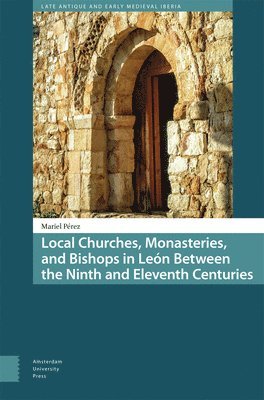
Local Churches, Monasteries, and Bishops in León Between the Ninth and Eleventh Centuries
Mariel Pérez
Häftad, 2025
909 kr
Rome and Byzantium in the Visigothic Kingdom
Damián Fernández, Molly Lester, Jamie Wood
Häftad, 2025
909 kr
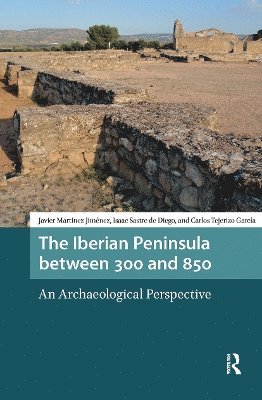
Iberian Peninsula between 300 and 850
Martínez Jiménez, Isaac Sastre de Diego, Carlos Tejerizo
Häftad, 2018
929 kr
Hoppa över listan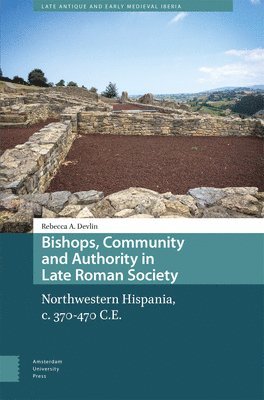


Du kanske också är intresserad av
Del 13
Del 14
Local Churches, Monasteries, and Bishops in León Between the Ninth and Eleventh Centuries
Mariel Pérez
Inbunden, 2024
2 419 kr
Rome and Byzantium in the Visigothic Kingdom
Damián Fernández, Molly Lester, Jamie Wood
Häftad, 2025
909 kr
- Nyhet
Del 11
Isidore of Seville and his Reception in the Early Middle Ages
Jamie Wood, Andy Fear
Häftad, 2025
929 kr
- Nyhet
Del 4