
Battle-Scarred
Mortality, Medical Care and Military Welfare in the British Civil Wars
Häftad, Engelska, 2019
479 kr
Beställningsvara. Skickas inom 5-8 vardagar. Fri frakt för medlemmar vid köp för minst 249 kr.
Battle-scarred investigates the human costs of the British Civil Wars. Through a series of varied case studies it examines the wartime experience of disease, burial, surgery and wounds, medicine, hospitals, trauma, military welfare, widowhood, desertion, imprisonment and charity. The percentage population loss in these conflicts was far higher than that of the two World Wars, which renders the Civil Wars arguably the most unsettling experience the British people have ever undergone. The volume explores its themes from new angles, demonstrating how military history can broaden its perspective and reach out to new audiences.
Produktinformation
- Utgivningsdatum2019-07-17
- Mått156 x 234 x 14 mm
- Vikt376 g
- FormatHäftad
- SpråkEngelska
- SeriePolitics, Culture and Society in Early Modern Britain
- Antal sidor264
- FörlagManchester University Press
- ISBN9781526144850
Tillhör följande kategorier
Hoppa över listan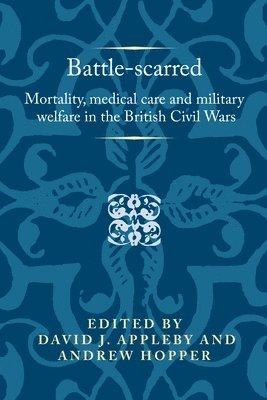



Du kanske också är intresserad av
Del 68
The Household Accounts of Robert and Katherine Greville, Lord and Lady Brooke, at Holborn and Warwick, 1640-1649: Volume 68
Stewart Beale, Andrew Hopper, Ann Hughes
Inbunden, 2025
849 kr
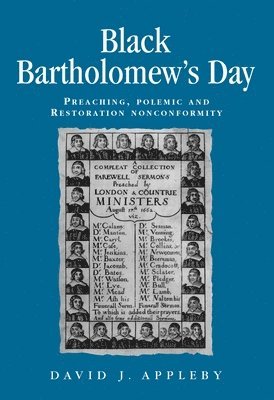
Black Bartholomew's Day: Preaching, Polemic and Restoration Nonconformity
David Appleby
Inbunden
1 119 kr