
Del i serien Russian Shorts
Ayn Rand and the Russian Intelligentsia
The Origins of an Icon of the American Right
Häftad, Engelska, 2022
269 kr
Skickas . Fri frakt för medlemmar vid köp för minst 249 kr.
Finns i fler format (1)
This book examines the writings of the American novelist Ayn Rand, especially The Fountainhead (1943) and Atlas Shrugged (1957), which Rand considered her definitive statement about the need for an unregulated free market in which superior humans could fully realize themselves by living for no-one but themselves. It explores Rand’s conception of American identity, which exalted individualism and capitalism, and her solution for saving the modern American nation, which she believed was losing the spirit of its 18th- and 19th-century founders and frontiersmen, having been degraded morally and economically by the rampant socialism of the mid-20th-century world.Derek Offord crucially goes on to analyse how Rand’s writings functioned as a vehicle in which she, a Russian-Jewish writer born in St Petersburg in 1905, engaged with ideas that had long animated the Russian intelligentsia. Her conception of human nature and of a utopian community capable of satisfying its needs; her reversal of conventional valuations of self-sacrifice and selfishness; her division of humans into an extraordinary minority and the ordinary mass; her comparison of competing civilizations – in all these areas, Offord argues that Rand drew on Russian debates and transposed them to a different context. Even the type of novel she writes, the novel of ideas, is informed by the polemical methods and habits of the Russian intelligentsia. The book concludes that her search for a brave new world continues to have topicality in the 21st century, with its populist critiques of liberal democracies and acrimonious debates about countries’ moral, social, and economic priorities and their identities, inequalities, and social tensions.
Produktinformation
- Utgivningsdatum2022-05-05
- Mått128 x 196 x 12 mm
- Vikt169 g
- FormatHäftad
- SpråkEngelska
- SerieRussian Shorts
- Antal sidor144
- FörlagBloomsbury Publishing PLC
- ISBN9781350283947
Tillhör följande kategorier
Hoppa över listan



Mer från samma författare
French and Russian in Imperial Russia
Derek Offord, Lara Ryazanova-Clarke, Vladislav Rjeoutski, Gesine Argent
Inbunden, 2015
1 609 kr
French and Russian in Imperial Russia
Derek Offord, Lara Ryazanova-Clarke, Vladislav Rjeoutski, Gesine Argent
Inbunden, 2015
1 609 kr
Hoppa över listan




Mer från samma serie
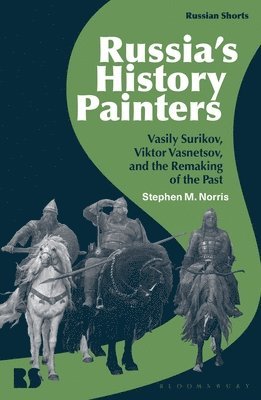
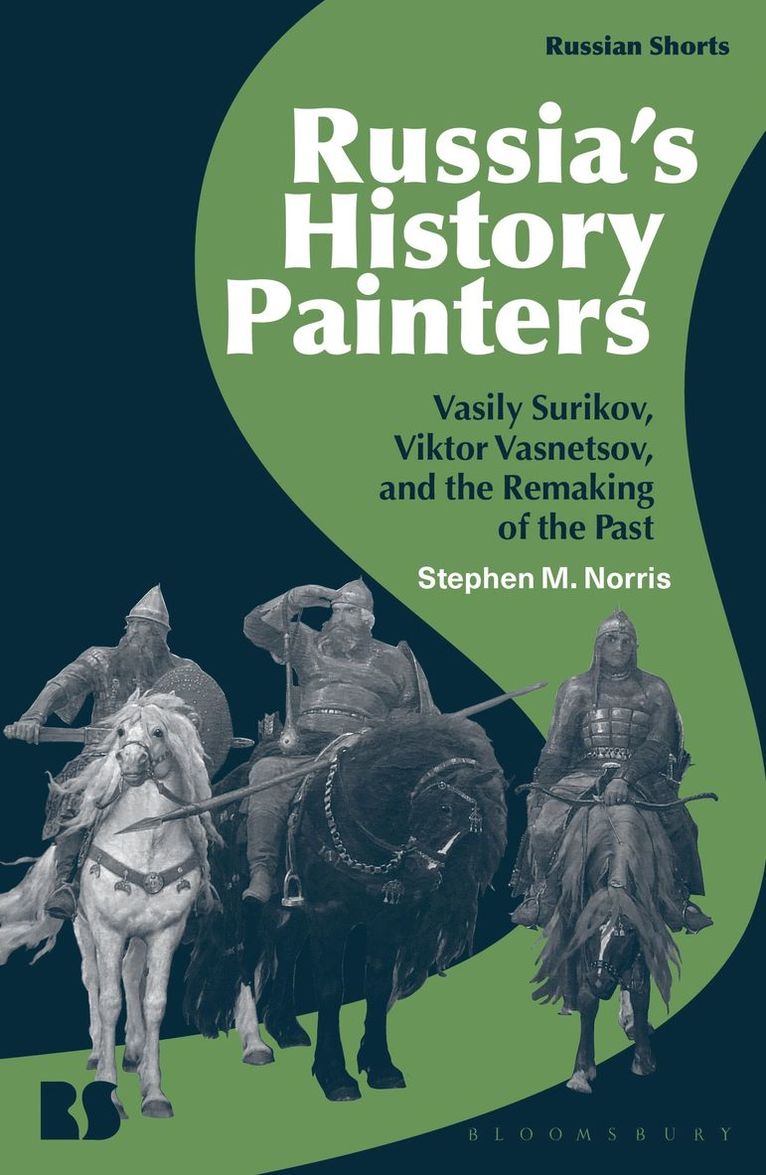
Russia's History Painters
Stephen M. Norris, Stephen M. Norris, Stephen M Norris, Polly Jones
Inbunden, 2030
729 kr
Russia's History Painters
Stephen M. Norris, Stephen M. Norris, Stephen M Norris, Polly Jones
Häftad, 2030
219 kr
Jews under Tsars and Communists
Robert Weinberg, Stephen M. Norris, Stephen M Norris, Polly Jones
Häftad, 2024
249 kr
Hoppa över listan




Du kanske också är intresserad av
Women, Gardens, and Agency in Imperial Russia
Ekaterina Heath, Stephen M. Norris, Stephen M Norris, Polly Jones
Inbunden, 2026
849 kr
Soviet Internment
Maria Cristina Galmarini, Stephen M. Norris, Stephen M Norris, Polly Jones
Häftad, 2025
329 kr
Russia's History Painters
Stephen M. Norris, Stephen M. Norris, Stephen M Norris, Polly Jones
Inbunden, 2030
729 kr
Black Encounters with the Soviet Union
Maxim Matusevich, Stephen M. Norris, Stephen M Norris, Polly Jones
Häftad, 2024
439 kr
Russia's History Painters
Stephen M. Norris, Stephen M. Norris, Stephen M Norris, Polly Jones
Häftad, 2030
219 kr
Jews under Tsars and Communists
Robert Weinberg, Stephen M. Norris, Stephen M Norris, Polly Jones
Häftad, 2024
249 kr
- Nyhet