
Autonomy and Clinical Medicine
Renewing the Health Professional Relation with the Patient
Inbunden, Engelska, 2000
1 439 kr
Beställningsvara. Skickas inom 10-15 vardagar. Fri frakt för medlemmar vid köp för minst 249 kr.
Finns i fler format (1)
This book arises from a two-fold conviction. The first is that autonomy, despite recent critiques about its importance in bioethics and philosophy of medicine, and the traditional resistance of medicine to its "intrusion" into the doctor-patient relation, is a fundamental building block of an individual's identity and mechanisms for dealing with illness, disease, and incapacity. As such it is an essential component in the health care professional's armamentarium employed to bring about healing. Furthennore, it functions in a similar way to assist the health professional in his or her relations to the sick and injured. The second conviction follows from the fITst. Autonomy is far more complex than appears from the philosophical use of the concept. In this conviction we join those who have criticized the over-reliance on autonomy in modem, secular bioethics originating in the United States, but gaining ascendancy in other cultures. This critique relies on appeals to the richer contexts of persons' lives. Elsewhere the contemporary critique of autonomy appears in a variety of alternative ethical models like narrative ethics, casuist ethics, and contextualism. Indeed, postmodern criticism of all bioethics argues that there is no defensible foundation for claims that one ought to respect autonomy or any other principle as a way of ensuring that one is ethical.
Produktinformation
- Utgivningsdatum2000-02-29
- Mått155 x 235 x 17 mm
- Vikt506 g
- FormatInbunden
- SpråkEngelska
- SerieInternational Library of Ethics, Law, and the New Medicine
- Antal sidor202
- Upplaga2000
- FörlagKluwer Academic Publishers
- ISBN9780792362074
Tillhör följande kategorier
Hoppa över listan

Mer från samma serie
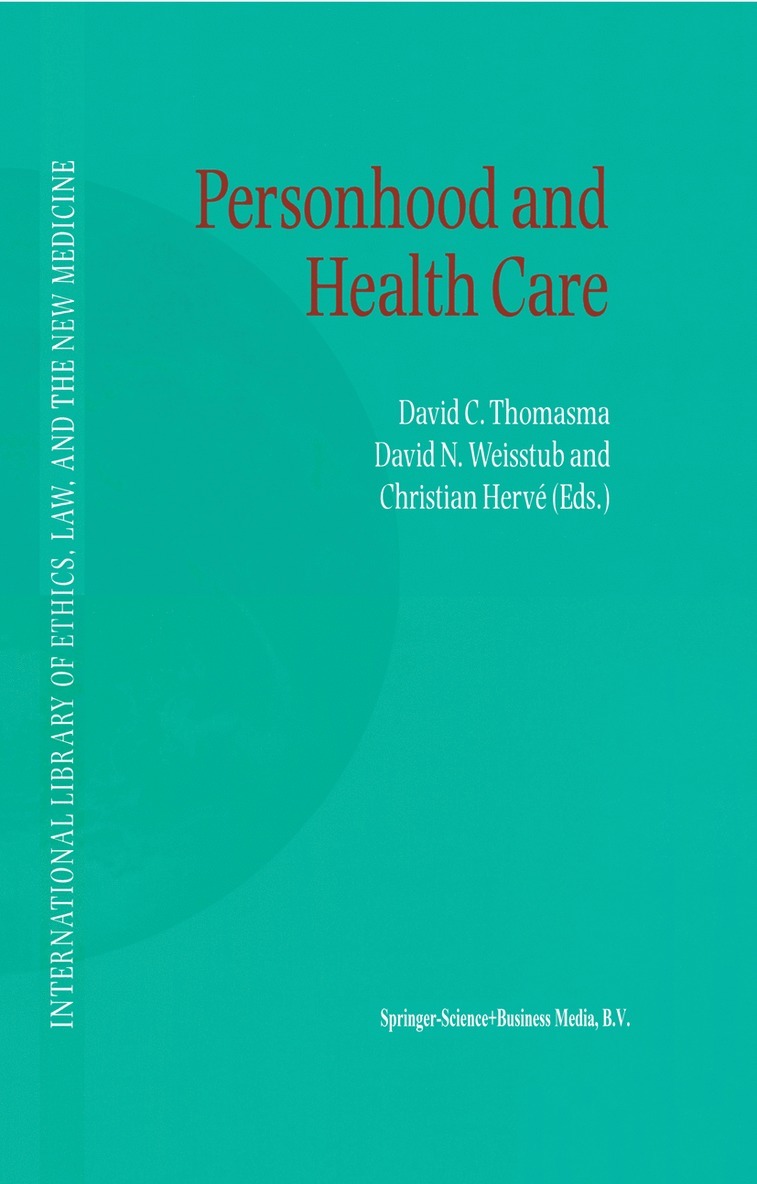
Personhood and Health Care
David C. Thomasma, David N. Weisstub, Christian Hervé
Inbunden, 2001
2 579 kr
Bioethics in a European Perspective
Henk A. M. J. Ten Have, Bert Gordijn, H.A. Ten Have, Bert Gordijn
Inbunden, 2001
2 869 kr
Aging: Culture, Health, and Social Change
David N. Weisstub, David C. Thomasma, S. Gauthier, G.F. Tomossy
Inbunden, 2001
2 219 kr
Aging: Caring for Our Elders
David C. Thomasma, Serge Gauthier, David N. Weisstub, David C. Thomasma, S. Gauthier, G.F. Tomossy
Inbunden, 2001
2 219 kr
Aging: Decisions at the End of Life
David N. Weisstub, David C. Thomasma, S. Gauthier, G.F. Tomossy
Inbunden, 2001
2 219 kr
Determinants of Health: Theory, Understanding, Portrayal, Policy
Matthew J. Commers
Inbunden, 2002
1 479 kr
Hoppa över listan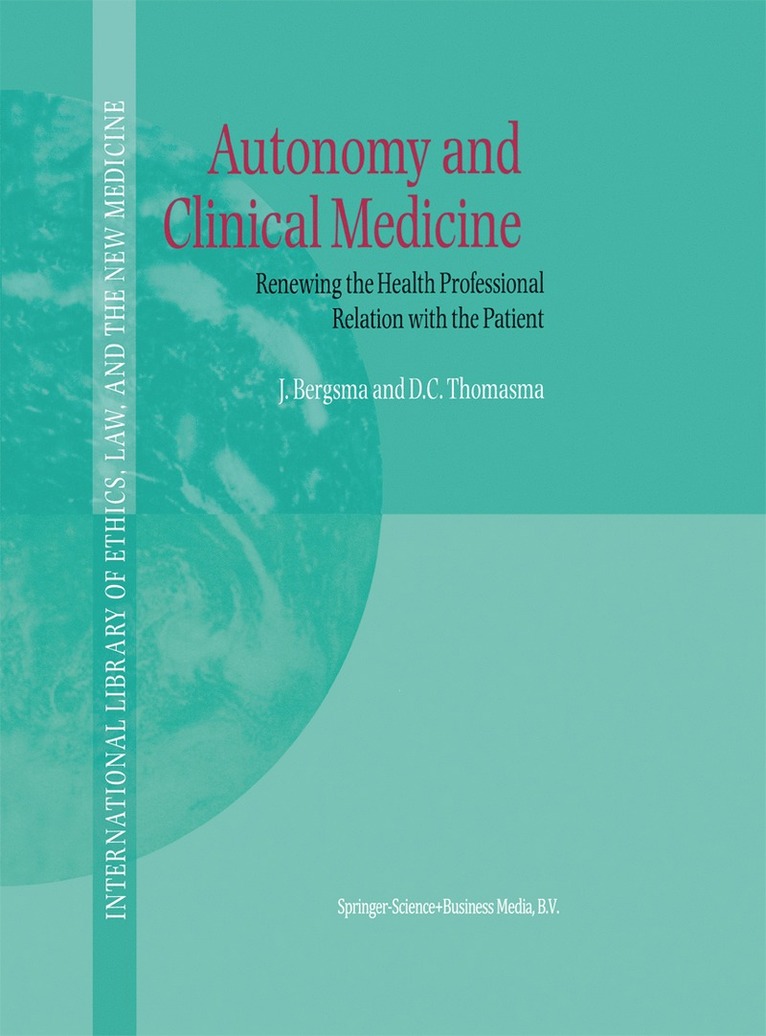
Du kanske också är intresserad av
Health Care Professional as Friend and Healer
David C. Thomasma, Judith Lee Kissell
Häftad, 2000
839 kr
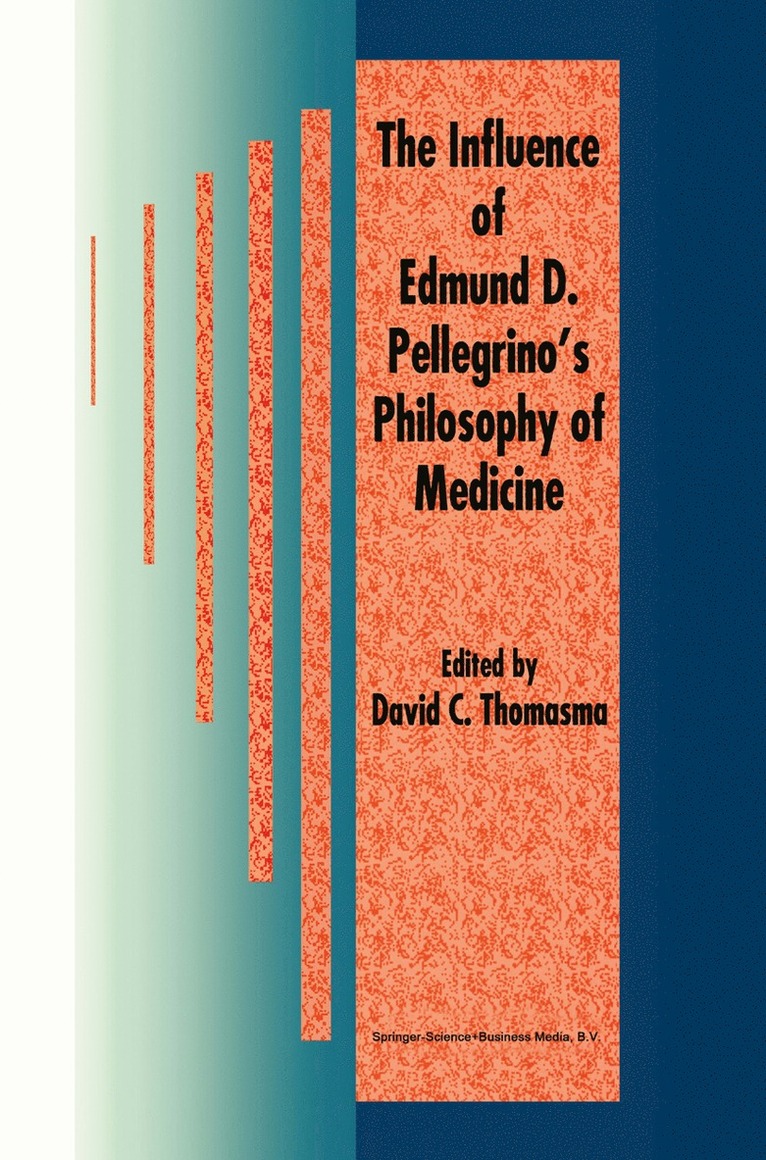
Influence of Edmund D. Pellegrino’s Philosophy of Medicine
David C. Thomasma, David C. Thomasma
Inbunden, 1997
1 439 kr
Personhood and Health Care
David C. Thomasma, David N. Weisstub, Christian Hervé
Inbunden, 2001
2 579 kr
Aging: Decisions at the End of Life
David N. Weisstub, David C. Thomasma, S. Gauthier, G.F. Tomossy
Inbunden, 2001
2 219 kr