Atlas of California
Mapping the Challenge of a New Era
Häftad, Engelska, 2013
329 kr
Tillfälligt slut
California is at a crossroads. For decades a global leader, inspiring the hopes and dreams of millions, the state has recently faced double-digit unemployment, multi-billion dollar budget deficits and the loss of trillions in home values. This atlas brings together the latest research and statistics in a graphic form that gives shape and meaning to these numbers. It shows a new California in the making, as it maps the economic, social, and political trends of a state struggling to maintain its leadership and to continue to offer its citizens the promise of prosperity. Among the world's largest economies, California is the nation's agricultural powerhouse, high tech crucible and leader in renewable energy. The state is the most populous and most diverse state in the continental U.S. Yet its infrastructure is coming under increasing pressure. Water supply systems are strained, the legendary highways are over capacity, and the celebrated system of public schooling is unable to offer affordable quality education at all levels. Health and welfare services, particularly for the poor, needy, disabled, and seniors, are at great risk.This indispensable resource gives readers the tools they need to understand the transformation as California attempts to forge a new identity in the midst of unprecedented challenges.
Produktinformation
- Utgivningsdatum2013-10-04
- Mått191 x 244 x 10 mm
- Vikt363 g
- FormatHäftad
- SpråkEngelska
- Antal sidor128
- FörlagUniversity of California Press
- ISBN9780520272026
Tillhör följande kategorier
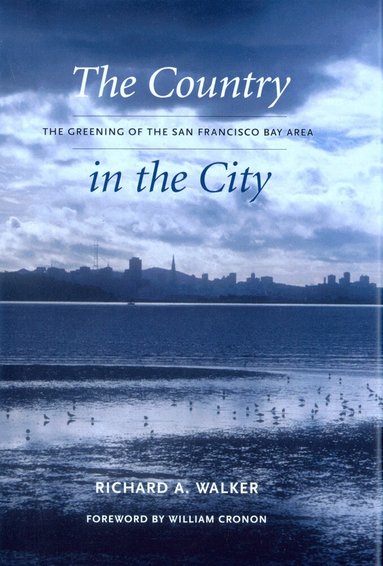
Richard Walker is Professor Emeritus of Geography at the University of California, Berkeley, and author of many books, including The Conquest of Bread and The Country in the City. Suresh K. Lodha is Professor of Computer Science at the University of California, Santa Cruz and coauthor of The Atlas of Global Inequalities.
- IntroductionAcknowledgmentsPhoto CreditsChapter One Land & PeopleLand & NatureCalifornia’s geography sets it apart from the rest of North America. Its natural blessings havebeen a source of wonder and wealth, its frequent earthquakes a challenge.Public Lands & ParksHalf of California’s land is in public ownership, and much of that is protected in the most extensive system ofnational, state, and local parks in the United States.Colonialism & Native CaliforniansCalifornia was part of the Spanish Empire, then Mexico, before being annexed to the United States. Nativepeoples were annihilated by Spaniards, Mexicans, and Americans alike, through forced removal, slave labor,disease and massacres, and are still struggling to regain their rightful place in state life.PopulationCalifornia is the most populous state in the United States and for decades was among the fastest growing, dueto high immigration and birth rates.MigrationFor centuries, California has been a magnet for migrants, both domestic and foreign. They have come frommany places in search of a better life, escaping poverty, war, famine, and persecution—but often facinghostility on arrival.Unauthorized ImmigrationCalifornia has the highest number of unauthorized immigrants of any state. Although their presence iscontroversial, several industries depend on them to fill low-wage, low-skill jobs.Chapter Two Politics, Governance, & PowerGovernment & PoliticsDemocracy in California has long suffered from unequal representation, a weak party system, and the powerof money in elections. But voting patterns are solidly Democratic have become more so in recent elections.Budget & TaxationCalifornia has the largest budget after the federal government but has suffered budget shortfalls, revenuevolatility, and reduced taxation, resulting in huge cuts during the recession and making planning difficult.Government FinancesTax revenues constitute roughly half of the general revenue of California state and local governments. Twothirdsof expenditure goes to education, health, welfare, and safety.Military PowerCalifornia is the most militarized of states. It has been a strategic intellectual and technological center for themilitary, and served as the Pacific base of operations in several major wars.Crime & IncarcerationCalifornia’s prison population and funding for corrections have soared in the last 30 years, even thoughviolent crime rates have dropped. The US Supreme Court has ordered a reduction in the state’s prisonpopulation to reduce overcrowding.Chapter Three Economy & IndustryEconomic GrowthCalifornia’s economic growth has long outpaced the rest of the country. With its vibrant and diverse industrialtapestry, it is a model of economic innovation and prosperity.WorkforceCalifornia’s prosperity has been built on its workforce, both in numbers and quality. Labor demand andsupply, skills, and wages have long exceeded the national average, feeding the state’s remarkable growth.Business & FinanceCalifornia is home not only to globestraddling corporations with large management teams, but also tothriving small businesses and start-ups. It has long been the second-largest center of finance in the country.AgribusinessCalifornia’s agribusiness is one of the agricultural wonders of the world, leading the country in the variety andquantity of output, and setting the pace for modern farming and food production in the United States.TechnologyCalifornia is known around the world as a leader in technology and innovation. It has offered highlyfavorable conditions for innovators to flourish and put new ideas into play.Chapter Four Urban AreasCities & Metro AreasCalifornia is highly urban, and the state’s cities and metro areas are among the nation’s largest, densest, andmost economically significant.The Bay AreaSan Francisco has long been world famous but is today part of a large, complex urban region: the Bay Area—high-tech capital of the world and richest big city in the country.Greater Los AngelesLos Angeles is California’s largest city and the country’s second largest metropolis. It is popularly knownfor its remarkable growth, sprawling landscape, and mixture of peoples, but is equally a manufacturing andtransportation powerhouse.Real EstateCalifornia runs on real-estate development. The scale of building is huge and property values high. After thegreatest real-estate bubble in history in the 2000s, the state suffered a devastating crash.Highways & TransportationCalifornia has one of the most advanced transportation systems in the world, including highways, airports,seaports, and railroads. The challenges of city commuting are great, as are those of handling an immense flowof goods, within and beyond state borders.Chapter Five Water & EnergyWater SupplyNorthern California has abundant rainfall and the Sierra a large snowpack; excess runoff is stored and movedsouth to supply agriculture and cities in the southern half of the state.Water UseWater use exceeds natural supply in many parts of California, especially in drought years. Water conservationhas checked the growth of consumption, and it must continue.Energy: Fossil FuelsCalifornia has one of the lowest rates of energy consumption in the United States. Fossil fuels, mostly foreignand domestic imports, dominate energy supply, despite efforts to develop alternative sources.Energy: ElectricityTotal electricity demand has been rising in California due to overall growth plus inland migration. Yet higherprices, government policies, and technical change have kept per capita electricity consumption flat over the lasttwo decades.Renewable EnergyCalifornia is a leading producer of renewable energy, but the goal of significantly increasing the share ofelectricity generated by renewables faces many obstacles.Chapter Six EnvironmentClimate ChangeGlobal climate change is being felt in California in the form of rising average temperatures and sea level,weather extremes, and more wildfires. The implications for water supply, flooding, and ecosystems arepotentially grave.Carbon EmissionsCalifornia is a national leader in reducing carbon emissions through transportation planning, industrialcontrols, and the use of renewable energy, making it one of the lowest emitters per capita of greenhouse gasesin the United States.Air PollutionAlthough California has made dramatic progress in reducing air pollution, a majority of the populationcontinues to breathe air that poses significant health risks.Water PollutionCalifornia’s surface, ground, and coastal waters suffer serious contamination from farms, cities, and industry,jeopardizing health, recreation, and wildlife. Toxic chemicals pose risks to the public and the environment.Chapter Seven Health & EducationHealthcare: Quality & OutcomesGood health depends greatly on access to and quality of healthcare, on health behaviors, socioeconomicconditions, and physical environment, which vary widely across California and create persistent disparitiesbetween places and racial/ethnic groups.Healthcare: Cost & AccessHealthcare costs have been rising rapidly, burdening families, employers, and governments. Yet Californiaranks towards the bottom in per capita health spending, as well as in state Medicaid support, employer-basedcoverage, and percentage of uninsured.Pre-K EducationDespite its leadership in introducing a variety of early childhood education and support programs, Californiaprovides preschool access to only half of its three and four year olds, and quality access to even fewer.K–12 EducationCalifornia’s once-heralded K–12 public education system today ranks near the bottom in student achievement,graduation rates, student–teacher ratio, and per-pupil funding. Greatly increased investment and commitmentare needed to put public schooling back on a sound footing.Higher EducationCalifornia’s public universities, vital engines of economic and civic life, are in danger of failing to provideaffordable access to quality higher education. Can California rediscover its former commitment to public highereducation?Chapter Eight Inequality & Social DividesIncome, Wealth, & PovertyIncome and wealth inequality have grown significantly in the last 30 years, fueled by stagnant wages, risingassets values and corporate pay, as well as federal tax relief for the rich. Poverty is rampant in Californiadespite its wealth and prosperity.Hunger & HomelessnessMillions of Californians go hungry every day and tens of thousands are homeless. This is one of the worstrecords in the nation. Government food assistance programs that help mitigate hunger need to be strengthened.Homeless people have little institutional support and often face hostility.Race & EthnicityCalifornia enjoys a rich mix of people of different races and national origins, just one of four states whereminorities are the majority. Yet the participation of people of color in politics and business is much less than thatof Whites, and almost all suffer disproportionately from low incomes, poor health, and less education.Gender & Sexual OrientationCalifornia’s record of gender equity is good in education, moderate in wages and political representation, andpoor in business. The state has been a pioneer in the struggle for gay rights, but has suffered setbacks on thequestion of equal rights to marriage.Youth & Old AgeCalifornia’s young and old suffer disproportionately from deprivation, and many are ineligible for governmentbenefits because of inadequate measures of cost of living and need.Chapter Nine C hallenges Ahead: A Glimpse into the FutureCalifornia’s glory resides in its prosperity but, in the face of multiple challenges, it needs to forge a new identity.Chapter Ten Data ChallengesData must be selected and interpreted with caution because of the challenges presented by inconsistency,omissions, imperfections, and underlying assumptions.Definition of Key TermsSourcesIndex