
ANZUS Economics
Economic Trends and Relations among Australia, New Zealand, and the United States
Inbunden, Engelska, 1992
1 389 kr
Beställningsvara. Skickas inom 10-15 vardagar. Fri frakt för medlemmar vid köp för minst 249 kr.
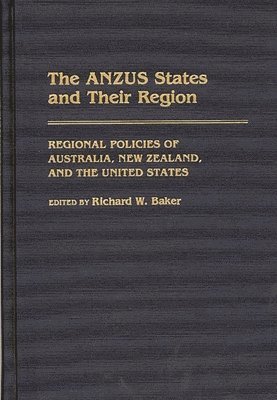
This work is the second in a series examining the changing nature of one of the United States most important relationships, the ANZUS Alliance, linking the U.S., Australia, and New Zealand. The volume describes the evolution of the three countries respective domestic economic structures, international economic orientations, and relationships with each other in the period since World War II. The study concludes that the most significant common economic interest of the three is the preservation and strengthening of an open international economic order and trading system, an interest sorely tested in the present difficult economic times. Still, the experts here find that Australia, New Zealand, and the U.S. must match trends toward greater economic interdependence with workable mechanisms and concerted action to achieve their truly common interests in the international economic system.This important work will be of interest to scholars in international relations, generally, and international economic systems, specifically.
Produktinformation
- Utgivningsdatum1992-11-30
- Mått161 x 240 x 19 mm
- Vikt581 g
- FormatInbunden
- SpråkEngelska
- Antal sidor276
- FörlagBloomsbury Publishing Plc
- ISBN9780275943813
Tillhör följande kategorier
Hoppa över listan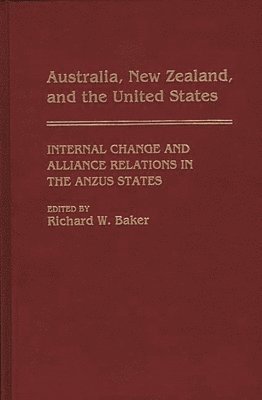



Mer från samma författare
Quality Improvement Research
Grol, BAKER, Richard Grol, Richard W. Baker, Fiona Moss
Häftad, 2003
1 139 kr
Hoppa över listan



Du kanske också är intresserad av
Quality Improvement Research
Grol, BAKER, Richard Grol, Richard W. Baker, Fiona Moss
Häftad, 2003
1 139 kr
- Nyhet
Del 7
- Nyhet
Del 3
- Nyhet
- Nyhet
Del 3