
Del 41 i serien Methodology & History in Anthropology
Anthropology and Ethnography are Not Equivalent
Reorienting Anthropology for the Future
Häftad, Engelska, 2024
429 kr
Skickas . Fri frakt för medlemmar vid köp för minst 249 kr.
Finns i fler format (1)
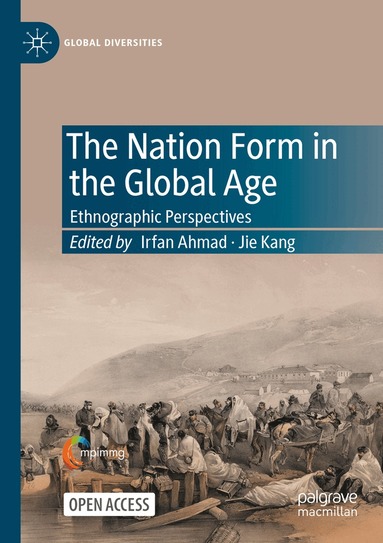
In recent years, crucial questions have been raised about anthropology as a discipline, such as whether ethnography is central to the subject, and how imagination, reality and truth are joined in anthropological enterprises. These interventions have impacted anthropologists and scholars at large. This volume contributes to the debate about the interrelationships between ethnography and anthropology and takes it to a new plane. Six anthropologists with field experience in Egypt, Greece, India, Laos, Mauritius, Thailand and Switzerland critically discuss these propositions in order to renew anthropology for the future. The volume concludes with an Afterword from Tim Ingold.
Produktinformation
- Utgivningsdatum2024-08-02
- Mått152 x 229 x 12 mm
- Vikt260 g
- FormatHäftad
- SpråkEngelska
- SerieMethodology & History in Anthropology
- Antal sidor172
- FörlagBerghahn Books
- ISBN9781805393436
Tillhör följande kategorier
Hoppa över listan









Mer från samma författare
(Il)liberal Europe: Islamophobia, Modernity and Radicalization
Natalie Doyle, Irfan Ahmad
Häftad, 2019
979 kr
(Il)liberal Europe: Islamophobia, Modernity and Radicalization
Natalie Doyle, Irfan Ahmad
Inbunden, 2017
3 279 kr
Hoppa över listan


Du kanske också är intresserad av
(Il)liberal Europe: Islamophobia, Modernity and Radicalization
Natalie Doyle, Irfan Ahmad
Inbunden, 2017
3 279 kr
Reconhecimento da mão utilizando a geometria da palma e da mão Caraterísticas
Irfan Ahmad, Manzoor Khan
Häftad, 2024
579 kr
Riconoscimento della mano utilizzando le caratteristiche della geometria del palmo e della mano
Irfan Ahmad, Manzoor Khan
Häftad, 2024
589 kr
Artificial Intelligence for Healthcare
Rishabha Malviya, Shivam Rajput, Mukesh Roy, Irfan Ahmad, Saurabh Srivastava
Inbunden, 2025
3 099 kr