
Del 77
Del 93 i serien New Directions in Critical Theory
Ambivalent Recognition
The Harmful Social Consequences of an Ethical Good
Inbunden, Engelska, 2026
1 319 kr
Beställningsvara. Skickas inom 5-8 vardagar. Fri frakt för medlemmar vid köp för minst 249 kr.
Finns i fler format (1)
Recognition has become one of the key concepts of contemporary critical theory, heralded by thinkers such as Axel Honneth and Charles Taylor. It is widely claimed that a person must be recognized by others in order to realize their own identity and that the lack of recognition constitutes a form of oppression or injustice. Is recognition always a good thing?In this ambitious and compelling book, Kristina Lepold challenges the common assumption that recognition is positive, emphasizing its ambivalent role in social life. She offers a systematic account of the complex nature of recognition, showing how it can implicate us in oppressive or otherwise problematic arrangements. Lepold engages with different approaches for thinking about recognition—including Axel Honneth’s influential theory, as well as arguments made by Louis Althusser, Pierre Bourdieu, and Judith Butler—which she reconstructs in a nuanced and accessible fashion.By one of the most original voices in the new generation of critical theorists, Ambivalent Recognition is a must-read for anyone interested in not only one of critical theory’s key concepts but also the larger question of why unjust social arrangements often prove so stubborn and difficult to change.
Produktinformation
- Utgivningsdatum2026-05-12
- Mått140 x 216 x undefined mm
- FormatInbunden
- SpråkEngelska
- SerieNew Directions in Critical Theory
- Antal sidor248
- FörlagColumbia University Press
- MedarbetareMartin Saar
- ISBN9780231217293
- ÖversättareCiaran Cronin
Tillhör följande kategorier
Hoppa över listan




Mer från samma författare
Del 77
Debating Critical Theory
Julia Christ, Kristina Lepold, Daniel Loick, Titus Stahl
Inbunden, 2020
1 459 kr
Del 2344
Hoppa över listan






Mer från samma serie
Del 4
Del 32
Del 63
Del 44
Del 73
Del 50
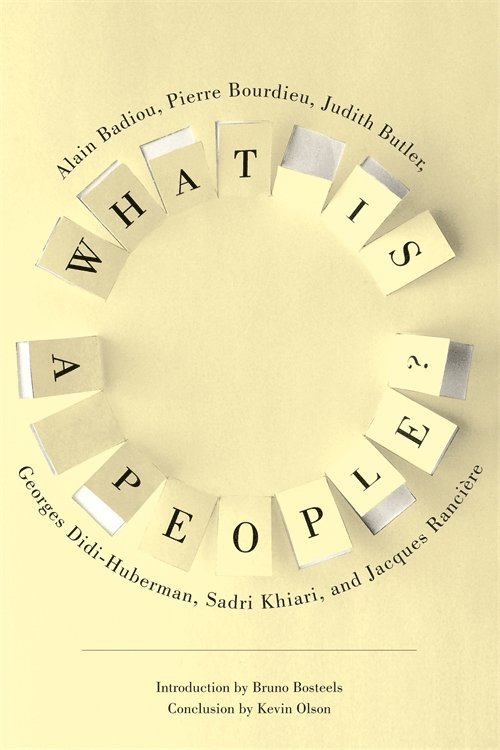
What Is a People?
Alain Badiou, Judith Butler, Georges Didi-Huberman, Sadri Khiari, Jacques Rancière, Pierre Bourdieu
Inbunden, 2016
339 kr
Del 27
Politics of Culture and the Spirit of Critique
Gabriel Rockhill, Alfredo Gomez-Muller
Inbunden, 2011
1 429 kr
Del 68
Del 33
Del 43
Hoppa över listan









Du kanske också är intresserad av
New Structural Transformation of the Public Sphere and Deliberative Politics
Jürgen Habermas
Häftad, 2023
169 kr