
Alternative History of Shakespearean Acting
Contexts, Practices and Cultural Authority
Inbunden, Engelska, 2027
1 809 kr
Kommande
What are the qualities of a ‘Shakespearean actor’? Who has access to this identity? And can ‘Shakespearean’ ever be a meaningful descriptor for acting identities without reinforcing conservative cultural assumptions?An Alternative History of Shakespearean Acting provides a variety of perspectives from theatre history, disability studies, performance studies, critical race studies and global Shakespeares, among others, to address these core questions. The book confronts the overwhelmingly white, male, able-bodied and English-speaking emphases of many histories of Shakespearean acting, and asks how actors who do not fit into these identity categories might be recognised as ‘Shakespearean’. It offers a provocative alternative to biographical approaches to Shakespearean acting, arguing that such approaches have tended to obscure the systemic association of Shakespearean performance with cultural imperialism. Addressing the idea of the Shakespearean actor in the context of its long-lasting entanglement with British colonial histories, the volume foregrounds colonized, marginalized and disabled performers and the challenge they might present to imperialist Shakespeares.In four sections, the book offers different approaches to the study of Shakespearean acting, which expand the familiar list of famous names by considering dancers and amateurs as well as actors in traditionally neglected groups. The opening section explores the use of personal memory to fill lacunae in the archival record. This is followed by a set of chapters considering how intergenerational relationships might help to break down exclusionary practices. The third section addresses performers’ uses of their voices and bodies to reinforce or challenge stereotypes. A final section proposes new, more inclusive frameworks for the history of Shakespearean acting which look towards a more capacious definition of ‘Shakespearean actor’ for the future.
Produktinformation
- Utgivningsdatum2027-02-18
- Mått138 x 216 x 14 mm
- Vikt317 g
- FormatInbunden
- SpråkEngelska
- Antal sidor304
- FörlagBloomsbury Publishing PLC
- ISBN9781350541962
Tillhör följande kategorier
Hoppa över listan

Du kanske också är intresserad av
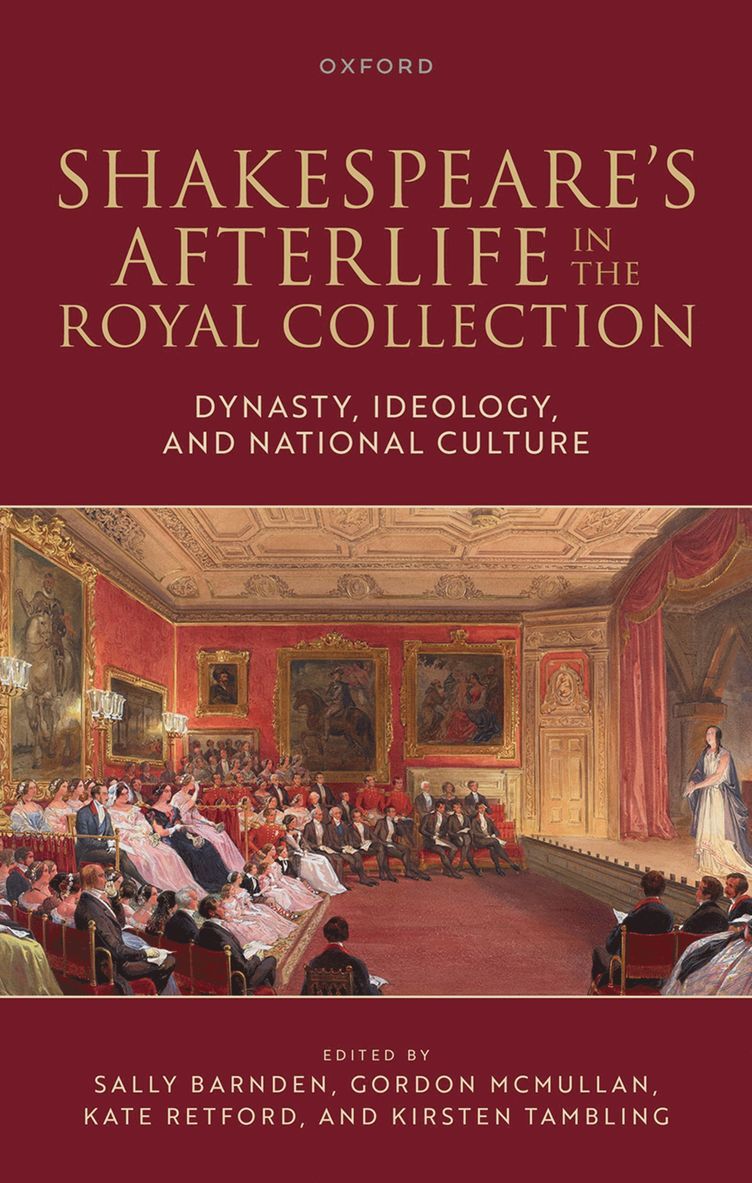
Shakespeare's Afterlife in the Royal Collection
Sally Barnden, Gordon McMullan, Sally Barnden, Gordon McMullan, Kate Retford, Kirsten Tambling
Inbunden, 2025
609 kr