
Del i serien Routledge Studies in Transport Analysis
Airline Profit Cycle
A System Analysis of Airline Industry Dynamics
Häftad, Engelska, 2020
909 kr
Beställningsvara. Skickas inom 10-15 vardagar. Fri frakt för medlemmar vid köp för minst 249 kr.
Finns i fler format (1)
The air transport industry has high economic impact; it supports more than 60 million jobs worldwide. Since the early years of commercial air travel, passenger numbers have grown tremendously. However, for decades airlines’ financial results have been swinging between profits and losses. The airline industry’s aggregate net average profit between 1970 and 2010 was close to zero, which implies bankruptcies and layoffs in downturns. The profit cycle’s amplitude has been rising over time, which means that problems have become increasingly severe and also shows that the industry may not have learned from the past. More stable financial results could not only facilitate airline management decisions and improve investors’ confidence but also preserve employment. This book offers a thorough understanding of the airline profit cycle’s causes and drivers, and it presents measures to achieve a higher and more stable profitability level.This is the first in-depth examination of the airline profit cycle. The airline industry is modelled as a complex dynamic system, which is used for quantitative simulations of ‘what if’ scenarios. These experiments reveal that the general economic environment, such as GDP or fuel price developments, influence the airline industry’s profitability pattern as well as certain regulations or aircraft manufactures’ policies. Yet despite all circumstances, simulations show that airlines’ own management decisions are sufficient to generate higher and more stable profits in the industry.This book is useful for aviation industry decision makers, investors, policy makers, and researchers because it explains why the airline industry earns or loses money. This knowledge will advance forecasting and market intelligence. Furthermore, the book offers practitioners different suggestions to sustainably improve the airline industry’s profitability. The book is also recommended as a case study for system analysis as well as industry cyclicality at graduate or postgraduate level for courses such as engineering, economics, or management.
Produktinformation
- Utgivningsdatum2020-08-14
- Mått156 x 234 x 27 mm
- Vikt630 g
- FormatHäftad
- SpråkEngelska
- SerieRoutledge Studies in Transport Analysis
- Antal sidor322
- FörlagTaylor & Francis Ltd
- ISBN9780367594916
Tillhör följande kategorier
Hoppa över listan
Mer från samma serie
Strategies for Sustainable Air Services Development
Chrystal Zhang, Kareem Yarde
Inbunden, 2024
3 209 kr
Hoppa över listan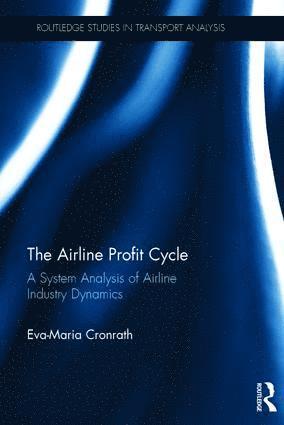

Du kanske också är intresserad av
Port Management Strategy for Enhancing Cybersecurity and Resilience
Chalermpong Senarak
Inbunden, 2025
3 309 kr
- Nyhet
Del 3
Electric Vehicle Supply Chain Management
Muhammad Shujaat Mubarik, Jyri Vilko, Sajid Nazir
Inbunden, 2026
3 209 kr