
Del i serien New Directions in Post-Keynesian Economics series
Aggregate Demand and Employment
International Perspectives
Inbunden, Engelska, 2020
2 319 kr
Beställningsvara. Skickas inom 5-8 vardagar. Fri frakt för medlemmar vid köp för minst 249 kr.
Written by distinguished Keynesian and Post-Keynesian economists from diverse national backgrounds, this book examines the economic growth and employment experiences of both large areas of the world and specific economies. Dealing with critical issues in macroeconomic theory and policy, this book puts current issues in a historical perspective.Emphasising developments during and after the Great Recession, and paying due attention to the impacts of austerity policies, chapters explain that high growth of aggregate demand is as essential as ever to achieving full employment and rising living standards. Organised into three distinct thematic parts, the book moves from discussing theoretical considerations, to aggregate demand and employment in the EU, Latin America and the developing world, to individual country studies including Canada, India and Japan.Economics students, particularly those interested in heterodox economics and macroeconomics, will find the accessible language and perspectives on a range of major regions helpful. This will also be a useful read for macroeconomic policy-makers looking for a more in-depth understanding of the importance of boosting aggregate demand.Contributors include: H. Bougrine, J.K. Galbraith, B.K. MacLean, J.W. Mason, L. Osberg, L.-P. Rochon, M. Sawyer, M. Seccareccia, S. Sen, J. Toporowski, M. Vernengo
Produktinformation
- Utgivningsdatum2020-03-04
- Mått156 x 234 x undefined mm
- FormatInbunden
- SpråkEngelska
- SerieNew Directions in Post-Keynesian Economics series
- FörlagEdward Elgar Publishing Ltd
- ISBN9781786432049
Tillhör följande kategorier
Hoppa över listan


Mer från samma serie
Financialization Response to Economic Disequilibria
Noemi Levy, Etelberto Ortiz
Inbunden, 2016
2 659 kr
Credit, Money and Crises in Post-Keynesian Economics
Louis-Philippe Rochon, Hassan Bougrine
Inbunden, 2020
3 209 kr
Hoppa över listan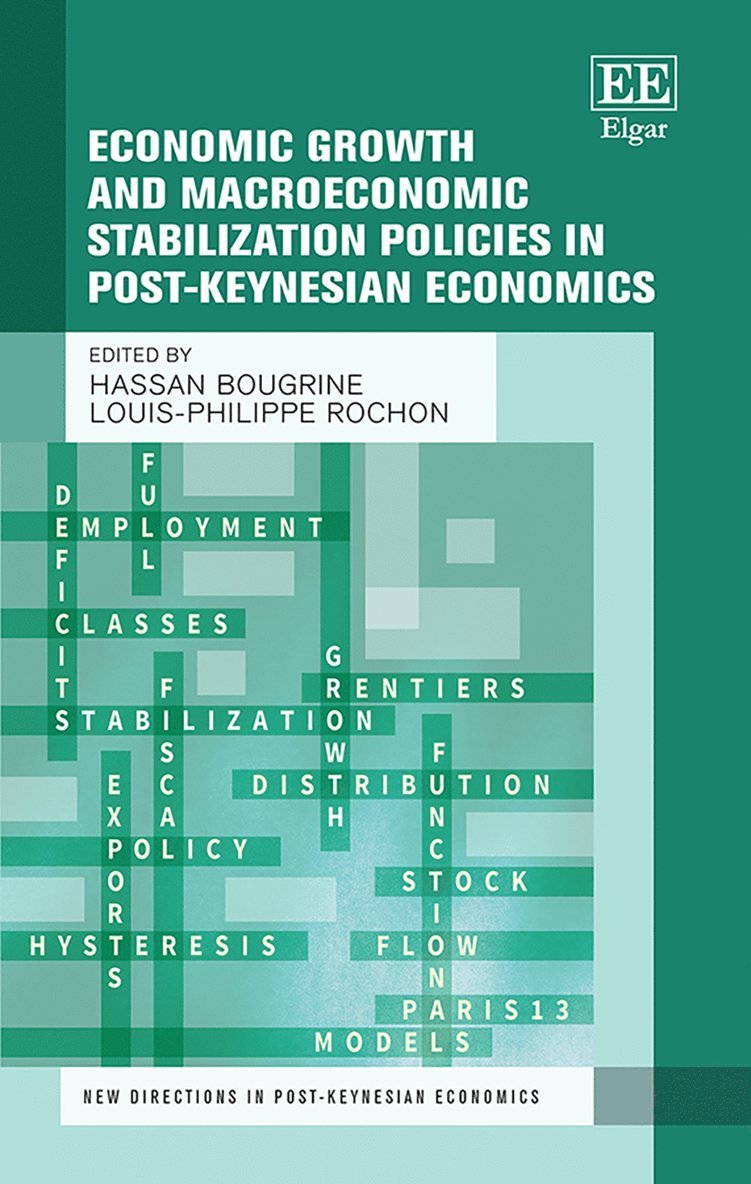





Du kanske också är intresserad av
Economic Growth and Macroeconomic Stabilization Policies in Post-Keynesian Economics
Hassan Bougrine, Louis-Philippe Rochon
Inbunden, 2020
2 979 kr
Credit, Money and Crises in Post-Keynesian Economics
Louis-Philippe Rochon, Hassan Bougrine
Inbunden, 2020
3 209 kr
Intermediate Macroeconomics
Hassan Bougrine, Louis-Philippe Rochon, Mario Seccareccia
Häftad, 2025
709 kr
Intermediate Macroeconomics
Hassan Bougrine, Louis-Philippe Rochon, Mario Seccareccia
Inbunden, 2025
2 529 kr