
Against Typological Tyranny in Archaeology
A South American Perspective
Inbunden, Engelska, 2013
1 449 kr
Beställningsvara. Skickas inom 10-15 vardagar. Fri frakt för medlemmar vid köp för minst 249 kr.
The papers in this book question the tyranny of typological thinking in archaeology through case studies from various South American countries (Venezuela, Colombia, Bolivia, Argentina, and Brazil) and Antarctica. They aim to show that typologies are unavoidable (they are, after all, the way to create networks that give meanings to symbols) but that their tyranny can be overcome if they are used from a critical, heuristic and non-prescriptive stance: critical because the complacent attitude towards their tyranny is replaced by a militant stance against it; heuristic because they are used as means to reach alternative and suggestive interpretations but not as ultimate and definite destinies; and non-prescriptive because instead of using them as threads to follow they are rather used as constitutive parts of more complex and connective fabrics. The papers included in the book are diverse in temporal and locational terms. They cover from so called Formative societies in lowland Venezuela to Inca-related ones in Bolivia; from the coastal shell middens of Brazil to the megalithic sculptors of SW Colombia. Yet, the papers are related. They have in common their shared rejection of established, naturalized typologies that constrain the way archaeologists see, forcing their interpretations into well known and predictable conclusions. Their imaginative interpretative proposals flee from the secure comfort of venerable typologies, many suspicious because of their association with colonial political narratives. Instead, the authors propose novel ways of dealing with archaeological data.
Produktinformation
- Utgivningsdatum2013-10-25
- Mått155 x 235 x 18 mm
- Vikt553 g
- FormatInbunden
- SpråkEngelska
- Antal sidor236
- Upplaga2014
- FörlagSpringer-Verlag New York Inc.
- ISBN9781461487234
Tillhör följande kategorier
Hoppa över listan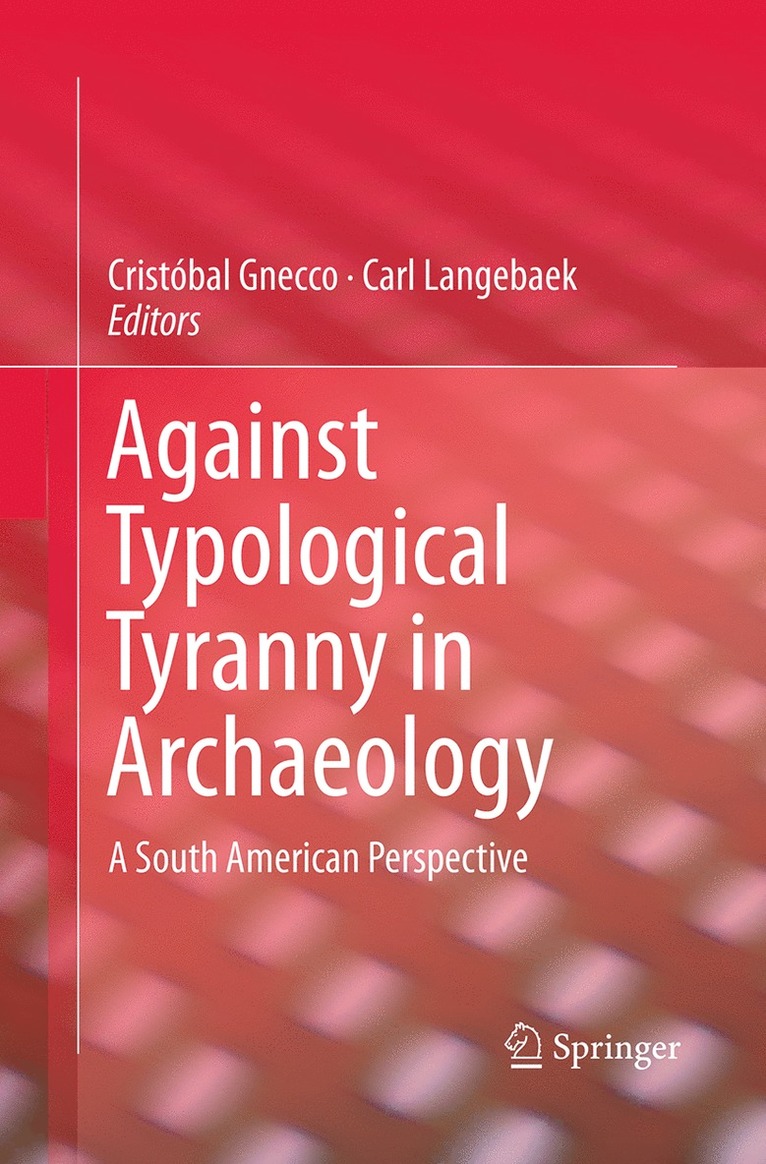

Du kanske också är intresserad av
Indigenous Peoples and Archaeology in Latin America
Cristóbal Gnecco, Patricia Ayala
Häftad, 2012
839 kr
Del 1
Indigenous Peoples and Archaeology in Latin America
Cristóbal Gnecco, Patricia Ayala
Inbunden, 2011
3 239 kr
Del 1
- Nyhet