
After the Cold War
Europe’s New Political Architecture
Inbunden, Engelska, 1991
1 409 kr
Beställningsvara. Skickas inom 10-15 vardagar. Fri frakt för medlemmar vid köp för minst 249 kr.
Finns i fler format (1)
In 1989, the floodgates of revolution were opened in Eastern Europe. Communist governments toppled in all of the East European countries that were members of the Warsaw Pact. Glasnost and perestroika in the Soviet Union, the prospect of increasing West European integration leading to the further marginization of Eastern Europe, and long-suppressed alienation of the public from the political leadership throughout Eastern Europe were amongst the immediate factors leading to the upheavals of 1989. In this research volume, Alpo Rusi, Director of Planning and Research in the Political Department of the Finnish Ministry of Foreign Affairs, examines the history of the postwar east-west relationship in Europe, the underlying proceses of change and the implications of the present period of transition to a new European order.;In Dr Rusi's view the events of 1989 are but a harbinger of a new security order in Europe. The author analyses the rise of bipolarism, both during the conflict of the Cold War and during the growth of detente, and lays stress on the parallel process of an evolution towards multilateralism. Dr Rusi's view is that in exploring the prospects for Europe's future, analysts
Produktinformation
- Utgivningsdatum1991-05-31
- Mått140 x 216 x 16 mm
- Vikt417 g
- FormatInbunden
- SpråkEngelska
- Antal sidor198
- Upplaga1991
- FörlagPalgrave Macmillan
- ISBN9780333564349
Tillhör följande kategorier
Hoppa över listan
Mer från samma författare
Rusibrassey Def 197576
Alpo M Rusi, Alpo M. Rusi, The Royal United Services Institute for Defence Studies
Inbunden
2 679 kr
Rusibrassey Def 197576
Alpo M Rusi, Alpo M. Rusi, The Royal United Services Institute for Defence Studies
Häftad
789 kr
Hoppa över listan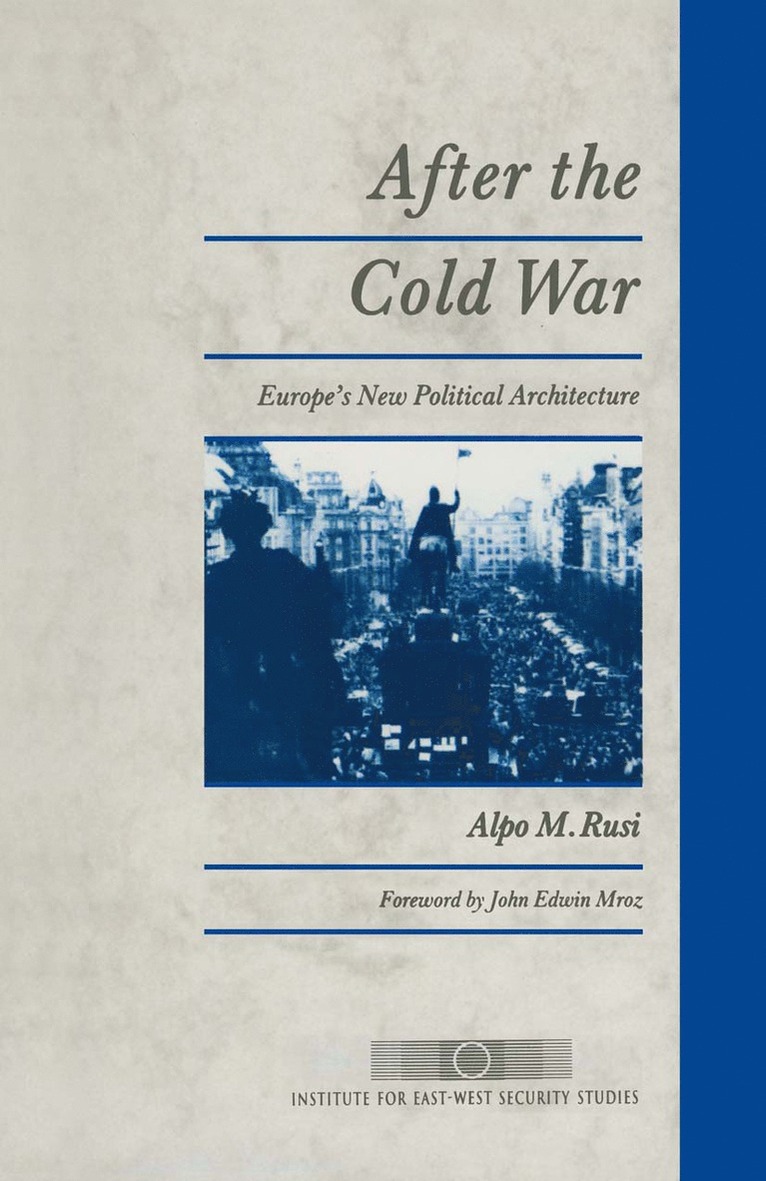
Du kanske också är intresserad av
Rusibrassey Def 197576
Alpo M Rusi, Alpo M. Rusi, The Royal United Services Institute for Defence Studies
Inbunden
2 679 kr
Rusibrassey Def 197576
Alpo M Rusi, Alpo M. Rusi, The Royal United Services Institute for Defence Studies
Häftad
789 kr