
Del i serien Routledge Advances in American History
After American Studies
Rethinking the Legacies of Transnational Exceptionalism
Inbunden, Engelska, 2017
3 309 kr
Beställningsvara. Skickas inom 10-15 vardagar. Fri frakt för medlemmar vid köp för minst 249 kr.
Finns i fler format (1)
After American Studies is a timely critique of national and transnational approaches to community, and their forms of belonging and trans/patriotisms. Using reports in multicultural psychology and cultural neuroscience to interpret an array of cultural forms—including literature, art, film, advertising, search engines, urban planning, museum artifacts, visa policy, public education, and ostensibly non-state media—the argument fills a gap in contemporary criticism by a focus on what makes cultural canons symbolically effective (or not) for an individual exposed to them. The book makes important points about the limits of transnationalism as a paradigm, evidencing how such approaches often reiterate presumptive and essentialized notions of identity that function as new dimensions of exceptionalism. In response to the shortcomings in trans/national criticism, the final chapter initiates a theoretical consideration of a postgeographic and postcultural form of community (and of cultural analysis).
Produktinformation
- Utgivningsdatum2017-07-20
- Mått152 x 229 x 16 mm
- Vikt403 g
- FormatInbunden
- SpråkEngelska
- SerieRoutledge Advances in American History
- Antal sidor188
- FörlagTaylor & Francis Ltd
- ISBN9781138054059
Tillhör följande kategorier
Hoppa över listan




Mer från samma serie
Perceptions of China and White House Decision-Making, 1941-1963
Adam S.R. Bartley
Inbunden, 2019
3 309 kr
Reagan’s “Boys” and the Children of the Greatest Generation
Jonathan M. Bullinger
Inbunden, 2019
3 309 kr
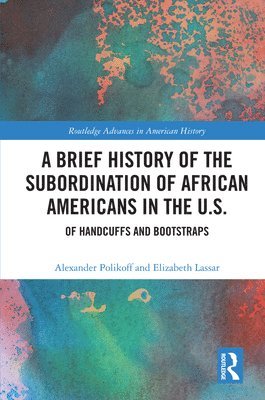
Brief History of the Subordination of African Americans in the U.S.
Alexander Polikoff, Elizabeth Lassar
Inbunden, 2020
3 309 kr