
African Realism?
International Relations Theory and Africa's Wars in the Postcolonial Era
Inbunden, Engelska, 2015
1 999 kr
Beställningsvara. Skickas inom 10-15 vardagar. Fri frakt för medlemmar vid köp för minst 249 kr.
Finns i fler format (1)
African Realism explains Africa’s international conflicts of the post-colonial era through international relations theory. It looks at the relationship between Africa’s domestic and international conflicts, as well as the impact of factors such as domestic legitimacy, trade, and regional economic institutions on African wars. Further, it examines the relevance of traditional realist assumptions (e.g. balance of power, the security dilemma) to African international wars and how these factors are modified by the exigencies of Africa’s domestic institutions, such as neopatrimonialism and inverted legitimacy. This study also addresses the inconsistencies and inaccuracies of international relations theory as it engages African international relations, and especially, its military history
Produktinformation
- Utgivningsdatum2015-03-19
- Mått161 x 236 x 29 mm
- Vikt599 g
- FormatInbunden
- SpråkEngelska
- Antal sidor316
- FörlagBloomsbury Publishing Plc
- ISBN9781442239500
- UtmärkelserChoice Outstanding Academic Title
Tillhör följande kategorier
Hoppa över listan


Mer från samma författare
Scriptures, Shrines, Scapegoats, and World Politics
Zeev Maoz, Errol A Henderson
Inbunden, 2020
1 359 kr
Hoppa över listan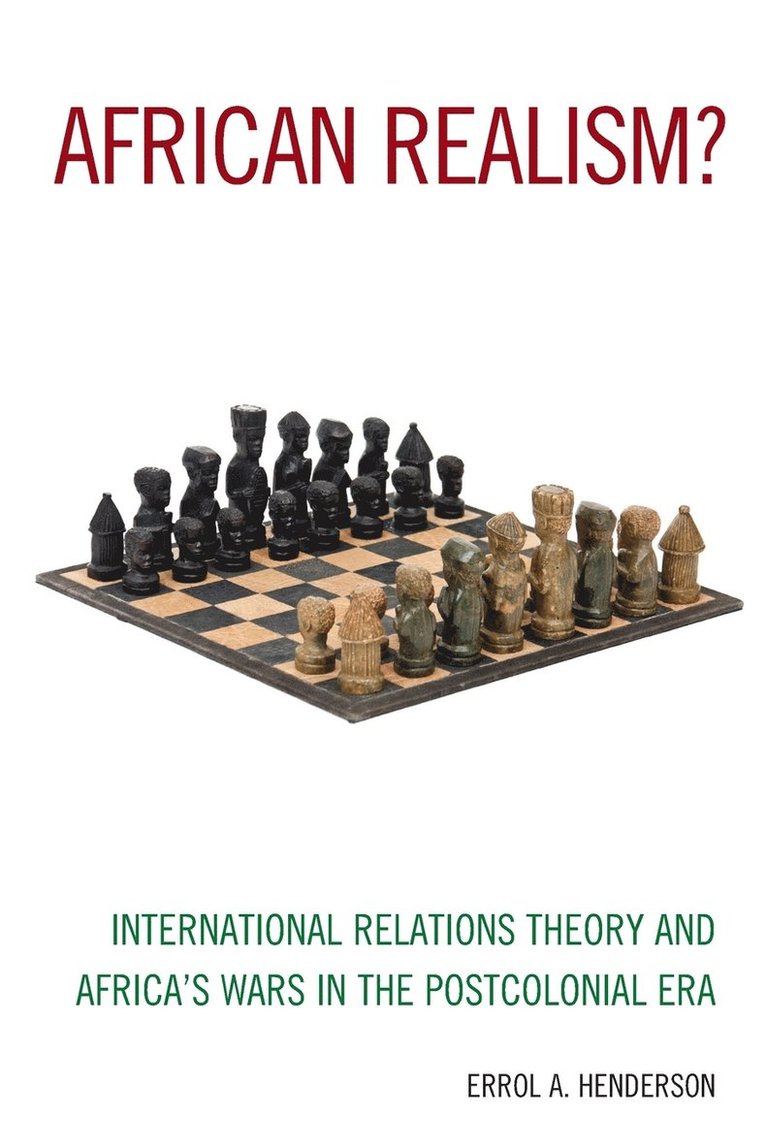




Du kanske också är intresserad av
Scriptures, Shrines, Scapegoats, and World Politics
Zeev Maoz, Errol A Henderson
Inbunden, 2020
1 359 kr
- Nyhet
Del 3
- Nyhet
Del 11
- Nyhet
Del 4
- Nyhet
Del 6