
Aesthetics of Education
Theatre, Curiosity, and Politics in the Work of Jacques Ranciere and Paulo Freire
Häftad, Engelska, 2014
719 kr
Beställningsvara. Skickas inom 10-15 vardagar. Fri frakt för medlemmar vid köp för minst 249 kr.
Finns i fler format (1)
This innovative book examines the aesthetic event of education. Extending beyond the pedagogy of art or art appreciation, Tyson E. Lewis takes a much broader view of aesthetics and argues that teaching and learning are themselves aesthetic performances. As Jacques Ranciere has recently argued, there is an inherent connection between aesthetics and politics, both of which disrupt conventional distributions of who can speak and think. Here, Lewis extends Ranciere's general thesis to examine how there is not only an aesthetics of politics but also an aesthetics of education. In particular, Lewis' analysis focuses on several questions: What are the possibilities and limitations of building analogies between teachers and artists, education and specific aesthetic forms? What is the relationship between democracy and aesthetic sensibilities? Lewis examines these questions by juxtaposing Ranciere's work on universal teaching, democracy, and aesthetics with Paulo Freire's work on critical pedagogy, freedom, and literacy. The result is an extension and problematization of Ranciere's project as well as a new appreciation for the largely ignored aesthetic dimension of Freire's pedagogy of the oppressed.
Produktinformation
- Utgivningsdatum2014-05-08
- Mått155 x 235 x 11 mm
- Vikt306 g
- FormatHäftad
- SpråkEngelska
- Antal sidor192
- FörlagBloomsbury Publishing PLC
- ISBN9781472581358
Tillhör följande kategorier
Hoppa över listan


Mer från samma författare
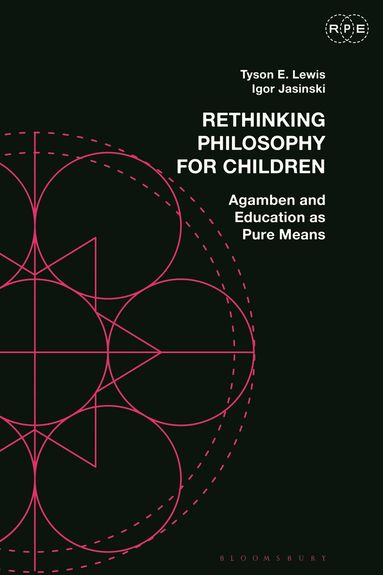
Rethinking Philosophy for Children
Tyson E. Lewis, Igor Jasinski, Derek R. Ford
Inbunden, 2021
1 959 kr
Against Sex Education
Caitlin Howlett, Derek R. Ford, Derek R Ford, Tyson E Lewis
Inbunden, 2021
639 kr
Hoppa över listan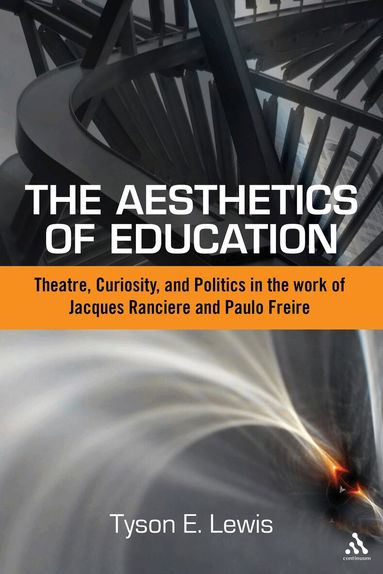
Du kanske också är intresserad av
Pedagogies in the Flesh
Sarah Travis, Amelia M. Kraehe, Emily J. Hood, Tyson E. Lewis
Inbunden, 2017
1 819 kr
Pedagogies in the Flesh
Sarah Travis, Amelia M. Kraehe, Emily J. Hood, Tyson E. Lewis
Häftad, 2018
419 kr
Rethinking Philosophy for Children
Tyson E. Lewis, Igor Jasinski, Derek R. Ford
Inbunden, 2021
1 959 kr
Against Sex Education
Caitlin Howlett, Derek R. Ford, Derek R Ford, Tyson E Lewis
Inbunden, 2021
639 kr