
Aesthetics and the Environment
The Appreciation of Nature, Art and Architecture
Inbunden, Engelska, 1999
3 209 kr
Beställningsvara. Skickas inom 10-15 vardagar. Fri frakt för medlemmar vid köp för minst 249 kr.
Finns i fler format (1)
Traditional aesthetics is often associated with the appreciation of art, Allen Carlson shows how much of our aesthetic experience does not encompass art but nature, in our response to sunsets, mountains or horizons or more mundane surroundings, like gardens or the view from our window.He argues that knowledge of what it is we are appreciating is essential to having an appropriate aesthetic experience and that scientific understanding of nature can enhance our appreciation of it, rather than denigrate it.
Produktinformation
- Utgivningsdatum1999-11-11
- Mått156 x 234 x 26 mm
- Vikt660 g
- FormatInbunden
- SpråkEngelska
- Antal sidor270
- FörlagTaylor & Francis Ltd
- ISBN9780415206839
Tillhör följande kategorier
Hoppa över listan








Mer från samma författare
Contemporary Chinese Politics
Allen Carlson, Mary E. Gallagher, Kenneth Lieberthal, Melanie Manion
Häftad, 2010
679 kr
Contemporary Chinese Politics
Allen Carlson, Mary E. Gallagher, Kenneth Lieberthal, Melanie Manion
Inbunden, 2010
1 449 kr
Hoppa över listan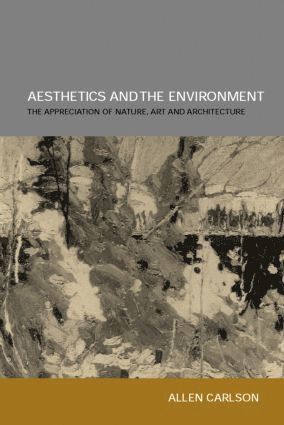

Du kanske också är intresserad av
Contemporary Chinese Politics
Allen Carlson, Mary E. Gallagher, Kenneth Lieberthal, Melanie Manion
Häftad, 2010
679 kr