
Del i serien Bloomsbury Aesthetics
Aesthetics and Nature
The Appreciation of Natural Beauty and the Environment
Häftad, Engelska, 2023
419 kr
Beställningsvara. Skickas inom 5-8 vardagar. Fri frakt för medlemmar vid köp för minst 249 kr.
Finns i fler format (3)
The appreciation of nature and natural beauty demands our attention as environmental issues become ever more urgent. In this timely introduction, Glenn Parsons provides an overview of philosophical work on the aesthetics of nature, identifying key conceptual questions, clarifying central theories, and analyzing the ethical ramifications of our experience of natural beauty.Outlining five major approaches to understanding the aesthetic value of nature, this second edition explores the aesthetic appreciation of nature as it occurs in wilderness, in gardens, and in the context of appreciating environmental art. Now updated to cover recent developments in the field, it includes:· A new chapter on the sublime, the picturesque, and the beautiful· Expanded discussion of empirical and evolutionary accounts of nature appreciation, as well as the appreciation of the environment in non-Western cultures· A new chapter on the aesthetic appreciation of animals· An in-depth analysis of the appreciation of nature through cinema and photography· Discussion of the relation between environmental appreciation and climate change Combining a clear and engaging style with a sophisticated treatment of a fascinating subject, Aesthetics and Nature explores the aesthetic dimension of humanity's relationship with our physical surroundings. This a must-read for anyone who cares about nature and the future of our environment.
Produktinformation
- Utgivningsdatum2023-11-30
- Mått145 x 206 x 46 mm
- Vikt499 g
- FormatHäftad
- SpråkEngelska
- SerieBloomsbury Aesthetics
- Antal sidor400
- Upplaga2
- FörlagBloomsbury Publishing PLC
- ISBN9781350121591
Tillhör följande kategorier
Hoppa över listan




Mer från samma författare
Routledge Handbook of Nature and Environmental Aesthetics
Glenn Parsons, Ned Hettinger, Sandra Shapshay
Inbunden, 2025
4 849 kr
Hoppa över listan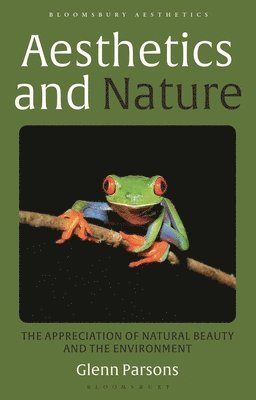



Du kanske också är intresserad av
- Nyhet
Routledge Handbook of Nature and Environmental Aesthetics
Glenn Parsons, Ned Hettinger, Sandra Shapshay
Inbunden, 2025
4 849 kr