Eric Schliesser's Adam Smith is the product of two decades' reflection by the author on the great Scottish Enlightenment. Unique among treatments of Adam Smith, Schliesser's book treats him as a systematic philosopher. Smith was a giant of the Scottish Enlightenment with polymath interests; Schliesser thus explores Smith's economics and ethics in light of his other commitments on the nature of knowledge, the theory of emotions, the theory of mind, his account of language, the nature of causation, and his views on methodology. He places Smith's ideas in the context of a host of other philosophers, especially Hume, Rousseau, and Newton; and he draws on the reception of Smith's ideas by Sophie de Grouchy, Mary Wollstonecraft, and other philosophers and economists to sketch the elements of, and the detailed connections within, Smith's system.Adam Smith traces the outlines of Smith's intellectual system and situates it in the context of his highly developed views on the norms that govern responsible speech. In particular, the book articulates Smith's concerns about the impact of his public policy recommendations, especially on the least powerful in society. In so doing, Schliesser offers new interpretations of Smith's views on the invisible hand, the Wealth of Nations, his treatment of virtue, the nature of freedom, the individual's relationship to society, his account of the passions, the moral roles of religion, and his treatment of the role of mathematics in economics.While the book does offer a single argument, it is organized in a modular fashion and includes a helpful index; readers with a more focused interest in Smith's achievements can skip to their section of interest.
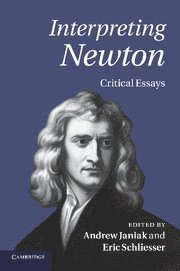
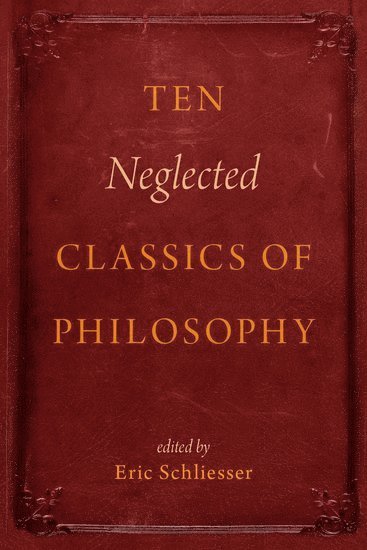
Eric Schliesser is Professor of Political Science at the University of Amsterdam. He is editor of The Oxford Handbook of Newton (OUP, forthcoming), Ten Neglected Classics of Philosophy (OUP, 2016), and Sympathy: A History (OUP, 2015).
AcknowledgmentsList of abbreviationsBibliographic note1. Introduction: Systematic Philosopher & Public Philosophera. Systems in Adam Smithb. Smith's Corpus as Two Systems of Philosophyc. A Bibliographical Interluded. Methodological Remarkse. Brief SummaryPart 1. Propensities and Passions2. Passionate Human Naturea. Human Propensities & Smithian Social Explanationb. Mind, Language, and Society3. The Passions, Rationality, and Reasona. Natural Passionsb. Proto-Passions, or Preconceptions and why Smith is not an Empiricistc. Causation, Sound Judgment, and Environmental Rationalityd. Reason as an Active Principlee. Natural unexpected passions: the intellectual sentiments.f. Derived Passions4. From Natural Sentiments to General Rules and Moral Sentimentsa. Natural Sentimentsi. Smith's criticisms of Hume's account of Propertyii. The Natural Sentiments and General Rulesb. Moral Faculties; the moral Sense and conscience 5. The Sympathetic Process & Judgments of Proprietya. Sympathetic process (feelings)b. Sympathy and Knowledge of Causal Relationsc. Judgments of Proportionalityd. Counterfactual reasoning in the Sympathetic Processe. The Piacular, or On Seeing Oneself as a Moral Cause in Adam Smithi. We (Ought to) See Ourselves as Causes!ii. Norms of Appeasement, or on experts and Smith's Embrace of Fortuneiii. Superstition and Grandeuriv. Natural Sentiments and Enlightenment, or Nature vs Reasonf. The Impartial SpectatorPart 2: Society6. Society and Political Taxonomy: Individuals, Classes, Factions, Nations, and Governments7. Adam Smith's Foundations for Political Philosophya. "A New Utopia"b. Even the Humane Smithc. Belonging to Societyi. The Genealogy of Propertyii. Original and Derived Propertyiii. The Turn to History: the Enlightenment Imperative8. Institutions and Social Consequentialisma. Society, Justice, and group-Selectionb. Utility and Social Institutionsc. The Measure of Real Price: Adam Smith's Science of Equityd. Progressive Taxatione. On Theoretical Partiality Toward the Working Poorf. The role of the legislator; private virtue, public happiness.g. Libertyh. Regulating Markets9. Virtuea. Virtue as Excellence or Virtue in Common Life?b. Excellent-in-Virtue-of Character10. Three Invisible Handsa. The Invisible Hand of Jupiter, and Miracles.b. The "Vain and Insatiable Desires" of the Richc. Promoting Unintended Ends in WNd. Comparing the three Invisible Hands.11. Philosophy of Sciencea. Philosophy Within the Division of Laborb. Social Epistemology & the Impartial Spectatorc. Copernicus & Newton: Modest Scientific Realismd. Magnanimous Superstition12. The Methodology of Wealth of Nationsa. Reflexivityb. Natural and Market Pricesc. Deviations from Nature, "The Price of Free Competition"i. Newton's Fourth Rule of Reasoningii. Descartes and Kepler's Irregularities d. The Role of Institutionse. Model, Cause, Process; Smithian Social Explanationf. Hume vs. Smith on the Introduction of Commerceg. Hume's Natural Rate of Propagation and Smith's Digression on Silver13. Smith and Anti-Mathematicisma. Adam Smith's Newtonianism Reconsideredb. The Road to True Philosophyc. Anti-mathematicism and Proportionality in Hume and Smithd. Adam Smith and Proportions (as well as good judgment)Part 3: Philosophers14. Religiona. Biblical Revelation & Christian Theologyb. Anti-Clericalism & Freedom of Religion15. A Cheerful Philosophical Lifea. The Commercial Philosopherb. Hume's exchange with Charonc. Friendship, Sincerity, and Real HappinessPart 4: Conclusion16. ConclusionBibliographyIndex
Schliesser has done a masterful job putting his work together into a logical progression, and tying together loose ends...It is a brilliant accomplishment. All serious Smith scholars will want to give it a careful read.
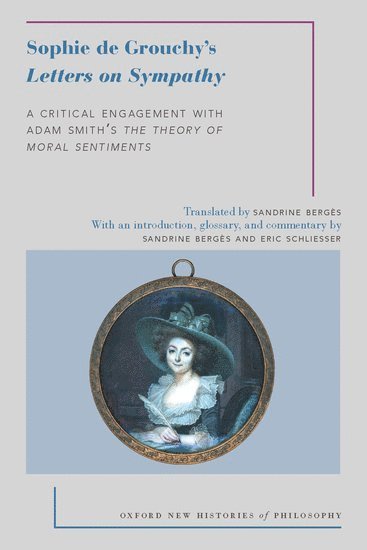
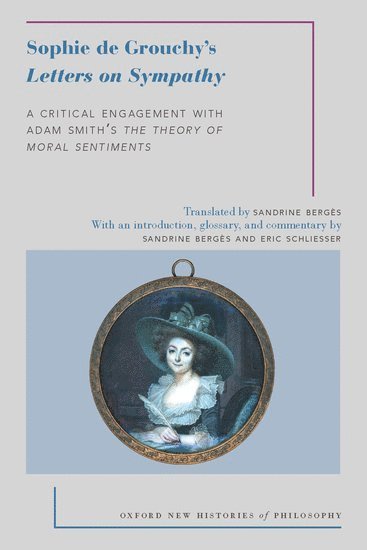
DE GROUCHY, de Grouchy, Sandrine Bergès, Eric Schliesser, Bilkent University) Berges, Sandrine (Associate Professor, Department of Philosophy, Associate Professor, Department of Philosophy, University of Amsterdam) Schliesser, Eric (Professor of Political Science, Professor of Political Science
Sandrine Bergäs, Sandrine Bergès, Eric Schliesser, Bilkent University) Berges, Sandrine (Associate Professor, Department of Philosophy, Associate Professor, Department of Philosophy, University of Amsterdam) Schliesser, Eric (Professor of Political Science, Professor of Political Science
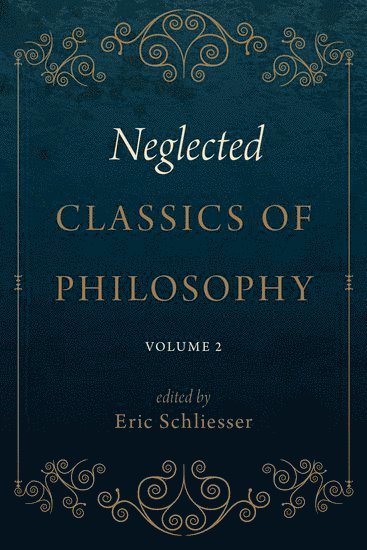
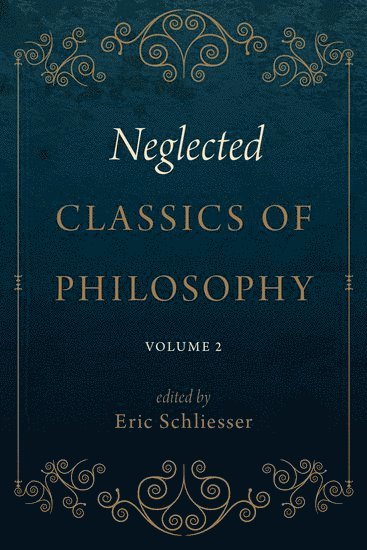
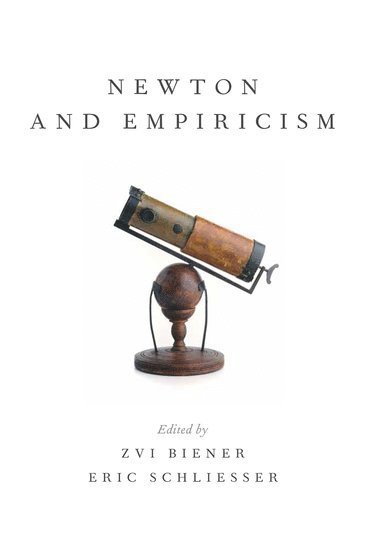
Zvi Biener, Eric Schliesser, USA) Biener, Zvi (Assistant Professor, Department of Philosophy, Assistant Professor, Department of Philosophy, University of Cincinnati, Cincinnati, Belgium) Schliesser, Eric (BOF Research Professor, Philosophy & Moral Sciences, BOF Research Professor, Philosophy & Moral Sciences, Ghent University, Ghent
LAERKE, Laerke, Mogens Laerke, Justin E. H. Smith, Eric Schliesser, Ecole Normale Superieure and University of Aberdeen.) Laerke, Mogens (Senior Research Fellow, Professor of Philosophy, Senior Research Fellow, Professor of Philosophy, Concordia University) Smith, Justin E. H. (Professor of Philosophy, Professor of Philosophy, Ghent University) Schliesser, Eric (Bijzonder Onderzoeks Fond Research Professor and Associated Professor of Philosophy and Moral Science, Bijzonder Onderzoeks Fond Research Professor and Associated Professor of Philosophy and Moral Science
DE GROUCHY, de Grouchy, Sandrine Bergès, Eric Schliesser, Bilkent University) Berges, Sandrine (Associate Professor, Department of Philosophy, Associate Professor, Department of Philosophy, University of Amsterdam) Schliesser, Eric (Professor of Political Science, Professor of Political Science
Sandrine Bergäs, Sandrine Bergès, Eric Schliesser, Bilkent University) Berges, Sandrine (Associate Professor, Department of Philosophy, Associate Professor, Department of Philosophy, University of Amsterdam) Schliesser, Eric (Professor of Political Science, Professor of Political Science
LAERKE, Laerke, Mogens Laerke, Justin E. H. Smith, Eric Schliesser, Ecole Normale Superieure and University of Aberdeen.) Laerke, Mogens (Senior Research Fellow, Professor of Philosophy, Senior Research Fellow, Professor of Philosophy, Concordia University) Smith, Justin E. H. (Professor of Philosophy, Professor of Philosophy, Ghent University) Schliesser, Eric (Bijzonder Onderzoeks Fond Research Professor and Associated Professor of Philosophy and Moral Science, Bijzonder Onderzoeks Fond Research Professor and Associated Professor of Philosophy and Moral Science