
Activism and Post-activism
Korean Documentary Cinema, 1981--2022
Inbunden, Engelska, 2024
1 649 kr
Beställningsvara. Skickas inom 7-10 vardagar. Fri frakt för medlemmar vid köp för minst 249 kr.
Finns i fler format (1)
Activism and Post-activism: Korean Documentary Cinema, 1981--2022 is a new book about nonfiction filmmaking in the private and independent sectors of South Korean cinema and media from the early 1980s to the present day. Drawing on the methodologies of documentary studies, experimental film and video, digital cinema, local discourses on independent documentary, and the literature on the social changes of South Korea, author Jihoon Kim historicizes the formation and development of Korean independent documentary in close dialogue with South Korea's social movements. From the 1980s mass anti-dictatorship movement to twenty-first-century labor issues, feminism, LGBT rights, environmental justice, and key events such as the Sewol Ferry disaster and the Candlelight Protests, Kim offers a comprehensive history of Korean social change documentaries in terms of their activist tradition.At the same time, Kim also maps out the formal and aesthetic divergences of twenty-first-century Korean documentary cinema beyond the activist tradition, while also demonstrating how they have inherited and dynamically renewed the tradition's engagement with contested reality and history. Making the tripartite connections between the socio-political history of South Korea, documentary's aesthetics and politics, and the shifting institutional and technological evolution of documentary production and distribution, the book argues that what is unique about this forty-year history of South Korean documentary cinema is the intensive and compressed coevolution of its two interlocked tendencies: activism and post-activism.
Produktinformation
- Utgivningsdatum2024-03-22
- Mått235 x 156 x 25 mm
- Vikt594 g
- FormatInbunden
- SpråkEngelska
- Antal sidor328
- FörlagOUP USA
- ISBN9780197760413
Tillhör följande kategorier
Hoppa över listan


Mer från samma författare
Unconventional Resources
Cenk Temizel, Cengiz Yegin, Jihoon Kim, Luigi Saputelli, Ole Torsæter
Inbunden, 2025
3 149 kr
Hoppa över listan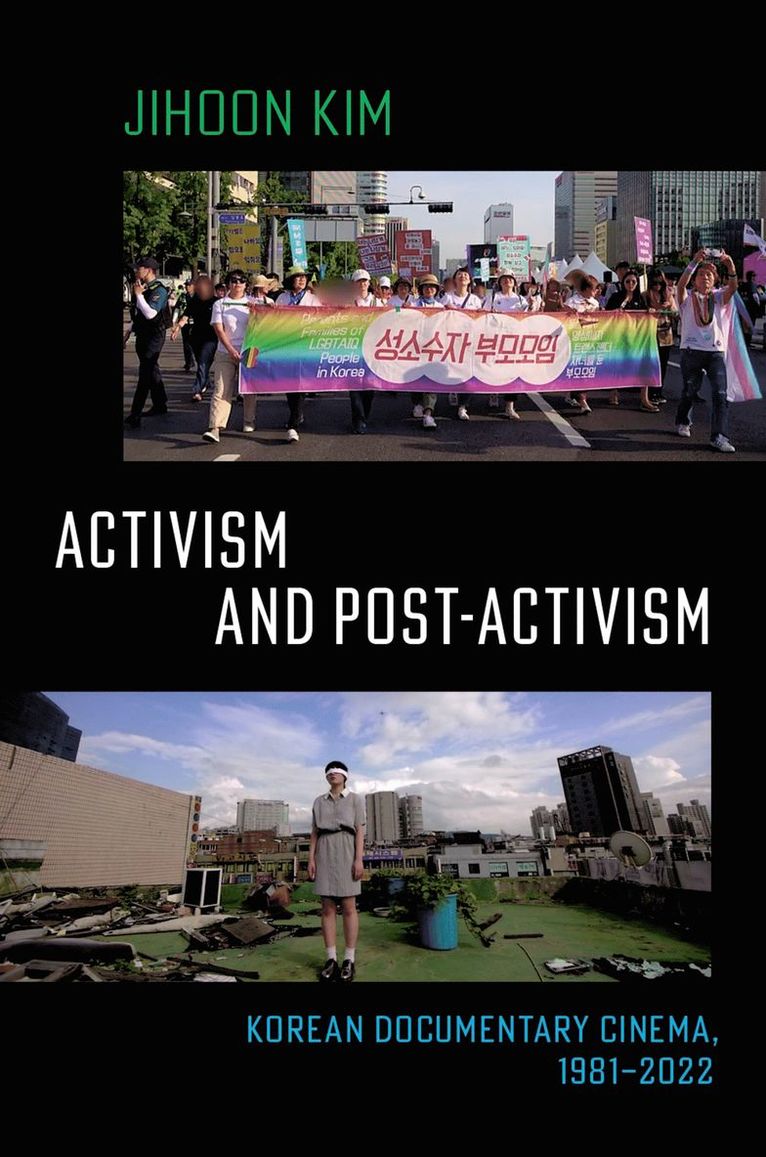

Du kanske också är intresserad av
Unconventional Resources
Cenk Temizel, Cengiz Yegin, Jihoon Kim, Luigi Saputelli, Ole Torsæter
Inbunden, 2025
3 149 kr
- Nyhet